
It’s good to be bad

Some actors are simply more convincing when depicting villains rather than heroes. Wrong, not right. Bad rather than good.

When Tchecky Karyo passed away last year, the world was suddenly absent a distinguished and accomplished thespian capable of conveying nuance and emotion. We also lost a villain par excellence. In a long career, some of the notable acting high notes for Mr Karyo were depicting bad guys, criminals and jerks – the mysterious spy boss in La Femme Nikita for one, who delights in keeping the eponymous character, a reformed criminal turned government assassin, on tenterhooks. She never knows when a covert assignment might be sprung on her. Then there was the cruel pimp in Kiss of the Dragon who cruelly noted, “All my Barbies are out on the street.”

Those actors who specialise in playing dubious, threatening or ominous characters may seem typecast, but this is the downside of having a specialty. And although playing villains may pay the bills, there is often considerably more to their actorly toolbox.

Ben Mendlesohn has found a niche as cruel and vicious sadists such as Rogue One’s Director Olson Krennic. Yet Mendo is a screen veteran, more than capable of subtly portraying a panoply of types, as evidenced by his evocation of Christian Dior in the recent series The New Look. Yet having made his name internationally in Animal Kingdom, Mendlesohn is no doubt on the short list when seething menace is called for.

A-listers such as, say, George Clooney, Tom Cruise, Emily Blunt or Anne Hathaway are usually depicted on the side of good, proper, worthy and right. It’s hard to imagine otherwise. Playing  a character with ill intentions could well damage their personal brand. Very occasionally casting a name from this list as a villain pays off for all concerned.

Consider the decision to cast classic nice guy and upright moral citizen Henry Fonda as the black-clad villain in Once Upon a Time in the West – a masterstroke from director Sergio Leone.

There is another group of actors who have the kudos and the versatility to play a range of characters and types and not be shunned by audiences or directors as a result. Mads Mikkelson comes to mind here, or Meryl Streep. Both take on unsympathetic characters with gusto and without fear. They simply inhabit parts, and have a way of convincing you of their character’s truth. Robert De Niro has earned nine Academy Award nominations playing an assortment of types. The prolific Oscar Isaac is in this category too. With Michael-Caine-like ubiquity, Isaac has made many movies better, but none more so than when playing difficult individuals in small but important roles in The Bourne Legacy and Drive.

Kudos too to Matt Damon for occasionally taking a risk, such as playing the craven and duplicitous Dr Mann in Interstellar, the creepy title character in The Talented Mr Ripley or a corrupt cop on the take, Colin Sullivan, in The Departed.

There also exists a list of actors who rise to the occasion – who become the best version of their actorly selves when a nefarious or black-hearted individual is required. Here is a selection.

Cate Blanchett
Prodigiously talented, Blanchett has earned more Academy Award nominations than any other Australian in film: blockbusters, sweeping historical epics, arthouse fare, you name it, and Blanchett has done it and usually been pretty amazing. Among those performances was as Tár’s title character, Lidia Tár (a renowned but manipulative and heartless orchestral conductor). She’s also played a snarling KGB agent, Irina Spalko, in Indiana Jones and the Kingdom of the Crystal Skull (about which the less said the better) and dentally obsessed CIA heavyweight Marissa Wiegler in Hanna. Villains all. She’s suitably despicable in these roles. Yet even as sympathetic characters such as Galadrial in The Lord of The Rings or Lou Miller in Ocean’s 8, she’s just that bit annoying.

Glenn Close
Screen veteran Glenn Close has played roles that are all sweetness and light, such as Roy Hobbs’ (Robert Redford) patient true love Iris in The Natural. Yet she’s considerably more memorable as out-and-out villains such as Cruella De Ville in 1001 Dalmatians, the original bunny boiler, Alex Forrest, in Fatal Attraction or as the scheming Marquise de Merteuil in Dangerous Liaisons.

Walton Goggins
Neo Nazi, arsonist, drug runner, pimp, thief, sometime-minister of the Lord and full-time ne’er-do-well – that’s Justified’s Boyd Crowder, the black hat to US Marshall Raylan Givens’ (Timothy Olyphant) white. Boyd was originally slated to be killed off early in the series, but proved so popular with test audiences that he was kept on for all six seasons of the show’s run. So adept at playing charismatic and verbose sociopaths is Goggins that decent, upright characters can never quite seem credible.

Hugh Grant
As a young man finding his way in the celluloid world, Hugh Grant made his name playing fresh-faced charmingly nervous floppy-haired lotharios. Age has gifted his face character such that eventually he became far more appealing playing individuals with an edge, such as About a Boy’s Will, The Gentlemen’s shameless mockney journalist/blackmailer Fletcher and even an obstreperous Oompa Loompa in Wonka.

Nicole Kidman
She can kind of do it all, can our Nicole, from BMX banditry to brain surgery (see Days of Thunder), and does not disappoint playing femme fatales and other assorted villains, either, whether that’s manipulating Matt Dillon (no relation) in To Die For, pursuing the eponymous bear for her taxidermy collection in Paddington or as the ruthless Mrs Coulter in The Golden Compass.

John Malkovich
As brainiac villain Cyrus “the Virus” Grissom in Con Air, as preening seducer Valmont in Dangerous Liaisons, as mannered Teddy KGB in Rounders or as the out-there Mitch Leary in In the Line of Fire, Mr Malkovich certainly has shown us the goods as bad guys – in turns calculating, psychotic, menacing, and perhaps what’s most important, eminently convincing.

Gary Oldman
Mr Oldman can do unhinged apoplexy with aplomb. He can go right off, he can, with some considerable verve. As bent cop Norman “Stan” Stansfield in Leon the Professional he was “terrifyingly erratic”, improvising many scenes. Who could forget his bellowing of the word, “EV-ERY-ONE!!” at a pivotal moment? When Luc Besson needed a monstrous soul capable of selling out Earth to something even more monstrous in The Fifth Element, he called upon Oldman to play Jean-Baptiste Emanuel Zorg, the “the galaxy’s cruelest financier”, who is as wacky as he is nasty. Dr Zachary Smith from Lost in Space and Dracula are other prominent mentions in Oldman’s classic villain CV.

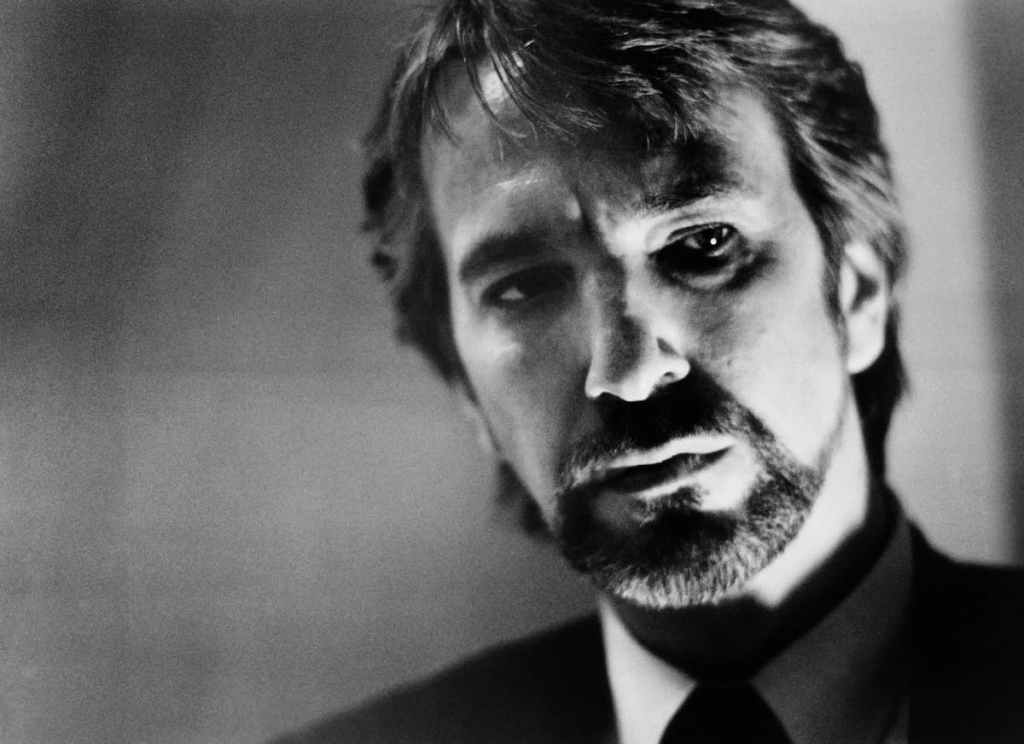
Alan Rickman
Severus Snape in the Harry Potter series, the scene-stealing Sheriff of Nottingham in Robin Hood, Prince of Thieves, the heartbreakingly philandering husband in Love Actually – the great Alan Rickman certainly played his share of bad seeds, charismatic cads and argumentative sods – always with panache and charm. Perhaps my favourite of all of these was clever-clogs Teutonic heist mastermind Hans Gruber in Die Hard, delivering the memorable line, “I’m not an ordinary thief. I’m an exceptional thief.”

Kevin Spacey
There’s something about the contours of his face, his body language, the cruel turn of his mouth that one can easily imagine that Kevin Spacey’s talent for tapping into a wellspring of malevolence is effortless. Verbal Klint from The Usual Suspects, the unnamed imaginative serial killer in Seven, or House of Card’s manipulative Frank Underwood – you suspect it might not all be acting.

Christopher Walken
It’s said that when Christopher Walken receives a script, the first thing he does is to remove and recalibrate the punctuation, which gives his delivery a self-styled, discordant, somewhat off-putting rhythm. This adds an extra layer to the large assortment of ghouls, gangsters, creeps and psychos that have made up the vast majority of Walken’s output. It’s true that over a long career (which includes an Academy Award win for Best Supporting Actor), Walken has played quite an eclectic array of roles, including some that are warm and sympathetic, such as the proud dads in Blast from the Past or Catch Me if You Can. He really seems to relish depicting villains, however – The Prophecy’s Arch Angel Gabriel, Things to Do in Denver When Your Dead’s Man with a Plan, Homeboy’s nightclub singer/ne’er-do-well Wesley Pendergass, or The King of New York’s Public Enemy No.1, Frank White. Walken’s nonpareil quiff lends each role an added dimension. It almost deserves its own credit.

Christopher Waltz
Quentin Tarrantino had screen tested a bunch of Teutonic types for the lead villain role in Inglorious Basterds before Christopher Waltz, a native Austrian best known at that point for his work in children’s television, tossed his hat in the ring to play the excessively loquacious and sadistic Nazi colonel Hans Landa. Herr Waltz seemed to relish the opportunity to play a man of such obvious ill intent. You might say the same for his turn as Ernst Stavro Blofeld in Spectre and No Time to Die, as chief nemesis Chudnofsky in The Green Hornet, or as Matt Damon’s party-loving upstairs neighbour Dusan in Downsizing. This man was born to play bad guys, and is really good at it.

James Woods
With some actors, there is an almost phrenological relationship between their physical appearance and their capacity to convincingly play conventionally nice characters. Basil Rathdowne’s slender lupine features made him perfect not only for playing that renowned sleuth Sherlock Holmes but also a series of pantomime villains in enjoyable medieval-themed Hollywood fare such as The Court Jester.

An enormous noggin, prematurely grey hair and weirdly coruscating blue eyes lend serious cred to the convincing villains played by Neal McDonough. Exhibit A might be the sadistic, pill-popping mob operative in Justified.

Add James Woods to that list. Whether it’s in the series of cartoon villains opposite Sylvester Stallone in the 80s or his turn in Ray Donovan, it’s not so hard to believe Mr Woods is capable of dark acts. Based on some of his social media posts, Woods is something of a far-right wing nutjob. Also, he famously has no cheeks.


Marshalling resources

Musician Marshall Allen has released his first solo album at a somewhat advanced age, proving that enjoyment and self-expression are not things from which we need retire.

In the days after a recent birthday, jazz saxophonist Marshall Allen finally set about starting a project many musicians aspire towards: a solo album. Here’s the thing, though. The birthday in question was Allen’s 100th.

On May 25 last year (2024), Allen celebrated his centenary. A few days later he entered the studio, laying down the first notes of what would become New Dawn, the only solo release to date of Allen’s illustrious career.

Although I’d not previously heard of Mr Allen, I was certainly familiar with the Sun Ra Arkestra, of which the sax player has been a member since 1958, and a co-spiritual leader since its founder, Sun Ra, passed away in 1993. The band has been playing, recording and touring consistently for the past 60 years or so.

New Dawn was released on February 14 (Valentine’s Day) earlier this year.

“We have created a record that showcases Marshall Allen’s musical versatility, including a surprising calmer side we may not have heard before,” says the record’s producer, Jan Lankisch.

Collaborating with Allen on the album was lifelong friend and fellow Arkestra member Knoel Scott, who helped select the seven original tracks from a considerable cache of unrecorded Allen compositions. Neneh Cherry provides vocals on the title track.

“The song reflects Allen’s ability to balance complexity with clarity, moving from serene introspection to explosive musical statements,” writes Mike Flynn in Jazzwise. “As the track unfolds, it becomes a perfect encapsulation of the album’s spirit: the melding of the past and the future, of legacy and discovery.”

In recording his first solo album at a well-rounded age, it’s something of a moot point whether Allen has left it too late in terms of playing ability. Would a better album have been produced at age 75, 85 or 95? As author Tom Vanderbilt says of his own imperfectly executed efforts at trying new ventures: “The important thing was the doing, rather than the not-having done.”

In a landmark study some years ago, it was discovered that Okinawans are among the world’s most long-lived races, a fact attributed to their healthy diets, unhurried pace of life, social connectedness, and sense of purpose. Worth noting is that the traditional language of the island has no word for “retirement”. Traditionally, Okinawans never step away from farming their small plots, or retire from martial arts practice. Along with a couple of other remote locales, Okinawa is (or was at the time) credited with having a remarkable number of centenarians living productive lives into their 101st years.

Like the Okinawans with whom he shares longevity, Allen doesn’t seem to be contemplating hanging up his saxophone.

When he recorded his final album New World Order, Curtis Mayfield had already issued some highly influential, infectious and downright groovy records and tunes, including the much imitated “Superfly” and “I’m You’re Pusher Man”. Father to nine children, Mayfield had lived a full life, travelled widely, and mastered his craft.

But there was more to say. Profoundly injured while performing his final concert when a bank of lights fell on him, Mayfield was left a quadriplegic. Still, he had a positive message he wanted to send to the world, and this is the prevailing theme of the final long player, released in 1996.

“Never forget,” Mayfield sings on the album, “this life we live is oh so beautiful.”

Paralysed from the neck down, Mayfield didn’t have the lung capacity to sing entire songs – or even verses – at the time of recording. Rather, he developed a technique whereby he would lie on the floor of his home recording studio and sing a line or two at a time, take a break, and move on to the next line, and thus create an entire album.

“How many 54-year-old quadriplegics are putting albums out? You just have to deal with what you got, try to sustain yourself as best you can, and look to the things that you can do,” he said in an interview at the time.

It’s an amazingly positive sentiment.

In “Back to Living Again” Mayfield sings, “Whenever life pulls you down, you just get back up and hold your ground. Let’s get back to living again. Right on.”

In a rare treat, Aretha Franklin sings backing vocals on the track.

Some artists decide at a certain age that they have done enough, that their output is complete. Any additional works to their canon would only tarnish or diminish a reputation built up over a lifetime of conscious, considered dedication.

Bill Withers effectively walked away from his music career in 1985 at the age of 47, having fallen out of love with the industry. Contractual and creative imbroglios blighted Withers’ career, perhaps somewhat incongruously given the sunny and optimistic nature of many of his musical offerings such as “Lovely Day”. Withers, however, had no regrets.

Others never stop. In the tradition of old bluesmen, the octogenarian Rolling Stones keep producing new records, their most recent (Hackney Diamonds) in 2023. Some of the surviving members have issued solo records too. Keith Richards’ Talk is Cheap is widely considered to contain some of his best songwriting work. It is very Stonesy indeed, boasting some killer riffs and Keef’s surprisingly effective gravelly voice.

Willie Nelson at 91 and Bob Dylan at 83 just keep on making stuff. In fact, Nelson’s 77th solo studio album, Oh What a Beautiful World, was released this week on April 25. I can’t speak to the quality of Nelson’s offering. But I can say that as a long-time fan of his work and owner of several of his albums, not everything hits the high mark of albums such as, say, Teatro, or songs such as “Crazy” or “You Were Always on My Mind”. And there are those who think the slick releases in the latter half of Nelson’s career don’t match his early tunes for rough-hewed authenticity.

The requirement to settle a tax bill with the US Internal Revenue Service doubtless also impacted Nelson’s busy recording schedule.

For their part, Nelson, Dylan, the Stones and Allen seem unconcerned about what critics, fans and others may think. All have adhered to the formula that Cambridge Professor of Positive Psychology Nick Baylis says is common among successful artists, which is what he’s termed “tenacious productivity”. Baylis says a focus on regular output from artists invariably results in better-quality products because the process inevitably leads to improvement at one’s chosen craft – to more experimentation, honing of skills and technique, and growth in understanding.

I’m reasonably certain that the legendary recording artists discussed here have not heard of nor read The French Art of Not Trying Too Hard by Ollivier Pourriol, although they happen to ably demonstrate some of its central precepts. (Fact: It is not a self-help book for those wishing to sing like Serge Gainsbourg.)

Despite Pourriol’s stated belief that some goals can be achieved only by “sincerely abandoning any attempt to attain them”, this was not my main takeaway from the book, which is best read as a guide to getting out of your own way.

The conclusion offers some practical advice we can all follow. First, renounce perfectionism. Abolish the distance between intention and action. Finally, understand that the key to action is getting down to it.

As Marshall Allen says, a new dawn is waiting for you.

Chill factor

Digital radio station SBS Chill offers a soothing balm for your ears, psyche and soul.

Sometimes when listening to digital radio station SBS Chill, you enter a fugue state of sonic bliss. It’s like taking an aural bath, as keyboards, beats and bass combine into a perfect mellow synthesis.

There is no past during such an experience, no anxiety-producing future. Only the mellifluously relaxing present exists. It’s akin to a brief mental excursion to a bucolic idyll, a foot rub for the harried mind. A day spa for one’s ears.

As the name suggests, SBS Chill, available in Australia on digital radio, online and on digital TV, is designed to relax its listeners.

“Chill out with an eclectic mix of downtempo, electronic, ambient and low-fi tunes from around the world,” says the channel’s promo blurb. “Music for working, studying and relaxing.”

It is, of course, background music. And that’s perhaps a point worth making. Were you to attend a live concert of regularly played SBS Chill artists, it might be advisable to bring along something to read or to doodle on, or your work laptop. It’s possible to do other things while SBS Chill hums and soothes.

As a DJ-less station, mellow music emanates from SBS continuously, 24/7. Each day is divided into different blocks. Because I have started writing this piece early in the day, it’s time for Morning Chill, which will segue into Afternoon Chill, followed by Unwind Chill and Wind Down Chill, which slides seamlessly into Night Chill, Overnight Chill, Gentle Rise, Mindfulness Chill and Breakfast Chill, wherein the virtuous circle continues.

Apart from perhaps a slightly more propulsive feel to Morning Chill, I haven’t detected much difference in the music played in the other time blocks that I’ve heard. Mind you, I haven’t yet tried to immerse myself in a continuous 24-hour loop.

Now playing is “Focus” by Thomas Lerner, which sounds like the poignant accompaniment to a montage sequence of a science fiction film set in the near future. It shifts nicely into “Sakura” by Living Room – low-fi beats over layers of synth strings.

Add “Kindred Spirit” by Sizzlebird and “Un Jour Comme Un Autre” by Degiheugi, which has some muted brass folded in, to the morning list.

Earlier in the session we were privy to “Sweet Tides” by Thievery Corporation, “It’s Good to Hear Your Voice” by dj poolboi (note the lowercase, with unconventional treatment of capitalisation something of a convention among low-fi ensembles), and “Frozen” (Extended Mix) by Nivlem. I’ve already forgotten what these tunes sounded like. They have all melded into one continuous, amorphous sonic soup.

At some point in my SBS Chill listening, I began to look up artists and songs. You can listen and not notice an hour or two has passed, but occasionally a tune will stick out.

Now, where were we … while my mood has been sonically moderated and the coffee percolating, a bunch of tunes have filled the space. “The State We’re In” by the Chemical Brothers is one of those. Another four recent tracks have been by artists or bands with one-words names: Empea, Duga, Sayana and Yasuma. It fits the vibe.

My research leads me to believe that the Golden Age of downtempo tunes was the late 1990s/early 2000s, with seminal tracks produced mainly by European DJs and producers such as Air, St Germain, Nightmares on Wax (a somewhat incongruous sobriquet for a remarkably mellow artist), the aforementioned Thievery Corporation, DJ Max, Bonobo, Lemonjelly and Tycho, whose tunes are all different from one another, but all sound like the soundtrack from a surfing documentary.

These are your legendary chill artists – those purveyors of tunes so soft and soothing they surely create a mental state of relaxation inspiring either astonishing productivity, or, conversely, one that requires no other sustenance apart from continuous mellow music.

I have purchased several albums from artists discovered on SBS Chill. Those mentioned here, including all four from St Germain, which despite the name suggesting a collective is in fact a solo artist, a reclusive French DJ and producer who seems to have gone into semi-retirement.

“Happy Hour at the Gene Pool” by Evolve is described by one listener as “a delightful blend of lounge pop, subtle beats, found sound, and mellow jazz influences” and another as “a mingling mélange of smooth grooves and chilled tracks from beginning to end.” It’s a good one to play in the car.

In fact, you encounter a lot of found sounds on SBS Chill – snatches of dialogue from old and obscure films, news reels, documentaries and interviews.

Sometimes too, you might hear a local artist, which is how I discovered self-styled Melbourne musicians Surprise Chef, Sinj Clarke and Mildlife.

One should not confuse or miscategorise the music featured on SBS Chill with muzak or the “middle of the road” or “adult contemporary” categories.  Although some tunes harken back to an earlier calmer time, the music on SBS is not so easily filed. It crosses aural boundaries. Most might accurately be described as electronic soundscapes, but other tunes are more traditional analogue fare. I recently heard “Summer Nights” by Lonnie Liston Smith & the Cosmic Echoes, from 1975.

Perhaps there is only a limited audience for the kind of low-fi downbeat ambient music broadcast by SBS Chill. A few years ago, private station Buddha explored similar sonic territory, but eventually ceased operation. Though the blocks of advertising it inserted were obviously necessary for the running of the station, they messed with the music flow. There’s nothing chill about the hard call to action of an advertisement.

“Playlist” is a nicer and more accurate word than “algorithm” for what we hear on SBS Chill, since I believe the list is curated by human expertise rather than bought into existence by AI. And it evolves.

For instance, I can’t recall the last time I heard “Sweet Fantastic” by troubled erstwhile Stone Roses frontman Ian Brown. And Hungarian musician Yonderboi’s instrumental version of the Doors’ “Riders on the Storm” could come around a bit more often, if I’m honest.

Mind you, it’s my own fault, I’m not completely loyal to SBS Chill. I listen to other radio stations and to albums too. Silence is also pleasing, on occasions (And truth be told, you might go a little loco listening exclusively to chill music. Sometimes I need listening material that has some soul or bite, some grit, groove and narrative rather than simply a mellow mood.)

There are few regular events on the station’s calendar. On Friday evening there’s a slot for soundtracks. And annually on New Year’s Day SBS Chill hosts the Chillest 100. That particular day makes a kind of sense, since downtempo, low-fi and trip-hop have an association as “recovery” music. They are tunes to have trilling away while you replenish energy expended at a club, bar or dance party the night before.

And yet the very idea of competition among chill tunes seems a little distasteful, in the manner of competitive yoga or rock climbing.

Does it matter which tune was the most popular among listeners last year? Not really, and the 100 tunes or 100 others could have been played in any order and still been credible.

Many of the usual suspects featured in last year’s list: Moby, Massive Attack, Morcheeba, Rufus Du Sol, Groove Armada and Portishead were all there. Alongside these are plenty of artists whose names I don’t recognise, and only a few whose monikers accurately reflect the soft and plaintive soundscapes most of these groups produce, enshrouding listeners in a pleasant sonic cocoon.

“Slip into something more Comfortable” by Kinobe and “Soothed by Summer” by Liminal Drifter are a couple that do, and two that receive a regular airing on SBS Chill.

The winner of the coveted No.1 slot in the 2024 lists was – soft percussion drumroll please (bongo perhaps) – “La Femme d’argent” by groundbreaking French duo Air, who toured Australia recently, (and are not to be confused with Airstream, who came in at #36 with “Indigo” (Daydream mix).

At the conclusion of the SBS Chill 100, regular programming continued. I had it on in the background.

The absence of Maris

Some TV programs have characters that aren’t played by actors – or anyone, really.

In the world of Frasier, a spinoff from storied US sitcom Cheers, the eponymous character’s sister-in-law Maris is the butt of many jokes from the show’s main characters, radio psychotherapist Dr Frasier Crane (Kelsey Grammar) and his equally snobby and uptight brother Niles (David Hyde Pearce).

Let’s face it: Niles might just be one of the more exacting, neurotic, and pretentious characters to have graced the small screen.

We can glean this from Niles’ tastes (opera, fine wine, Italian tailoring), and also his predilections, for instance how he orders his steak.

“Not so lean it lacks flavour,” he insists, “but not so fat that it leaves dripping on the plate … not true pink, but not a mauve either, bearing in the mind the slightest error either way and it’s ruined.”

We also learn a considerable amount about Niles from Maris and the manner in which the show’s characters observe and comment on her (despite, you know, her perpetual absence). Niles may be somewhat stuffy and difficult; Maris is impossibly insufferable.

In fact, Maris we are told, is “like the sun, but without the warmth”.

As domineering and demanding as she is, Maris also happens to be completely unseen – always. She is in fact what’s known in the business as an “unseen character”. Not only does the audience never see her nor hear her voice, no actor portrays Maris on the show.

The audience is in on the gag, of course. The absence of Maris is usually explained away because she’s resting in another room, recovering from an unusual malady, or otherwise preoccupied.

So why not have an actress playing the part? Evidently that was the original intention of the program’s showrunners. As time went on, however, and descriptions of Maris and her behaviour became increasingly ridiculous, not only did the part become harder to cast, it was more humorous not to.

“We felt it was better if she was left unseen,” says program co-creator Peter Casey. “It was much funnier adding new and outrageous descriptions.”

Perhaps in this instance it’s a case of the character viewers have constructed in their imaginations being far more memorable than one that might actually have been depicted. What the mind creates is more vivid than what a flesh-and-blood thespian could likely portray.

Consider the classic creature feature Jaws, which is extremely scary, almost unbearably so, until you eventually see the rubber animatronic shark created by the film’s special effects team, which dubbed the model “Bruce”, and which is about as scary as that name might suggest.

Unseen characters existed well before the Seattle-set Frasier. In the aforementioned Cheers, in fact, we often hear about Vera, long-suffering wife of corpulent bar denizen Norm Peterson (George Wendt), who is usually depicted dodging his wife’s phone calls.

But we never actually see Vera (well, there is one episode where an actress playing Vera appears, but her face is completely obscured, keeping the joke alive).

Deceptively perspicacious LA police detective Columbo (Peter Falk) caught perpetrators off guard by asking “just one more question” as he departed from an interview.

The trench-coat-attired sleuth regularly refers to “Mrs Columbo”, a supportive partner who features in the detective’s anecdotes.

From early episodes we are informed the lieutenant’s spouse provides him with a pencil every day, which he invariably manages to lose. So, we learn that Mrs Columbo (in the original Columbo we never learn her first name), considers her husband forgetful, and would prefer that he smoke a pipe rather than the cigars he favours. She’s also sceptical about his police skills.

Could our lead character have been making up these stories (and the wife who tells them) as part of a strategy to lull felons into a false sense of security? The stories, definitely, but the way in which the show unfolds would suggest we are meant to think Columbo’s spouse is real but simply hidden from view.

In Minder, dodgy and scheming second-hand car dealer Arthur Daley acts in a less-than-scrupulous manner, bending laws to suit his needs. But there is one authority he will not mess with, and that is his spouse, who he less-than-lovingly refers to as “’er Indoors”.

It’s a sign of how deeply the show resonated that ’er Indoors was officially entered into the Oxford English Dictionary of Modern Slang, where it is defined as “one’s wife or girlfriend, a domineering woman.”

Fond of malapropisms such as, “the world’s my lobster”, Arthur maintained that ‘er Indoors was the bane of his (somewhat disreputable) existence.

In Magnum PI, the titular character, Thomas Magnum (Tom Selleck), has the use of a guest house and Ferrari courtesy of the generous and enigmatic novelist Robin Masters. The luxury digs are part of an estate known as Robin’s Nest.

Mr Masters might be very elusive and not actually seen, but in early episodes audiences could clearly hear conversations estate manager Higgins (John Hillerman) was having with him over the phone and intercom. The voice heard in those conversations, which take place over half a dozen or so episodes, was none other than Hollywood titan Orson Welles, who in his later years did plenty of voice work, including for the Transformers franchise.

Unfortunately that means Magnum PI is more of a footnote than entry in this story.

Eventually the Frasier writers orchestrated a divorce for Niles and Maris, paving the way for the former to pursue his infatuation with his father Martin’s (John Mahoney) live-in carer, Daphne Moon (Jane Leeves).

And what of Maris? Well, she went from unseen to completely absent – from, ubiquitous and dominant (albeit invisible) to barely mentioned, and then forgotten. Fortunately, no actors lost their job in the process.