Some actors are simply more convincing when depicting villains rather than heroes. Wrong, not right. Bad rather than good.
When Tchecky Karyo passed away last year, the world was suddenly absent a distinguished and accomplished thespian capable of conveying nuance and emotion. We also lost a villain par excellence. In a long career, some of the notable acting high notes for Mr Karyo were depicting bad guys, criminals and jerks – the mysterious spy boss in La Femme Nikita for one, who delights in keeping the eponymous character, a reformed criminal turned government assassin, on tenterhooks. She never knows when a covert assignment might be sprung on her. Then there was the cruel pimp in Kiss of the Dragon who cruelly noted, “All my Barbies are out on the street.”
Those actors who specialise in playing dubious, threatening or ominous characters may seem typecast, but this is the downside of having a specialty. And although playing villains may pay the bills, there is often considerably more to their actorly toolbox.
Ben Mendlesohn has found a niche as cruel and vicious sadists such as Rogue One’s Director Olson Krennic. Yet Mendo is a screen veteran, more than capable of subtly portraying a panoply of types, as evidenced by his evocation of Christian Dior in the recent series The New Look. Yet having made his name internationally in Animal Kingdom, Mendlesohn is no doubt on the short list when seething menace is called for.
A-listers such as, say, George Clooney, Tom Cruise, Emily Blunt or Anne Hathaway are usually depicted on the side of good, proper, worthy and right. It’s hard to imagine otherwise. Playing a character with ill intentions could well damage their personal brand. Very occasionally casting a name from this list as a villain pays off for all concerned.
Consider the decision to cast classic nice guy and upright moral citizen Henry Fonda as the black-clad villain in Once Upon a Time in the West – a masterstroke from director Sergio Leone.
There is another group of actors who have the kudos and the versatility to play a range of characters and types and not be shunned by audiences or directors as a result. Mads Mikkelson comes to mind here, or Meryl Streep. Both take on unsympathetic characters with gusto and without fear. They simply inhabit parts, and have a way of convincing you of their character’s truth. Robert De Niro has earned nine Academy Award nominations playing an assortment of types. The prolific Oscar Isaac is in this category too. With Michael-Caine-like ubiquity, Isaac has made many movies better, but none more so than when playing difficult individuals in small but important roles in The Bourne Legacy and Drive.
Kudos too to Matt Damon for occasionally taking a risk, such as playing the craven and duplicitous Dr Mann in Interstellar, the creepy title character in The Talented Mr Ripley or a corrupt cop on the take, Colin Sullivan, in The Departed.
There also exists a list of actors who rise to the occasion – who become the best version of their actorly selves when a nefarious or black-hearted individual is required. Here is a selection.
Cate Blanchett
Prodigiously talented, Blanchett has earned more Academy Award nominations than any other Australian in film: blockbusters, sweeping historical epics, arthouse fare, you name it, and Blanchett has done it and usually been pretty amazing. Among those performances was as Tár’s title character, Lidia Tár (a renowned but manipulative and heartless orchestral conductor). She’s also played a snarling KGB agent, Irina Spalko, in Indiana Jones and the Kingdom of the Crystal Skull (about which the less said the better) and dentally obsessed CIA heavyweight Marissa Wiegler in Hanna. Villains all. She’s suitably despicable in these roles. Yet even as sympathetic characters such as Galadrial in The Lord of The Rings or Lou Miller in Ocean’s 8, she’s just that bit annoying.
Glenn Close
Screen veteran Glenn Close has played roles that are all sweetness and light, such as Roy Hobbs’ (Robert Redford) patient true love Iris in The Natural. Yet she’s considerably more memorable as out-and-out villains such as Cruella De Ville in 1001 Dalmatians, the original bunny boiler, Alex Forrest, in Fatal Attraction or as the scheming Marquise de Merteuil in Dangerous Liaisons.
Walton Goggins
Neo Nazi, arsonist, drug runner, pimp, thief, sometime-minister of the Lord and full-time ne’er-do-well – that’s Justified’s Boyd Crowder, the black hat to US Marshall Raylan Givens’ (Timothy Olyphant) white. Boyd was originally slated to be killed off early in the series, but proved so popular with test audiences that he was kept on for all six seasons of the show’s run. So adept at playing charismatic and verbose sociopaths is Goggins that decent, upright characters can never quite seem credible.
Hugh Grant
As a young man finding his way in the celluloid world, Hugh Grant made his name playing fresh-faced charmingly nervous floppy-haired lotharios. Age has gifted his face character such that eventually he became far more appealing playing individuals with an edge, such as About a Boy’s Will, The Gentlemen’s shameless mockney journalist/blackmailer Fletcher and even an obstreperous Oompa Loompa in Wonka.
Nicole Kidman
She can kind of do it all, can our Nicole, from BMX banditry to brain surgery (see Days of Thunder), and does not disappoint playing femme fatales and other assorted villains, either, whether that’s manipulating Matt Dillon (no relation) in To Die For, pursuing the eponymous bear for her taxidermy collection in Paddington or as the ruthless Mrs Coulter in The Golden Compass.
John Malkovich
As brainiac villain Cyrus “the Virus” Grissom in Con Air, as preening seducer Valmont in Dangerous Liaisons, as mannered Teddy KGB in Rounders or as the out-there Mitch Leary in In the Line of Fire, Mr Malkovich certainly has shown us the goods as bad guys – in turns calculating, psychotic, menacing, and perhaps what’s most important, eminently convincing.
Gary Oldman
Mr Oldman can do unhinged apoplexy with aplomb. He can go right off, he can, with some considerable verve. As bent cop Norman “Stan” Stansfield in Leon the Professional he was “terrifyingly erratic”, improvising many scenes. Who could forget his bellowing of the word, “EV-ERY-ONE!!” at a pivotal moment? When Luc Besson needed a monstrous soul capable of selling out Earth to something even more monstrous in The Fifth Element, he called upon Oldman to play Jean-Baptiste Emanuel Zorg, “the galaxy’s cruelest financier”, who is as wacky as he is nasty. Dr Zachary Smith from Lost in Space and Dracula are other prominent mentions in Oldman’s classic villain CV.
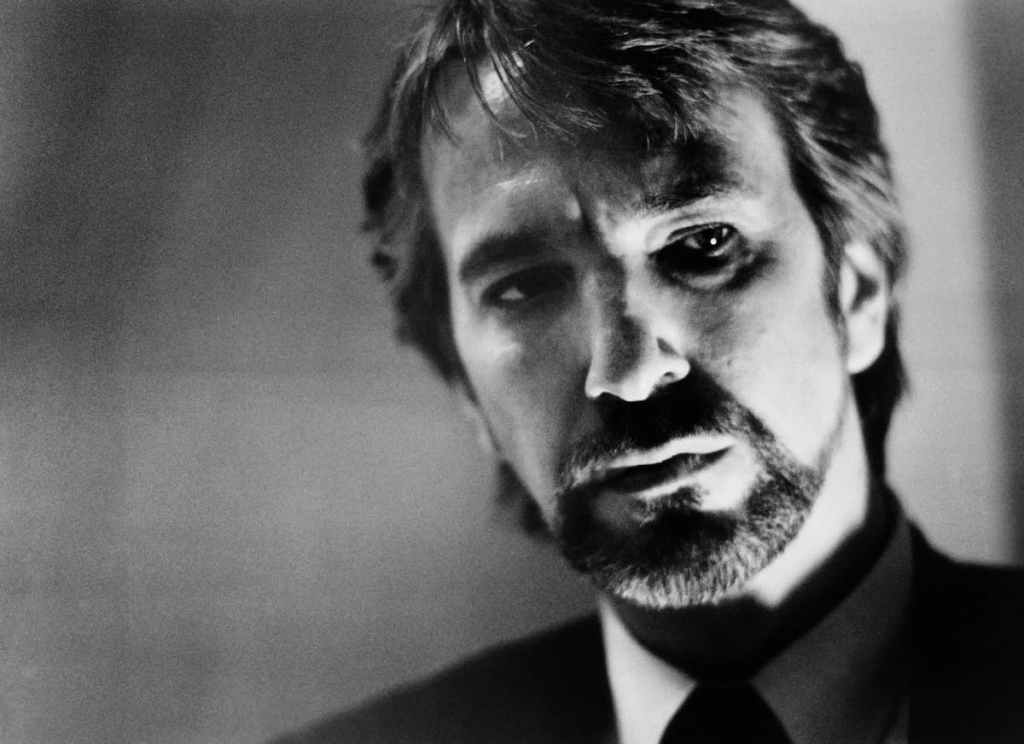
Alan Rickman
Severus Snape in the Harry Potter series, the scene-stealing Sheriff of Nottingham in Robin Hood, Prince of Thieves, the heartbreakingly philandering husband in Love Actually – the great Alan Rickman certainly played his share of bad seeds, charismatic cads and argumentative sods – always with panache and charm. Perhaps my favourite of all of these was clever-clogs Teutonic heist mastermind Hans Gruber in Die Hard, delivering the memorable line, “I’m not an ordinary thief. I’m an exceptional thief.”
Kevin Spacey
There’s something about the contours of his face, his body language, the cruel turn of his mouth that one can easily imagine that Kevin Spacey’s talent for tapping into a wellspring of malevolence is effortless. Verbal Klint from The Usual Suspects, the unnamed imaginative serial killer in Seven, or House of Card’s manipulative Frank Underwood – you suspect it might not all be acting.
Christopher Walken
It’s said that when Christopher Walken receives a script, the first thing he does is to remove and recalibrate the punctuation, which gives his delivery a self-styled, discordant, somewhat off-putting rhythm. This adds an extra layer to the large assortment of ghouls, gangsters, creeps and psychos that have made up the vast majority of Walken’s output. It’s true that over a long career (which includes an Academy Award win for Best Supporting Actor), Walken has played quite an eclectic array of roles, including some that are warm and sympathetic, such as the proud dads in Blast from the Past or Catch Me if You Can. He really seems to relish depicting villains, however – The Prophecy’s Arch Angel Gabriel, Things to Do in Denver When Your Dead’s Man with a Plan, Homeboy’s nightclub singer/ne’er-do-well Wesley Pendergass, or The King of New York’s Public Enemy No.1, Frank White. Walken’s nonpareil quiff lends each role an added dimension. It almost deserves its own credit.
Christopher Waltz
Quentin Tarrantino had screen tested a bunch of Teutonic types for the lead villain role in Inglorious Basterds before Christopher Waltz, a native Austrian best known at that point for his work in children’s television, tossed his hat in the ring to play the excessively loquacious and sadistic Nazi colonel Hans Landa. Herr Waltz seemed to relish the opportunity to play a man of such obvious ill intent. You might say the same for his turn as Ernst Stavro Blofeld in Spectre and No Time to Die, as chief nemesis Chudnofsky in The Green Hornet, or as Matt Damon’s party-loving upstairs neighbour Dusan in Downsizing. This man was born to play bad guys, and is really good at it.
James Woods
With some actors, there is an almost phrenological relationship between their physical appearance and their capacity to convincingly play conventionally nice characters. Basil Rathdowne’s slender lupine features made him perfect not only for playing that renowned sleuth Sherlock Holmes but also a series of pantomime villains in enjoyable medieval-themed Hollywood fare such as The Court Jester.
An enormous noggin, prematurely grey hair and weirdly coruscating blue eyes lend serious cred to the convincing villains played by Neal McDonough. Exhibit A might be the sadistic, pill-popping mob operative in Justified.
Add James Woods to that list. Whether it’s in the series of cartoon villains opposite Sylvester Stallone in the 80s or his turn in Ray Donovan, it’s not so hard to believe Mr Woods is capable of dark acts. Based on some of his social media posts, Woods is something of a far-right wing nutjob. Also, he famously has no cheeks.
 “Killing’s a helluva thing,” says the eponymous character (Clint Eastwood) in The Outlaw Josey Wales. “You take away everything a man has, and everything he’s gonna have.”
