Presented here are the films I most enjoyed viewing for the first time in 2025. The criterion was that I had not seen them before in their entirety. I’m quite certain that I had seen clips or scenes of some of the classics below, but just as sure I had not seen them from start to closing curtain. Every year my friend Derek and I go through the exercise of rating our favourite film-watching experiences. This time we had only one movie in common: Black Bag. I found that there were fewer newer films than ever drawing my attention, and so my list is half older texts and half new releases. D’s list is more on point in terms of capturing the films of the moment, and as usual, his list is beautifully written, making me think twice about at least one film: Sinners. I saw it as a derivative mash-up of From Dusk till Dawn, Crossroads and Blade, with some quirky dance numbers tossed in for good measure. But maybe there is more to it after all. The Academy voters certainly so, nominating it for a record 16 categories in the 2026 gongs. I should say, due to some timing issues, this list is slightly different from the one I put forward to the Senses of Cinema World Poll. Next year I expect the lists to be more aligned. Keep reading below for Derek’s list.
All the President’s Men (Alan J Pakula, 1976) The year of 1976 was a pretty decent one for movies, with All the President’s Men up against Taxi Driver and Network in the Best Film Academy Award. Somehow pugilistic crowd favourite Rocky prevailed, proving – as if anyone doubted it – that Hollywood’s most celebrated gongs offer no accurate index of quality. This is a cracker of a film, and deftly crafted. Robert Redford and Dustin Hoffman play Woodward and Bernstein, a couple of young hungry reporters on The Washington Post who relied on persistence and some well-placed sources to bring undone a federal government caught bugging the Watergate Hotel to eavesdrop on the Democratic Convention. It’s a film that is as relevant today as it was 50 years ago, and perhaps more so.
Black Bag (Steven Soderbergh, 2025) This elegant and clever exploration or spy craft and the spooks who practise it sees Mr Soderbergh doing what he does best: films that are as intelligently composed as they are entertaining. Cate Blanchett and Michael Fassbender play a couple who work in British intelligence charged with identifying a traitor – who might just be one of them.
Casablanca (Michael Curtiz, 1942) Why did it take me so long to see this classic? It’s gripping and great fun, with some smart lines delivered with panache.
The Choral (Nicholas Hytner, 2025) As poignant as it is witty and charming, The Choral tells the story of a northern England community choir during the First World War. Ralph Fiennes plays a choirmaster, Dr Guthrie, who leads a daring production during a time of tumult and grief, the choir hollowed out by the regular departure of young men for the front. Quietly powerful.
Hamnet (Chloé Zhaoe, 2025) Yes, it’s manipulative in the manner in which it pulls on heartstrings, but this adaptation of Maggie O’Farrell’s book about the Bard and perhaps the inspiration for his most famous play is also moving, masterfully acted and beautifully composed.
Holy Cow (Vingt Dieux, Louise Courvoisier, 2024) Set in a rural cheese-producing region of France, this drama tells the story of irresponsible 18-year-old Totone (Clément Faveau), who must grow up quickly when he is charged with looking after his little sister Claire (Luna Garret) and the struggling family farm. I saw this film with my Mum, who loved the cinema and passed away not long afterwards, so despite its imperfections will be remembered fondly.
Mission: Impossible – The Final Reckoning (Christopher McQuarrie, 2025) Having walked out two-thirds of the way through the penultimate film in this eight-part series, there was no guarantee I’d make it to the starting line for this, part eight. Yet a ticking bomb (of course), a (near) impossible task and propulsive action make this a compelling finale (I hope) for the series.
The Natural (Barry Levinson, 1984) So iconic that The Simpsons has riffed on it, Robert Redford’s ode to baseball and second chances is as enjoyable as it is hokey and unlikely. This was one of eight Redford vehicles I watched after the legendary actor passed away, one of the best of those I’d not seen in the past, yet not quite in the same league as a classic such as Butch Cassidy and the Sundance Kid.
Once Upon a Time in the West (Sergio Leone, 1968) The sweeping cinematography, the soaring Ennio Morricone score, the charismatic performances, especially from Henry Fonda playing against type, and Sergio Leone’s confidence at the helm all add up to one thing: an unforgettable epic.
On Her Majesty’s Secret Service (Peter R Hunt, 1969) Tight, moving and engaging. One could not ask for more from a James Bond tale.
Derek’s list
One Battle After Another A tense, paranoid thriller from director Paul Thomas Anderson. (Though it’s not paranoia if they really are out to get you!) Leonardo DiCaprio stars as a former member of a militant activist group, now the single parent of a teenage daughter, shlepping around in his dressing gown like Jeff Bridges in The Big Lebowski. The performances are excellent, there are some impressive set pieces, and the climactic chase scene is in instant classic.
Sinners It’s blues versus folk in a supernatural musical showdown! Sinners is Ryan Coogler’s riff on the legend of Robert Johnson, who supposedly sold his soul to the devil for mastery of the blues, and the spectacular scene at the centre of the movie showcases the mythical power of music across the ages. It’s also his twist on the vampire genre, with white appropriation of black culture cast as another form of bloodsucking.
Weapons The eerie opening of Weapons was among the most memorable of the year, showing school children running off into the night, arms almost playfully outstretched. The story behind their disappearance is told from multiple perspectives – their teacher, a parent, the last remaining student – as the mystery unfolds. There are echoes of fairy tales (like the Pied Piper or Hansel and Gretel) and of real-world violence (like school shootings), yet the eventual explanation is an unexpected new horror. Gripping.
Black Bag Detective fiction is said to be all about men trying to understand women. Here the male lead is asked to investigate his own wife. Michael Fassbender and Cate Blanchett play married intelligence agents and Steven Soderbergh’s approach is quite genteel. Certainly more George Smiley than James Bond. The sparring is intellectual, dinner party conversation takes the place of interrogation, and the drama is as much about marriage as espionage.
The Phoenician Scheme Wes Anderson movies almost feel like a genre of their own at this point, combining elements of quirky indies, family dramas and picaresque adventures into a colourful and distinctive trademark style. Benecio del Toro is the flawed father figure this time around, and the large ensemble of A-list cast members continues to expand. I never expected to see Tom Hanks and Bryan Cranston playing HORSE.
Superman After leaving Marvel to lead DC, director James Gunn reboots this rival cinematic universe with his take on the most iconic of all comic book superheroes. While DC was dark and serious under Zach Snyder, Gunn returns to the wholesome heart of the old Christopher Reeve movies – with their charm, optimism and warmth – and blends in the action, pace and humour of the better Marvel movies. Just good, light-hearted fun.
The Assessment A couple applies for permission to have a child in the near-future setting of this strange sci-fi thriller. A woman arrives to assess their suitability, staying in their home and behaving in increasingly unpredictable and unsettling ways. And as the tension ramps up, their relationship strains under the pressure. Thought-provoking and at times prickly and uncomfortable, particularly for new parents.
28 Years Later Danny Boyle and Alex Garland return to the series they started with a gritty, low-budget hit back in 2002. Decades on from the virus outbreak of the first film, Britain remains overrun with zombies and isolated from the rest of the Europe. When a family from an offshore island returns to the mainland to scavenge for supplies, it goes about as well as you would expect. Though there are some surprises and another sequel has already arrived …
Flow A little black cat is swept away by a flood in this animated survival story. There are no human characters and no dialogue. Just the cat and the other animals it encounters along the way, including a capybara, a dog, a lemur and a bird. Quite different from anything else I saw last year. We watched this at home but it looks amazing and would be great on the big screen.
Train Dreams This Netflix adaptation of Denis Johnson’s novella tells the tragic life story of Robert Grainier, a logger in mid 20th century America, who is haunted by the loss of his wife and child in a forest fire. The landscapes are beautiful, but the living is not easy. Slow, understated and quite melancholy.
Honourable mentions: Eephus, Bugonia, Universal Language, The Mastermind, Predator: Badlands.
There is something just that bit off about writing produced by AI, and one of the obvious giveaways of synthetic text is a particular turn of phrase.
In the dystopian future depicted in Blade Runner, the only way of truly identifying synthetic humans – the kind that are cooked up in a lab – is via psychological testing administered by an expert such as the titular bounty hunter, Deckard (who may himself be a replicant, but that’s another story). Replicants, who are all somewhat NQR, cannot fudge or finesse the test.
It might just take a jeweller to pick the cubic zirconium from the real thing. Ersatz stones lack the integrity of the genuine article, regardless of how much they shine. Yet for the untrained eye it’s hard to tell the real from the fake. Knock-off designer handbags, however, usually shout their counterfeit status from a distance. And crocodile tears from toddlers can easily be intuited by parents practised in detecting crying on demand.
Synthetic writing also has its tells, and I am not the first to name them: a samey, homogenous hyperbolic tone, overuse of emojis, listing items in threes, employing the Oxford comma, favouring “whilst”* rather than “while” and use of the em dash (rather than the aesthetically superior en dash).**
Another telltale sign that AI has been used to generate or sharpen prose is use of reflexive phrases structured along the lines of “it’s not just this, it’s that”.
“More than fabric, denim is a living material—a companion that skates, refines and adapts over time.”
“This isn’t just an Olympic race, it’s a whole masterclass in life … Sometimes the smartest move isn’t chasing the crowd, it’s trusting your own pace.”
“GoPro wasn’t just a camera company, it was a movement.”
“That upbringing didn’t just influence his shooting form—it shaped the way he saw the entire game.”
“Negotiation isn’t about being difficult. It’s about showing up prepared and knowing your value.”
“This is more than a watch—it’s a piece of horological history you can wear with confidence, wherever your journey takes you.”
“The CS311 isn’t nostalgia dressed up—it’s evolution done right.”
“Sports doesn’t just shape performance, it can slow down aging.”
“At Earthen Co, we believe time is not just measured—it is experienced.”
“Literacy isn’t just about reading words on a page, it’s about reading deeply.”
“I’ve been using the em dash since 2008, when I was an undergrad writing literary analyses and falling in love with the art of language. It’s not an algorithmic quirk—it’s a stylistic choice … And while we’re at it—let’s remember that AI isn’t the enemy. It’s a tool. It can enhance creativity, not erase it.”
“Stepping away mid-week feels like pressing pause on all the noise … it’s not just about the work or the grind, it’s about creating moments that shape the bigger picture.”
“Great educators do more than deliver lectures. They spark curiosity, champion creative risk taking, and shape futures.”
“In engineering, your signature is not just a date on a drawing. It’s a guarantee. A guarantee that you value integrity over speed …”
“Events like these remind us that innovation isn’t just about technology, it’s about people, collaboration and purpose.”
“In reviving Thomas Mason, Albini hasn’t just preserved history – they’ve created a living testament to textile excellence.”
“This isn’t just a form-filling exercise—this is how we know if TGBC is doing what we set out to do. It’s how we measure the collective outcome of our impact— yours, mine, the whole chapter’s … This isn’t a feedback form. You’re reflecting on the club—on us— and what we’ve built together. Every response counts, and we need everyone on board.”
“A bad game, a missed promotion, or a poorly written article isn’t just a failure of performance—it’s a failure of self.”
It could be that not all of these examples have been generated by AI, but that they simply look, sound and feel like it, akin to someone who has real hair that resembles a toupee. Perhaps it’s a case of a style of writing and a method of expression that has become popular right now. It has entered the idiom, in the same manner that “leaning into” something has become de rigueur to say. Our language is dynamic, after all. Words come and go, or the meaning subtly changes over time.
I have no truck with the way in which “verses” is used as a verb – i.e., “My team is versing yours in today’s game” – but I suspect that this expression will likely have some resonance due to its common use among younger generations.
So yes, it’s possible Claude AI or ChatGPT didn’t spit out all of the phrases above, but I suspect they probably did. Synthetic writing has a particular sheen and rhythm to its manufactured cadences. It’s almost as if the words have been bent to fit a template. I can’t think of a reason, for instance, why a survey of a men’s book club couldn’t “just” be a survey. I mean, what else is it realistically going to be? There is no overarching authority the text can apply to so that it might alter its status. It’s just a fu*cking survey.
Which underscores another problem I have with this way of expressing things. Why can’t a watch simply be a watch? By implying that a watch need be anything more than a wrist instrument for telling the time (rather than, say, a piece of history or a horological artefact) is egregious. For something simply to be itself and nothing beyond that doesn’t diminish its status.
You know, I believe literacy is simply about reading words on a page, and the em dash is more than likely an algorithmic quirk, especially the way it is used by AI. Denim is just a fabric, and that’s OK. That’s what it was designed to be. Your jeans aren’t going to be offended because you referred to them as a pair of daks rather than a “living material”. And I reckon Go Pro was simply a camera company. What else could it be for crying out loud?
I can understand the temptation to use AI for everyday writing tasks. It’s just so easy, after all. Put in a few prompts and reams of copy come tumbling out, like tickertape in a 1940s noir. Writing that might hitherto have been jumbled or confused can now have a two-pack-like surface applied to it and buffed. That text, however, is not yours; it doesn’t sound like you (unless you’re a B-grade copywriter), and it doesn’t really express what you were trying to say. How can it? If you use Co-Pilot to smooth over your emails or to provide them with an authorial voice not your own, there’s a very real risk that your message will be misconstrued. Your voice belongs to you, and is not something that you should yield to a third party, let alone a lower power.
AI is powerful, no doubt. It can save an astonishing amount of time analysing data. It can help improve your golf swing or convert a mountain of stats into a spreadsheet. It can write code, synthesise information into reports, or spit out that correspondence you’ve been sitting on all day, and sound as ornery as you genuinely are.
So where to from here? We’re already living in an era described by The Atlantic Journal scribe Charlie Warzel as “the golden age of AI slop***”. So, perhaps consider not contributing to the muck, not putting your own version of “it’s not just this, it’s that” out into the ether.
AI scrapes the internet to stay current. But what if the vast majority of the examples from which it is learning are AI-generated? A hall of mirrors eventuates, where the copy LLMs generate is a tapestry of what has already come before. Surely we are above that. Is it really so hard to turn what you are thinking into words on a page?
I could write that using AI for creative purposes isn’t just a sloppy way of working, it’s a betrayal of our higher selves. Yet I won’t express my thoughts quite like that, because – well, you know why.
*Acerbic writer Martin Amis wrote, “Never use ‘whilst.’ Anyone who uses ‘whilst’ is subliterate.”
**I’ve never liked the em dash. Never had much truck with it. The em dash – so-called because it shares dimensions with the base of the alphabet’s 13th letter – always strikes me as over-specced for the task at hand. It’s just a bit much. That said, I understand not every instance of its use indicates the dark handiwork of AI. Although it has greatly diminished in use in Australia over the past 30 years (the time I have spent as a professional writer, editor and sub-editor) it has never gone out of fashion in the US. It is part of the house style for Air Mail, the New York Times and The Atlantic Journal among other venerable publications. James Joyce and Emily Dickinson were said to be fans of the punctuation device, making it part of their respective style. Jon Hamm and Sofia Coppola have come to its defence. Yet I hadn’t seen an em dash used in corporate correspondence for years until a recent stint working for an organisation where the use of AI as a productivity tool was strongly encouraged, if not mandated. Now the em dash is downright ubiquitous, used by individuals who wouldn’t know an em dash from an en dash, hyphen or interrobang. I blame Claude AI, Chat GPT and those who feel compelled to use them.
***”Slop” is the Merriam-Webster Dictionary 2025 Word of the Year. The lexicon defines “slop” as “digital content of low quality that is produced usually in quantity by means of artificial intelligence.”
If you’ve been counting – and even if you haven’t – the 21st century has ticked over 25 years. In fact, if we’re marking the year 2000 as the first year of the new century and millennium, as per convention, this milestone was passed at the end of last year. Some literary-inclined publications have used the occasion to publish “best of” lists for the past quarter century. The books below represent my attempt at organising and ranking my favourite reads – fiction and non-fiction – published since 2000. It is not a list compiled after considerable rumination, late-night teeth gnashing or references to past notes. Rather, the first place I consulted was my bookshelf: which books published in recent times have been revisited – and enjoyed on re-read? Which had me admiring the craft on display, the storytelling? Which brought me pleasure? These were the criteria.
Empires of the Plains, by Lesley Adkins Providing insight into the origins of written language, Empires of the Plains is an extraordinary true story, excellently told, of a real-life Indiana Jones, one Henry Rawlinson, who used an amazing facility for ancient languages and a taste for adventure to make enormous strides during the 19th century in the understanding of cuneiform, a type of written language that predates hieroglyphics. The “plains” of the title are those that exist between the Tigris and Euphrates, the site of many cultures that rose and fell over the past 10,000 years. Rawlinson’s efforts were focused on a monument carved into rock vertiginously high on a cliffside at Behistun in western Iran. There, Darius the Great ordered a tribute to his conquests, carved in three ancient languages: Old Persian, Elamite and Babylonian. With grit, nous, bravery and determination, Rawlinson led a charge to decipher the text and shed light on a chapter of history little was known about. This is an edifying yet rollicking read.
Wolf Hall, by Hilary Mantell What an incredibly evocative wordsmith Hilary Mantel was. A two-time winner of the Booker Prize for Wolf Hall and Bring Up the Bodies, Mantel was perhaps unfairly denied a third bauble for the final book in the trilogy, The Mirror & the Light. Wolf Hall tells the story of the murderous Henry VIII, but with Henry’s major domo, Thomas Cromwell, front and centre. In the past Cromwell has typically been depicted as a villain, but here he is a family man, working behind the scenes to minimise the damage from Henry’s impulses, and to (of course) maximise the profit.
The Year of Reading Dangerously, by Andy Miller After graduating with a degree in literature from prestigious Cambridge University, aspiring writer Andy Miller finds his professional life on a limited, predictable trajectory of customer service in a high street bookstore, literary ambitions on permanent hold as a grinding daily commute exacts its toll. Deciding that something must be done, Miller sets out to reignite his love of words and books, by dedicating his quotidian train time to consuming the great tomes of the Western Canon that he claims at parties to have read, but never actually got around to. There hasn’t been a book this exciting about one man’s reading adventure since Peter Robb’s Midnight in Sicily.
The Havana Room, by Colin Harrison The plots and characters (apart from the city of New York) vary from tome to Harrison tome, but often it’s a case of rearranging the ingredients: a generous helping of shady/dislikeable characters trying to cut corners and get what’s theirs, a past that can’t be outrun, a soupcon of sex, a dollop of power, a central character dealing with challenges beyond his control – all told in Harrison’s high style and hung around a propulsive plot. After losing his high-paying job, luxury house and then his family, untethered Bill Wyeth finds himself drawn daily to a chi chi Manhattan steakhouse whose denizens seek a taste of forbidden pleasure in the exclusive eponymous space. But just what exactly is going on in the Havana Room?
Cultural Amnesia: Notes in the Margin of My Time, by Clive James Polymath, writer, critic, aphorist, cad, genial TV talk show host, fierce intellectual – Mr Clive James must surely be one of the sharpest minds to have emerged from the colonies. This is a book that James spent a professional lifetime preparing to write. It’s an A–Z of cultural, scientific and political figures prominent, as the subtitle suggests, in the margins of James’ version of the 20th century. He was keeping detailed notes. Some of these individuals are prominent, iconic even. Titans. Others would doubtless have been consigned to more obscure compendiums had they not been included here, or perhaps forgotten altogether. There are chapters dedicated to such towering souls as Albert Einstein, but others to names such as Zinka Milanov, an opera singer who was once said to have uttered, “Either you got the voice, or you don’t got the voice: and I got the voice”. A chapter might start as an exploration of a historical figure, but veer off in a different direction, settle certain points, reference a bunch of names or works with which I might only have been vaguely familiar, and then return to the original narrative strand and conclude in James’ satisfyingly heady style.
Strange Bodies, by Marcel Theroux You might recognise the surname of writer Marcel Theroux, the eldest son of renowned scribe Paul Theroux (Mosquito Coast), brother of documentary maker and podcaster Louis, and cousin of Hollywood actor and scriptwriter Justin (who has Tropic Thunder among his scriptwriting credits). Marcel’s oeuvre is the unsettling, clever and compelling literary novel. Yes, that is a thing. And perhaps it’s the best way of describing Strange Bodies, which is as unnerving as it is moving. The novel opens with a knock on a woman’s door by an odd-looking stranger claiming to be academic Nicholas Slopen, one of her old beaus, despite bearing no physical resemblance to him. A carefully concealed memory stick left behind turns out to be the story we have in our hands – and what a page-turner it is!
Heresy: Jesus Christ and the Other Sons of God, by Catherine Nixey As the progeny of a former nun and former monk, writer Catherine Nixey has some bona fides for writing about religion. In this, her second book, Nixey does a deep dive into the many alternative versions of Christianity that proliferated in the centuries following Jesus’ life and death. The Ophites, for example, believed that Christ had appeared on Earth in the form of a serpent. They therefore celebrated mass by encouraging a snake to crawl over the altar on which loaves had been placed, consecrating them in the process. Another sect dating from the first century AD believed that King Herod rather than Jesus was the Messiah for whom they had been waiting. There are, in fact, plenty of conflicting tales about Jesus to be found, and apparently more than one charismatic bearded young man performing miracles and collecting acolytes while roaming around the Middle East in the first century. Certainly, more than enough for Nixey to start asking questions and looking through files, synthesising the findings into this fascinating read.
Station Eleven, by Emily St. John Mandel How prescient and well timed was this take from Canadian scribe Emily St. John Mandel, which depicts a near future in which a potent virus wipes out vast swathes of humanity. In such challenging circumstances would we rise to the occasion by forming into cooperative communities to feed, clothe and defend ourselves, or would we descend, a la Cormac McCarthy’s The Road, to our base instincts?
Soon, by Andrew Santella In my small library there are some fantastic non-fiction and reference books published in the past 25 years that have become cherished resources or often-returned-to reads. The Field Guide to Typography by Peter Dawson is one I love flicking through even though I can’t help but think focusing on getting to know a handful of typefaces would probably serve me better that being exposed to them all. I was impressed by Impossible City: Paris in the Twenty-First Century by Simon Kuper. It is as informative as it is engaging. Another Gallic tome, The French Art of Not Trying Too Hard by Ollivier Pourriol, provided some nuggets (or petit four, perhaps) of wisdom. Morning by Allan Jenkins made we want to (one day) start setting my alarm earlier. But a book that spoke to me and my life-long proclivity for scheduling a better (i.e., later) time for tasks was Soon, an exploration of procrastination throughout history. Beautifully written by Andrew Santella, the book sets out to find out why the will to delay has been the signal habit of such luminaries as Leonardo Da Vinci, Charles Darwin and Frank Lloyd Wright, and what, if anything, can be done to overcome it.
A Gentleman in Moscow, by Amor Towles There is one remaining slot on the list of 10, which has allocated five each of fiction and non-fiction (my self-imposed rules for this compilation). It could easily have been taken by The Amazing Adventures of Kavalier & Clay by Michael Chabon, or The Shadow of the Wind by Carlos Ruiz Zafon. I also inhaled Creation Lake by Rachel Kushner and was thoroughly entranced by The Empusium by Olga Tokorczuk. The House of Silk by Anthony Horowitz was a most excellent addition to the Sherlock Holmes canon. The Wizard of the Kremlin by Giuliano Da Empoli, inspired by Vladimir Putin’s major domo Vladisav Surkov, was consumed in a few short sessions. Yet at a time when inspiration rather than darkness and grimness was called for, A Gentleman in Moscow answered this call. The novel tells the story of the charming and stoic Russian aristocrat Count Alexander Ilyich Rostov, who is deigned by the Bolshivik authorities to live out his days in Moscow’s Metropol Hotel, where he remains under house arrest for 30 years. Rather than succumbing to self-pity, he finds pleasure in reading and food – it is a luxury hotel in which he is ensconced, after all – and in cultivating friendships with staff and guests. His life becomes one of service. A former financier, Mr Towles has an authoritative but engaging writing style, and has our main character share many useful aphorisms, such as “Imagining what might happen if one’s circumstances were different was the only sure route to madness.” Perhaps it is time to read A Gentleman in Moscow again.
A good foreword – the pages at the front of a book, not the goal-scoring type (forward) – can tell you much about the story you are about to navigate, and enrich the reading experience, providing nuance and context. Or it may just make you think twice about continuing on with the tome in your hands.
There are two kinds of readers in the world. Those who read a book’s foreword (should it be available) and those who always eschew it. For the purposes of simplification, I’m referring to all varieties of the additional explanatory pages at the front of a book (fiction or non-) as a foreword, regardless of whether it is named an “introduction”, “preface”, “author’s note” or something else.
I’m in the former category, by the way: I always read a foreword when it’s available, or search out the afterword. Although my university study occurred at a time when theories such as semiotics and poststructuralism rose to prominence – when the author was declared “dead” – I enjoy finding out about the tidbits, factoids and contextualising information a foreword can provide.
Some forewords are excellent pieces of writing, independent of the book in which they appear. And this would seem to be even more the case when it is penned by a writer other than the book’s author – someone who was influenced by the book in question and whose experience with it was personal. Donna Tartt penned a fantastic foreword to True Grit, a small but powerful novella that impacted three generations of women in her family.
Indeed, there are forewords so well written that I sometimes wish I could simply keep reading it, were there more to take in. Forewords being what they are, however, they play a lower-priority role in the life of a book. And part of their beauty lies in their self-containment.
Even so, I’ve long wondered what it would be like to encounter a book made up entirely of these introductory, informative and complementary pieces of writing. In my mind Full Foreword (or maybe Foreword Ho is a better title – still thinking about that) might be a Borges-like reading experience, or perhaps something reminiscent of Italo Calvino’s postmodern exploration, If on a Winter’s Night a Traveller, a novel that can only allude to conclusions it will never reach, composed as it is of pieces of other books.
If the complicated rights and IP issues could be sorted for Full Foreword, I’m thinking you’d have to include the foreword to Lee Child’s Safe Enough, penned by the author himself. Safe Enough is a collection of Child’s short stories not featuring the literary creation with which the English expatriate is most closely associated: Jack Reacher.
Some of the stories are very tidily written and propulsive, others are entertaining, while some are simply competent. All are enjoyable. It’s at this point I should say I have not been a loyal reader of Reacher novels. So, what then attracted me to this book? Well, even if you’re not a Reacher aficionado, you must acknowledge that Lee Child has an extraordinary gift for storytelling. I’ve read one or two of the Reacher yarns and found them OK. Yet it was a Child short story published in Esquire a few years ago under erstwhile editor David Granger’s watch that made me look a little closer.
The foreword to Safe Enough contains some extraordinary facts. After teaching himself to read aged three and graduating to books without pictures a year later, Child’s love of books and reading led to him, he says, consuming about 10,000 long-form narrative works.
Much later, after it appeared his television producing career was drawing to a close, Child (whose real name is Andrew Grant) thought he had a reasonable chance of making it as a novelist. He had carefully crafted the first Reacher title and was halfway through the next when an opportunity was presented to write a short story.
In Child’s mind, the best short stories are like Fabergé eggs: “Small, intricate, perfectly formed items”. Lee’s short stories are more akin to very short novels, each with a beginning, middle and end. He delighted in punching out stories without having to plan carefully, or “parcel stuff out” – that is, “save” key plot points for the back end of a novel.
Child’s facility for getting down to business is admirable. The short stories in Safe Enough were written with abandon, usually in one sitting, and often in one take. This is not someone wrestling with confrontation of the blank page, and more power to him.
“Like I said,” Child writes, “It was fun.”
I never actually got around to reading Death in Venice by Thomas Mann, but I did read the foreword to a new translation by Michael Henry Hein, written by Hein himself, a highly esteemed translator capable of translating works in eight languages.
“All novels are translations, even in their original languages,” he writes, meaning that authors translate the raw material of ideas and inspiration and turn it into language.
There are some other pearls of wisdom in this edifying foreword.
“In its earliest form a novel is a cloud that hangs over a writer’s head.”
“A novel is an expression of unreasonable hopes.”
“We are creatures whose innate knowledge exceeds that which can be articulated.”
“Life is bigger than literature.”
Death in Venice is a novella of some 160 pages, so does not require a huge investment of time. It deals with an older chap, Gustav von Aschenbach, who takes a holiday to Venice to revive his enthusiasm for life. It ends with Gustav, cheeks rouged, face down in the sand, having not encountered the youth with whom he had become obsessed.
You could say that Hein’s foreword has done its job all too well, and after reading it, I no longer felt compelled to explore the novella it introduced.
It was in the foreword to A Tale of Two Cities that I read about Charles Dickens’ advice to fellow scribe Wilkie Collins. Boz advised Wilkie to make his audience “laugh, cry and wait”, which is about as good a description of the prolific Dickens’ modus operandi as one could hope for. Laugh? Who could suppress a titter after reading some of the dialogue of Oliver Twist’s Mr Gradgrind? I challenge you. Anyone who could read about the plight of Abel Magwich or Pip in Great Expectations and not become lachrymose must surely have a heart of stone. And “wait” … well, since Mr Dickens penned his novels in instalments, waiting was something to which his readers became most accustomed.
In the introduction to a new translation by Will Hobson of The Three Musketeers by French maestro Alexandre Dumas, you find out some things that help explain how Dumas was able to be so astonishingly prolific. And, mon Dieu, was he prolific. A month after serialisation of the 690-page The Three Musketeers wrapped up the tale (following six months of newspaper instalments), in August 1844 The Count of Monte Christo, also a doorstopper, began publication in a rival newspaper.
The sequel to The Three Musketeers, Twenty Years After, was released the following year. The third – and longest – of the D’Artagnan romances, The Viscount of Bragelonne, was released two years later.
In the same period Monsieur Dumas cranked out seven plays and 15 other novels!
“No wonder Dumas, who had always worked on several things at once but, even by his standards, was now in a golden period, was called the ‘inextinguishable volcano’ by a contemporary critic,” writes Hobson in the introduction to the new Vantage edition of the book.
How did Dumas do it? Well, he was quite open about using collaborators, most notably Auguste Maquet, who wrote drafts on instruction, created scenes and provided research.
Dumas, writes Hobson, “definitely signed his name to things he hadn’t written”. And sometimes his focus was obviously more attuned to production than punctuation.
“Dumas lets nothing get in the way of a good story, and spotting his historical inaccuracies, like his continuity errors, is one of the pleasures of reading him,” Hobson writes, in something of a back-handed compliment.
So, in some ways it might be useful to see Dumas as creative director of his own writing studio, or as a band leader. Yet everything produced under his name had the Dumas touch, flavour and je ne sais quo. It was his. And anything that did not, even written in the same tone, simply did not.
In the introduction to The Casebook of Sherlock Holmes, you definitely get a sense that the singular (it must be Arthur Conan Doyle’s favourite word, I swear) deerstalker-attired London sleuth had overstayed his welcome, like a messy tenant or colleague with halitosis. Despite the enormous financial rewards penning Holmes stories had wrought him, Sir Arthur had had a gutful.
In the intro, Doyle compares his literary creation to a tenor who finally takes a bow after outliving his time. In 1891 the first Sherlock Holmes tale – A Scandal in Bohemia – appeared in The Strand magazine. By 1893, a mere two years later, Doyle had wanted to bring the unique investigations to an end in The Memoirs of Sherlock Holmes. By then Doyle wished to concentrate on other writing and to explore extrasensory/supernatural matters. But it took until 1927 and The Casebook of Sherlock Holmes for this to occur, much to Doyle’s obvious glee.
“And so, reader,” he writes in the introduction, “farewell to Sherlock Holmes!”
It was not so much a goodbye, of course, as a “so long for now”. A century later and in various guises across a range of media, the private detective is still looking for clues, analysing evidence and, yes, solving crimes. Neither Doyle’s intentions, nor a tumble off the Reichenbach Falls, cocaine and tobacco habits, chronic insomnia – or our changing reading and viewing habits – could kill off the self-styled sleuth. The game is still afoot.
The truth is, however, the tales in the Casebook are somewhat lacklustre. Although Watson is as slow on the uptake as ever (how he earned his medical degree is anyone’s guess), and Holmes’ observations as perspicacious as they are unlikely, the writing and the plots that it serves are not much chop.
Forewords, introductions and author notes abound – so much so that one volume of Full Foreword may not suffice. There would need to be room for Mark Billingham’s thoughts about Raymond Chandler’s creation, Phillip Marlowe, who Billingham describes as a lonely “shop-soiled Galahad” who plays chess and reads poetry and who keeps his biggest bruises hidden. Among other juicy asides in Rebecca Fraser’s introduction to Charlotte Brontë’s Shirley and the Professor, we learn that Charlotte “spent considerable time submerged in an imaginary kingdom also inhabited by her brother Branwell, who later descended into alcoholism”. All the Brontës died young. As a young soldier, Leo Tolstoy once lost his house in a game of cards. It was subsequently dismantled and reassembled some 32km away. Well, you get the gist. There is no shortage of material for this meta volume. It will, of course, need its own foreword, and I have the perfect opening for it: “There are two kinds of readers in the world …”
Musician Marshall Allen has released his first solo album at a somewhat advanced age, proving that enjoyment and self-expression are not things from which we need retire.
In the days after a recent birthday, jazz saxophonist Marshall Allen finally set about starting a project many musicians aspire towards: a solo album. Here’s the thing, though. The birthday in question was Allen’s 100th.
On May 25 last year (2024), Allen celebrated his centenary. A few days later he entered the studio, laying down the first notes of what would become New Dawn, the only solo release to date of Allen’s illustrious career.
Although I’d not previously heard of Mr Allen, I was certainly familiar with the Sun Ra Arkestra, of which the sax player has been a member since 1958, and a co-spiritual leader since its founder, Sun Ra, passed away in 1993. The band has been playing, recording and touring consistently for the past 60 years or so.
New Dawn was released on February 14 (Valentine’s Day) earlier this year.
“We have created a record that showcases Marshall Allen’s musical versatility, including a surprising calmer side we may not have heard before,” says the record’s producer, Jan Lankisch.
Collaborating with Allen on the album was lifelong friend and fellow Arkestra member Knoel Scott, who helped select the seven original tracks from a considerable cache of unrecorded Allen compositions. Neneh Cherry provides vocals on the title track.
“The song reflects Allen’s ability to balance complexity with clarity, moving from serene introspection to explosive musical statements,” writes Mike Flynn in Jazzwise. “As the track unfolds, it becomes a perfect encapsulation of the album’s spirit: the melding of the past and the future, of legacy and discovery.”
In recording his first solo album at a well-rounded age, it’s something of a moot point whether Allen has left it too late in terms of playing ability. Would a better album have been produced at age 75, 85 or 95? As author Tom Vanderbilt says of his own imperfectly executed efforts at trying new ventures: “The important thing was the doing, rather than the not-having done.”
In a landmark study some years ago, it was discovered that Okinawans are among the world’s most long-lived races, a fact attributed to their healthy diets, unhurried pace of life, social connectedness, and sense of purpose. Worth noting is that the traditional language of the island has no word for “retirement”. Traditionally, Okinawans never step away from farming their small plots, or retire from martial arts practice. Along with a couple of other remote locales, Okinawa is (or was at the time) credited with having a remarkable number of centenarians living productive lives into their 101st years.
Like the Okinawans with whom he shares longevity, Allen doesn’t seem to be contemplating hanging up his saxophone.
When he recorded his final album New World Order, Curtis Mayfield had already issued some highly influential, infectious and downright groovy records and tunes, including the much imitated “Superfly” and “I’m You’re Pusher Man”. Father to nine children, Mayfield had lived a full life, travelled widely, and mastered his craft.
But there was more to say. Profoundly injured while performing his final concert when a bank of lights fell on him, Mayfield was left a quadriplegic. Still, he had a positive message he wanted to send to the world, and this is the prevailing theme of the final long player, released in 1996.
“Never forget,” Mayfield sings on the album, “this life we live is oh so beautiful.”
Paralysed from the neck down, Mayfield didn’t have the lung capacity to sing entire songs – or even verses – at the time of recording. Rather, he developed a technique whereby he would lie on the floor of his home recording studio and sing a line or two at a time, take a break, and move on to the next line, and thus create an entire album.
“How many 54-year-old quadriplegics are putting albums out? You just have to deal with what you got, try to sustain yourself as best you can, and look to the things that you can do,” he said in an interview at the time.
It’s an amazingly positive sentiment.
In “Back to Living Again” Mayfield sings, “Whenever life pulls you down, you just get back up and hold your ground. Let’s get back to living again. Right on.”
In a rare treat, Aretha Franklin sings backing vocals on the track.
Some artists decide at a certain age that they have done enough, that their output is complete. Any additional works to their canon would only tarnish or diminish a reputation built up over a lifetime of conscious, considered dedication.
Bill Withers effectively walked away from his music career in 1985 at the age of 47, having fallen out of love with the industry. Contractual and creative imbroglios blighted Withers’ career, perhaps somewhat incongruously given the sunny and optimistic nature of many of his musical offerings such as “Lovely Day”. Withers, however, had no regrets.
Others never stop. In the tradition of old bluesmen, the octogenarian Rolling Stones keep producing new records, their most recent (Hackney Diamonds) in 2023. Some of the surviving members have issued solo records too. Keith Richards’ Talk is Cheap is widely considered to contain some of his best songwriting work. It is very Stonesy indeed, boasting some killer riffs and Keef’s surprisingly effective gravelly voice.
Willie Nelson at 91 and Bob Dylan at 83 just keep on making stuff. In fact, Nelson’s 77th solo studio album, Oh What a Beautiful World, was released this week on April 25. I can’t speak to the quality of Nelson’s offering. But I can say that as a long-time fan of his work and owner of several of his albums, not everything hits the high mark of albums such as, say, Teatro, or songs such as “Crazy” or “You Were Always on My Mind”. And there are those who think the slick releases in the latter half of Nelson’s career don’t match his early tunes for rough-hewed authenticity.
The requirement to settle a tax bill with the US Internal Revenue Service doubtless also impacted Nelson’s busy recording schedule.
For their part, Nelson, Dylan, the Stones and Allen seem unconcerned about what critics, fans and others may think. All have adhered to the formula that Cambridge Professor of Positive Psychology Nick Baylis says is common among successful artists, which is what he’s termed “tenacious productivity”. Baylis says a focus on regular output from artists invariably results in better-quality products because the process inevitably leads to improvement at one’s chosen craft – to more experimentation, honing of skills and technique, and growth in understanding.
I’m reasonably certain that the legendary recording artists discussed here have not heard of nor read The French Art of Not Trying Too Hard by Ollivier Pourriol, although they happen to ably demonstrate some of its central precepts. (Fact: It is not a self-help book for those wishing to sing like Serge Gainsbourg.)
Despite Pourriol’s stated belief that some goals can be achieved only by “sincerely abandoning any attempt to attain them”, this was not my main takeaway from the book, which is best read as a guide to getting out of your own way.
The conclusion offers some practical advice we can all follow. First, renounce perfectionism. Abolish the distance between intention and action. Finally, understand that the key to action is getting down to it.
As Marshall Allen says, a new dawn is waiting for you.
Only a few items in my wardrobe ever elicit much comment, and very rarely from strangers. I have a couple of stylish ties that sometimes are remarked upon, not least of which because ties are seldom worn these days, even in offices. A bargain Uniqlo denim chore coat has drawn compliments from chi chi clothes shop owners.
Yet the item that most frequently catches the eye of others is a now-faded blue cotton tracksuit top, purchased from the US when the currency conversion rates were more favourable.
One night about 10 years ago in Lygon St a voice called out, “Hey, nice tracksuit top!” I looked to my right to see a man giving me the thumbs-up symbol. My partner Lucy was astonished such a nondescript garment was even noticed.
Recently it happened again. Now older and tatty, but having aged to an almost perfect softness (it must surely start to disintegrate from here), it’s something I regularly wear to the gym. I was queueing up for a post-workout coffee at a nearby café when an elderly chap of Italian heritage, and bearing more than a passing resemblance to Giorgio Armani, nodded at me.
“I like your top,” he said. “The New York Cosmos. I saw them play when they came to Melbourne in maybe 1975 or ‘76.”
The New York Cosmos was the best-known team in the short-lived North American Soccer League (NASL), which was active from the late 60s to early 1980s. What separated the Cosmos from other teams was its cadre of highly paid global stars, particularly Franz Beckenbauer and the renowned Pelé (Edson Arantes do Nascimento), described by some as the greatest soccer player of all time. By inking a three-year US$4.75 million pact with the Cosmos, Pelé became the sport’s highest paid player in the world.
The Cosmos nickname was inspired by baseball team the New York Mets (a contraction of “Metropolitans”). The Cosmos owners thought they could do one better than this, and plumped for Cosmopolitans, shortened to Cosmos. I had always assumed that Cosmos had an astronomical inspiration, and without knowing much about soccer, it seemed to confer a coruscating vastness, an epic quality on the team that Pelé’s presence only confirmed. A team known as the Cosmos should rightly have the sport’s biggest star.
Then as now, I was not a soccer fan. But even as a youngster I was a keen admirer and searcher out of sports stories, especially anything basketball related, and particularly the long-form narrative.
It must have been the early 80s when my mother found a sports book, with a title something like The Greatest Competitors, her eyes no doubt drawn by the image of two towering b’ball players – Bill Russell and Wilt Chamberlain – on the cover. She knew I would devour anything connected with hoops.
The book was one of those marvellous compendiums you see far fewer of these days. (I had half expected to find it on the shelves of my local library when I went searching recently, only to discover that three-quarters of the sports books were dedicated to cricket and Aussie rules football, and most of these were new. Where were the books about Victor Trumper, Baron Pierre de Coubertin, Johnny Weissmuller, our Dawn Fraser, even Phar Lap? Where were the tomes about Roy Cazaly, royal tennis, Betty Cuthbert, Sterling Moss, Alan Wells, lacrosse? I was in the wrong building and perhaps the wrong decade, clearly.)
It must have been a British book, because in addition to Pelé’s glamorous Cosmos era, there were chapters on Formula 1 (Jackie Stewart, I think), Tony Grieg, and some forgotten mangled warriors from rugby union to go with ones dedicated to Billie Jean King, Willie Shoemaker, “Broadway” Joe Namath, and Arnold Palmer.
The chapter on Russell and Chamberlain detailed their great rivalry – how Russell had attended San Francisco State University and led the small school to an NCAA championship, revolutionising how defence was played. His contemporary, Chamberlain, had decamped from powerhouse Kansas early to go barnstorming with the Harlem Globetrotters, thus foregoing his amateur status. Russell’s winning streak just kept going, however, right through to Olympic gold in 1956 and 11 NBA championships.
An astonishing physical specimen who once scored 100 points in an NBA game, led the league in assists one season and averaged more than 50 points per game in another, Chamberlain, who never fouled out of a game during his professional career, earned two NBA rings before segueing into the movie business, and from his own account, prodigious romantic conquests.
In those pre-internet, pre-YouTube, pre-VCR days, the foreign sports stars I was reading about were to me like characters in a novel, bought to life by description and imagination.
Although not an aficionado of the sport, I have admired the virtuosity of soccer (or if you prefer, football) players such as Diego Maradona and Patrick Viera, and the panache of Thierry Henri. The je ne sais quoi of Zinedine Zidane. The guile of Lionel Messi.
But with Pelé, I relied on the description of writers, who told me his style of play was joyous, wondrous, potent and infectious – like dancing a salsa.
Perhaps it was this memory that led me one night down a rabbit hole of buying merchandise from a team that no longer exists in a sport I don’t follow from a league that’s folded. It wasn’t so much a garment that I was buying as an idea.
Andrew Gaze might be greying, and he may have slowed slightly, but he remains the most dangerous weapon in the National Basketball League.
Friday morning at The Courthouse, the Melbourne Tigers’ training facility located in the inner Melbourne suburb of North Melbourne. It’s the day before Melbourne plays Game 2 of its semifinal against North Melbourne and Andrew Gaze and teammate Lanard Copeland are completing their individual training assignment.
Were it not for the fact there’s an important game to prepare for, Copeland and Gaze would be shooting sets of 25 buckets from varying distances for up to an hour, but this particular drill is a more relaxed version.
Alternating spots just inside the three-point line and beyond, the NBL’s most offensively talented backcourt will compete against one another to see who can take the least attempts to make 11 baskets at a time from each spot over about 45 minutes.
There is some smack being talked, and it’s all emanating from Copeland, whose hot-and-cold, pigeon-toed high-release sling quickly falls behind the textbook stroke of Gaze.
“He’s serious today, he ain’t saying a word,” says Melbourne assistant Alan Westover, who handles the Tigers’ individual session. “You get Drewey mad, he’ll shoot you to death.”
Rarely shooting more than 14 attempts per game, Gaze takes a 5–2 lead over Copeland, whose line of talk subsequently becomes more constant.
“You know when I get in your head, I’m going to be there for a while,” Copeland says, laughing.
At a score of 6–5, Copeland wants to change the rules and bring in bonus points for shots made in a row.
The reply from Gaze is succinct and dismissive.
“Let’s just play it the way we’ve played for the last six years.”
Says Westover: “Shane Heal’s the Hammer, Drewey’s the Sledgehammer.”
Gaze wins. Again.
It was a strange year for the Tigers. For so long characterised by head coach and club patriarch Lindsay Gaze’s, “If it ain’t broke don’t fix it” strategy, the Tigers dumped long-time import forward Dave Simmons from the roster in the pre-season.
Then followed the arrival of Jarvis Lang, whose brief Australian tenure was marked by his striking blond coif and a weak knee.
The Tigers lost to begin with, lost badly – nine of their first 12, in fact. Their recovery was sublime, peeling off 16 consecutive wins to match a league record, then stuttering in Game 2 of the grand final series before capturing a second title.
And what of Andrew Gaze, you ask. What of his year?
To use a phrase favoured by his friend, North Melbourne coach Brett Brown, it was the same old, same old.
All he did was average 31.5 points and 6.5 assists per game, playing as has become his custom, every minute of every game, every night. On almost every Melbourne possession, the ball went through his hands.
In leading the Tigers to the championship, Gaze earned another Most Valuable Player trophy, the sixth time since 1991 he’s captured the award. No player has impacted this league – not ever – more than the Tigers’ No. 10.
So much has been written about Gaze Jnr, and he maintains such a ubiquitous presence in various forms of the media, that the story of his upbringing has become familiar, if not folklore.
The son of one of Australia’s basketball pioneers, Andrew used the dilapidated Albert Park hardwood as a playground growing up. By the time he was 18, Gaze had shown enough to earn selection to the Australian team.
His pedigree, dedication, and upbringing might go some way to explaining how such a precocious player developed initially, but it doesn’t fully explain how Andrew Gaze has been able to maintain the output for so long, or so consistently, with few, if any, signs of letting up or slowing down.
The answer to that question is multi-faceted: part talent, part endurance, part instinct, (large) part dedication, part fact he is the focus of team run by his father, and of an offence built around him.
The biggest part, however, might be that Gaze Jnr has an olfactory sense innately attuned to hoop. The guy can really sniff out a basket.
“Obviously, number one, he has the ball in his hands a lot, which helps,” said former Brisbane coach Daved Ingham in attempting to explain how Gaze continues to rattle up points.
“He knows the offence back to front and inside out and he knows every inch of it. To a certain extent, he’s similar to Michael Jordan: he’s very smart. Sometimes it takes him a while, but he always works out how he’s going to get his points. He works out how the defence is stopping him and then he goes about beating that.”
When Andrew Gaze was younger and the NBL less professional, teams didn’t demand as big a commitment from their players. Sure, there were a couple of training sessions a week and a game or two on the weekend, but nothing like the hours demanded now.
Gaze estimates he probably spent as much time then as now with a ball in his hands, the difference being that was unorganised jungle ball, pick-up games, shooting around, whatever.
The individual sessions he completes several times each week with Copeland and Westover are maintenance; the real work takes place before the season’s opening tip-off.
“It’s very difficult to really improve yourself significantly throughout the season,” Gaze says. “As far as working on your game, or working on your shot or your specific skills. It’s very difficult to do that within the structure of your team. I don’t really have an offseason where I go away and do nothing. It’s hard to do that, to go away and do nothing and not touch a ball.
“I find that I lose my skills very, very quickly if I don’t maintain it. During the offseason it’s a time to get specific, maybe set some goals about what you’re trying to do, or what you need to do the next year to try and improve yourself.”
A handful of seasons ago, Gaze decided to work on his three-point percentage, so that subsequently became the task for the offseason.
He’s gone from a 32 per cent three-point shooter in 1994 to a 39.2 clip in 1997. Along the way, he’s launched an extra 100 attempts per season from the distance.
One season, he wanted to work on shots off the dribble. Another it was free throw shooting. Whatever task it is Gaze decides needs improving doesn’t instantly become part of his repertoire. Like any professional near the top of his field, Gaze works constantly to better himself, and it doesn’t always come easily.
“You have to have the mental discipline to understand that there’s a process you have to go through to get better and that you just have to stick with it,” he says.
“A lot of people develop their skills, and they become good at certain things and they’re comfortable with that. They’ll try and make those new improvements and that can be very disappointing because when you do try and do something different, there’s a few backward steps you have to take before you’re going to go forward.”
Nearly every Australian basketball journalist has heard the question, most more than once, some to the point of distraction. If Andrew Gaze is so damn good, why didn’t he have a long and productive career in the NBA?
I patiently explain that in the NBA a premium is placed on athleticism and for this Gaze is (perhaps unfairly) not renowned. There reaches a point where veteran players are deemed to have had their window of opportunity slammed shut, and Gaze probably had his last chance several years ago when he turned down, without regrets, an opportunity to try out at veterans’ camp.
Pointing out the fact that thousands of quality basketball players are produced for the various levels of educational facilities in the United States each year, I explain how the NBA doesn’t want for talent, and that there are more than enough players to fill out the rosters of teams each year.
Even though Gaze had an albeit short and distinguished college career at Seton Hall, excellence at that level doesn’t always translate into a brilliant professional basketball career.
I’ll point out that even athletes who were named College Player of the Year have struggled to establish themselves in the pro ranks.
I explain that while each NBA team has a sophisticated network of scouts to monitor players all over the globe, it’s an unfortunate fact that good players sometimes never get the opportunity, at least not with a team that best suits their ability.
I explain all that.
The simple answer is, however, I dunno.
It’s hard to have watched the NBA for most of my life and not imagined Gaze finding a role with some team, perhaps coming off the bench as a perimeter specialist.
One only need watch two middle-of-the-road NBA teams battle it out to think that there has to be a place for a guy who can do just about anything.
Skinny white boy. Is that why Gaze never really caught on in the States, people ask, because he’s Caucasian and no one’s idea of a ‘90s athlete? Though, like the other Melbourne players, he lifts weights regularly, there’s no muscle definition. He looks soft and milky. A passer, not a receiver whenever Melbourne runs the alley-oop, it’s true Gaze does not bear the outward trappings of what we normally associate with elite athletes. No bristling muscles. No jumpers’ calves.
Though it’s also true he has a game predicated on a virtuoso’s skill and guile, it would be a mistake to say Gaze is no athlete. Handling the ball, running in a straight line, is there anyone in the league who is faster? I don’t think so.
There was a point in Game 3 of the championship series when Gaze took possession of the ball in the backcourt, with Defensive Player of the Year Mike Kelly just on his tail. When Gaze had deposited the ball in the bucket for a deuce, Kelly was still a half step behind, and he wasn’t encumbered with a ball as he made that 90-odd foot trip.
Though his legs appear supermodel thin, poking out from beneath the baggy Melbourne uniform, Gaze broke the club record for leg press when he completed his physical before playing a brace of 10-day contracts with the NBA’s Washington Bullets in 1994.
Frankly bird-chested, Gaze is durable enough to absorb the buffeting he receives from defenders every time he completes a cut through the key.
“Actually, I’m not as slow as what a lot of people think,” Gaze says. “I don’t have particularly good jumping ability, but I can jump. A lot of people say, ‘Every time he’s on a breakaway, he doesn’t dunk the ball. What’s with that?’
“When I was a junior, I was dunking the ball regularly I wasn’t a (Melbourne reserve and NBL Dunk Contest winner) Brett Rainbow, coming up there doing 360s. But I can go out there and dunk the ball. It’s not a problem.
“It’s more of an understanding that I’m trying to conserve my energy. I’m playing a lot of minutes, and I’ve sort of got past the stage where I need to dunk.”
Two points is two points.
In basketball parlance, the critical factor is that Gaze is athletic enough to “turn the corner”. That is, even with quick defenders inhibiting his movements, Gaze has the capacity to get past defenders laterally.
When that happens, it means another defender is forced to come help, resulting in an open Tiger, an assist issued, and a basket made.
Another platitude levelled at Gaze is that he’s a defensive liability. His answer to that criticism is, well, let people think what they want to think.
“Maybe to a certain extent I’m conning a lot of people,” Gaze says. “They’ll look at a game, they’ll watch a game on video, and they’ll specifically watch me.
“They’ll watch transition, they’ll see me, and I’ll be hovering around, and they say, ‘Hah, he’s not getting back on defence. He’s a lazy bastard’. But in all honesty, I don’t know many times where I’ve been beaten in those circumstances. It’s knowing when to take your break, when to conserve energy and when it’s required.
“They think, ‘He’s just cherry-picking’. Good. If that’s a blight, or a defensive liability, or people think that and want to assume that, I welcome that.”
So then why play every minute? Why not play an extremely hard 35–40, and run back on every defensive transition?
Gaze says it’s a combination of giving respect to teammates, the game and the opposition. If Andrew Gaze is on the floor the whole time, it means there’s no such thing as garbage time. And, he’ll admit it, he loves to play.
“I’ve got good endurance and I’m able to go the distance, and I love being out there,” he admits. “And I just do pretty much what I’m told. If I can come out of the game, it’s not as if I’m concerned about that. It’s not as if I’m going to complain. But my objective is to be out there. I want to play every single second, every play, every minute of every game. That’s what I want to do.”
In essence, the offence the Tigers run is the same strategy Melbourne founding father Ken Watson brought home with him when he made a fact-finding mission to Auburn University in Alabama in the 1950s.
Known as the Shuffle, the system is based on ball movements and cuts that, like the Chicago Bulls’ offensive system, creates triangular arrangements of three players. From there, standard plays like the give-and-go, pick-and-roll, back door, alley-oop, high-post feed and pass-and-screen-away can be run.
Gaze’s mastery of the system, his understanding of its nuances, the possibilities it creates and how best it can be exploited for gain, is consummate.
When former teammate Nigel Purchase filled the position in the Shuffle now serviced by Warrick Giddey, it seemed that Gaze amassed 10 points a game simply on backdoor cuts.
Yet as good a fit as the Shuffle and the Gaze family might be, Andre Gaze doesn’t need any system to get his points.
Playing collegiately in the US, at the Olympics and professionally in Europe, he’s scored points and helped win games from all over the floor.
“He’s such a scorer,” Canberra coach Brett Flanigan says. “He’s not shooter, he’s a scorer. He goes out and accumulates his points. You can limit his opportunities, but you can’t shut him down completely. A lot of that has to do with their Shuffle offence, and everyone is aware of that. He just kneads it for everything it’s worth … he just contributes in so many different ways.”
That, in essence, is his genius. Play him close, he’ll upfake, drive all the way for a layup or else find someone close to the basket. Step back, he’ll connect on a trey that has deep, deep range. In between, he’s got the jumper off the dribble, or if needs be, the fall-away.
“Most of the time, I believe I’ve got a very good read,” Gaze says about reading opposition defences. “And most of the time before the game, I’ve got a pretty good idea of what the [opposition] coach is going to do. And in my mind, I’ll have a set idea in my own head of what I think the emphasis is going to be in the game and how I’m going to get my scores.”
In fact, the most difficult defence for him to overcome individually is a straight, no-fuss, every-Sunday-night-team-can-play-it zone.
“If teams want to junk it up, play a box-and-one or triangle-and-two, or they’ll have a specific emphasis in their zones or man-to-man defence, I’m very confident,” Gaze says. “Very, very confident.”
It’s unfortunate that Magic youngster Frank Drmic was saddled with that “next Andrew Gaze” tag because there is no next Andrew Gaze. Never will be.
To start with, it’s very unlikely any coaches of major programs are going to produce sons that tower over them, allow their progeny to spend big chunks of their childhood in the gym right next to the family house, and then oversee the entirety of their career.
Andrew’s talent is such that he would likely prosper should Lindsay decide to concentrate full-time on investing in real estate and property.
It would be an interesting exercise for Junior.
You watch Lindsay, dressed in a comfortable cardigan, talking in a time-out, and hear the time-worn axioms spill from his mouth, and it seems as if Andrew is hardly listening.
In a sense it doesn’t matter, because to have his dad there, talking about the same things in the same way he always has, is comforting in itself. Copeland and Gaze Jnr admitted as much when they talked about the coach’s calming influence during the tumultuous opening to the Tigers’ 1997 campaign.
Yet Andrew would survive, cardigan or not, for there is a legitimate sense of individual strength and purpose in everything he does. His father is a comfort, not a crutch.
The other reason there won’t be another Andrew Gaze?
Simple. The next time some 18-year-old hoop wunderkind averages 40 points over the course of an NBL season, he will have inked a preposterous deal in the US before he’s had time to accept his Ray Gordon Fairest Player Award.
There is only one Andrew Gaze.
There will only ever be one.
This article was first published in the December 1997 issue of One on One magazine. It was the winner of the 1997 NBL Award for Best Feature.
When it comes to reporting on the climate, mainstream media is failing in its role as agenda setter.
Recently UN scientists announced that signs of human-induced climate change reached “new heights” last year. According to the report, the levels of CO2 observed in the atmosphere represented an 800,000- year high.
I don’t recall seeing “CO2 reaches 800,000-year high” in a 64-pt headline on the front page of our daily newspapers. Look, it’s possible that The Age, The Australian and the Herald Sun did in fact, prioritise this disturbing news and that I simply missed it. After all, it has been quite some time since I was a daily reader of our venerable publications.
I’d be surprised, though, and it would represent a new approach. Usually climate-related news features well down the pecking order. And although I haven’t made a habit lately of watching commercial TV news (or for that matter, commercial TV) I’d be taken aback if it made it to a nightly bulletin.
Since climate change was declared “the great moral challenge of our generation” in 2007 by Australia’s then Prime Minister Kevin Rudd, a strange phenomenon has taken place. As climate change has continued to impact and become more obvious, both from a physical and statistical point of view, mainstream media attention has not kept pace.
In the case of The Australian and the Herald Sun, this might be because its editors share similar views towards climate change as News Corp’s owners, the notoriously climate-sceptical Murdoch family (Rupert and Lachlan specifically). News Corp columnists (Andrew Bolt is the sine qua non of denialists) often refute the existence of climate change, or downplay its importance.
Perhaps other news outlet editors are fatigued by climate news. Depressed. This must surely be a phenomenon as unenviable records continue to be set. Taken on their own some of these are compelling. Looked at as a pattern, they tell a nightmarish tale. The UN report, as Yale Environment 360 points out, is full of “grim superlatives”. Ocean heat reached a record high last year, as did global sea levels, which are now rising twice as fast as they were in the 1990s. Sea ice continues to decrease: the past three years were the leanest on record in the Southern Ocean.
Last year was the Earth’s warmest on record, with records dating back to 1850. According to NASA, Earth was about 1.47°C warmer in 2024 than in the late 19th century (1850–1900) preindustrial average.
According to Europe’s Copernicus Climate Change Service (C3S), 2024 was the first calendar year that has reached more than 1.5°C above the pre-industrial level.
“All of the internationally produced global temperature datasets show that 2024 was the hottest year since records began in 1850,” says C3S director Carlo Buontempo. “Humanity is in charge of its own destiny, but how we respond to the climate challenge should be based on evidence. The future is in our hands – swift and decisive action can still alter the trajectory of our future climate.”
Not only were the past 10 years the warmest on record. Each of those were individually the 10 warmest years on record at the time.
Also, January 2025 was the hottest global January on record – 1.7°C above pre-industrial levels.
Some climate watchers expected the planet to cool slightly last year given the natural La Nina phenomena, but this was not the case. January 2025’s record demonstrates how human-driven ocean warming is increasingly overwhelming these natural patterns.
“Our planet is issuing more distress signals – but this report shows that limiting long-term global temperature rise to 1.5°C is still possible,” says United Nations Secretary-General António Guterres. “Leaders must step up to make it happen – seizing the benefits of cheap, clean renewables for their people and economies.”
The world’s biggest emitter of emissions is acting decisively, alright, but heading in the other direction. President Donald Trump has withdrawn the US from the Paris Climate Agreement, gutted the EPA and NOAA, and ordered the removal of key climate statistics from US websites. He’s permitting logging in US national parks.
Trump also appointed former fracking executive Chris Wright to lead the US Energy Department.
“There is no climate crisis,” Wright said in 2023, “and we’re not in the midst of an energy transition either.”
One wonders what would constitute a climate crisis from Wright’s perspective. Perhaps for him it would be one in which conditions were so bad it threatened further extraction of fossil fuels. As it is, melting of the polar ice caps is expected to make access to these mineral-rich areas easier.
June 2023 through August 2024 saw 15 consecutive months of record-high global temperatures, marking an unprecedented heat streak in the global data set.
The streak ended last September, with September 2024 only the second-hottest September in NASA’s temperature record. The month was 1.26°C above the long-term average, which was much warmer than any other September since 1880, aside from September 2023.
Speaking on the inaugural World Day for Glaciers recently, Dr Jeremy Ely from the University of Sheffield’s School of Geography and Planning, issued a warning on the potential catastrophe that awaits in South America should action not be taken to reduce climate change.
“The first Intergovernmental Panel on Climate Change (IPCC) report on climate change was published in 1990, and since then, very little has been done to curb the global carbon emissions fuelling climate change,” he said. “Our brief shows that what scientists have been predicting for years is now coming true, and swift action needs to be taken if we stand any hope of saving and preserving the glaciers that so many people rely on as a source of water.
“All the targets that have been set have already been missed and failed, yet the only way to preserve glaciers is to drastically reduce carbon emissions once and for all,” Ely says. “The situation is serious, and it will take global cooperation to tackle climate change and make meaningful difference for the communities around the world most vulnerable from the effects of climate change.”
The global co-operation on Professor Ely’s wish list is unlikely to manifest any time soon. If there is one thing the new US government has shown us it is that finding common cause across boundaries is not high on its list of priorities. And if you take Trump at his word about wanting to corral Greenland, Canada and the Panama Canal, it could even be said that the opposite is true.
So, yes, there has been a steady flow recently of disturbing climate milestones – grim superlatives if you will. Just don’t expect to read too much about it in our newspapers or see anything at all about it on your nightly news, where it would seem it’s a case of no climate news is good news.
It’s “lightning in a bottle” but is passion your everyday inspiration?
Yes, yes, we get that you’re super dedicated to your hobby, team, music or wine, even your job. But are you actually passionate about it, or do you simply have a limited vocabulary?
You hear a lot about passion these days. Passion is an obligatory characteristic for those competing on TV talent quests. Passionate sports fans never miss a game their club plays, their heads full of obscure team-related lore.
For others, their ardour is reserved for a pastime that has become so much more than a hobby: succulents, pottery, mid-century design, travel, or collecting knick-knacks.
Various libations such as coffee, cocktails or craft beer inspire intense devotion and – you guessed it – the p-word.
The professional realm is another site for the expression of passion. Whether it’s an obscure area within a profession (“I’m passionate about antivirus software”) or the crux of a job (“My passion is customer service”), passion is seemingly ubiquitous at the workplace. It would appear there is a surfeit of it out there. An epidemic.
“We live in a passion-fetishising society, where people are constantly being given this very often-unhelpful piece of advice, which is ‘Follow your passion, follow your passion, follow your passion’,” says writer Elizabeth Gilbert.
No one is saying that passion is bad. Of course it isn’t. But it may not always be available to tap into. Passion is energising but also energy-intensive. Enlightening but consuming.
The Shorter Oxford Dictionary lists nine definitions of the word “passion”, the first of which is “the suffering of pain”, as in “the passion of Christ”. In fact, the word derives from the Latin pati, which simply means “pain”. The first four listed meanings all have a connection with pain in some sense, including a now-obsolete definition of “a painful disorder, an affliction of a specified part of the body”, or “a violent attack of disease”.
Other definitions include a “strong barely controllable emotion”, a “strong sexual feeling”, an “outburst of anger or rage” or “a strong enthusiasm for a (specified) thing; an aim or object pursued with strong enthusiasm”.
Under this definition it is certainly possible to be passionate about Excel spreadsheets, your local footy team or the novels of Lee Child.
In my mind, however, those earlier definitions of the word are inextricably tied up with the more contemporary understandings such that something that evokes passion must also spur discomfort. You love something so much that it hurts; or your dedication to it is such that other parts of your life start to suffer. That’s passion.
And because it causes pain, passion cannot be long-lasting or sustainable; it’s an outburst, as per definition #7. An explosion. A brilliant spark. Passion is immersion, emotion and immolation.
As Dr Tyrell told replicant Roy Batty in Blade Runner, “The light that burns twice as brightly burns half as long. And you have burned oh so brightly, Roy.”
It’s true: there are those who really are deeply dedicated to their daily dose of caffeine, or whose predilection for keyboard shortcuts borders on mania.
My problem with the word is its blanket application. From keen interest to ardent devotion and lots of things in between all are filed under “passion”.
Perhaps other terms from the dedication spectrum might better be applied. You do not, after all, have to be a train spotter to drive the 7.30am express to the city and get it there safely and according to schedule. You can be competent and do that. Competence is acceptable. Competence gets the job done. What it lacks in panache it more than compensates with efficiency. So, let’s place it at one end of the spectrum.
Next along on this hypothetical rating scheme is professionalism. A professional is beyond competent – their tasks are completed with efficiency and aplomb, if not savoir-faire. Professionals make for pleasant colleagues because they are usually not overly chatty, and their reliability and efficiency are sources of comfort. Their actions are polished and executed with confidence and dexterity. They do not cut corners.
Beyond professionalism exists the realm of the enthusiast. Those embracing enthusiasm show “intense and eager enjoyment, interest or approval” for a subject or pursuit. There is nothing wrong with enthusiasm, and a lot right. Enthusiasm is attractive and appealing, positive and energetic. Enthusiasts emit good karma. Their vibe is contagious, their work often bodacious. An enthusiast will take you a long way simply on mindset and energy.
Is there another trait capable of enhancing quality of life and perhaps productivity? Consider curiosity. Gilbert says curiosity is more important to a creative individual’s output than passion.
“Passion is the big tower of flame on the hill,” she says. “It’s lightning in a bottle. It’s the voice of God. It’s all very exciting if you should happen to run into it. But it’s not always there. Every single day you can be curious, because every single day, curiosity approaches you and taps on your shoulder almost to the point where you can’t even feel it, and whispers in your ear, ‘Hey, what’s that?!’”
I know what you’re thinking: What kind of cynical bastard can be critical in any way of passion?
To be clear, I admire the passionate, as I do the curious and enthusiastic (among whose number I’d like to think I belong). Passion combined with intention can create an unstoppable force.
Yet somehow passion has become one of those words – like journey, curated, iconic, purpose and humble – whose ubiquity has blunted its impact, blurred its meaning. Passion is almost a cliché. Even your spellcheck doesn’t like it very much.
It’s on trend to be passionate, but fashions come and go. They are ephemeral. A flash in the pan. Professionalism, enthusiasm and curiosity – especially when combined with a soupcon of nonchalance – well, these are as accessible as your daily single-origin double-ristretto.
If your reading journey has seen you reach this far, you may be able to tell from this humble screed that on occasion I enjoy messing around with words and expressing a loosely held opinion. In fact, you could say it’s one of my passions.
What are the big, overarching global influences – megatrends if you will – that we are likely to see in the built environment, and particular in HVAC&R, in the lead‑up to 2050?
Most of us are no doubt familiar with the prefix “mega” being added to words, the application of these giant-making two syllables converting regular-sized things into monsters, behemoths, titans and epics.
I can think of Megadeth, the totally huge and bodacious thrash metal band; Megatron and Megamind, both animated arch-villains; a megachurch, the kind built like a stadium and often led by a charismatic (to some) televangelist; and a megamart, which to my mind is like a supermarket but with more big-box retailers.
The Tattslotto Megadraw may just be the huge windfall that could change your life forever, making you, of course, mega-rich.
Megafauna, megabyte, megacity – all enormous, imposing and capacious – are other mega-things that come to mind.
In a similar vein, megatrends are defined as trends that have an effect on a global scale. These are big, important movements.
A megatrend can be defined as “a widespread and long-term social, economic, environmental, political or technological change that is slow to form but has a major impact once in place”.
It can cover political, economic, natural environmental, social, and cultural dimensions.
In its most recent once-in-a-decade report on global megatrends, CSIRO identified seven such trends to keep an eye on: Adapting to climate change; Leaner, cleaner and greener; the Escalating health imperative; Geopolitical shifts; Diving into digital; Increasingly autonomous; and Unlocking the human dimension.
“Australia is at a pivotal point,” says CSIRO CEO Dr Larry Marshall. “There is a tidal wave of disruption on the way, and it’s critical we take steps now to get ahead of it.
“From resource scarcity to drug‑resistant superbugs, disrupted global trade, and an increasingly unstable climate threatening our health and way of life – these are just some of the challenges we face.
“But these challenges also tell us where the most powerful innovation can be found, when we see a different future, and leverage science to create it.”
In the quest to nail down the abstract term – to draw an outline when what we have is only fuzzy uncertainty – we sought clarity from some future‑thinking individuals.
Abraham Corona Sustainability and resilience “Picture this: as an HVAC&R engineer, I find myself at the intersection of two compelling narratives that shape the world around us: sustainability and resilience in the built environment – megatrend one,” Engineer and entrepreneur Abraham Corona says.
“Imagine walking through the bustling streets of a city, where every building stands as a testament to our commitment to a friendlier universe. It’s no longer just about constructing structures; it’s about weaving sustainability into the very fabric of our cities. Gone are the days of mindless consumption and environmental neglect. Now, every decision, every design, is guided by a reverence for our planet and a desire to leave a positive mark on it.”
Towards net-zero “Working in the Australian HVAC industry for the last 15 years has allowed me to witness firsthand the shift towards net-zero – megatrend two. It’s not just about reducing our carbon footprint; it’s about creating buildings that give back more than they take. Imagine skyscrapers adorned with solar panels, harvesting energy from the sun to power themselves and more. It’s a dance with nature, where every step forward is a step towards a greener, cleaner future.
Adaptive design “But sustainability alone isn’t enough. In a world where climate change endures, resilience is key. We have seen the devastating effects of extreme weather events and natural disasters, and we know that our buildings must be able to weather the storm, quite literally. That’s where adaptive design –megatrend three – comes in, ensuring that our structures can bend without breaking, and bounce back stronger after every setback.
The Earth in 2050 “Now, let’s fast forward to 2050. What does the Earth look like? What are our cities like?In my vision of the future, the Earth breathes a sigh of relief. Our cities are vibrant, thriving hubs of innovation and sustainability. From the towering skyscrapers to the old-fashioned neighbourhood cafes, every corner of our urban landscapes is infused with greenery and life. We have learned to live in harmony with nature, harnessing its power while respecting its limits.
“Technological marvels like 3D printing have revolutionised the construction industry, allowing us to build with unprecedented speed and precision. But more than that, they have opened up a world of possibilities for creativity and design. Imagine reducing construction time by receiving onsite prefabricated modules – modules that were previously not feasible – all brought to life through the magic of 3D printing.
“But perhaps the most inspiring aspect of this future is the sense of community that infuses every aspect of city life. In a world where sustainability is the norm, we have learned to come together, to support one another, and to build a future that works for everyone.”
A citizen of this world “So yes, there are challenges ahead,” Corona says. “But as an HVAC&R engineer and a citizen of this world, I choose to believe in a future where sustainability, resilience, and community are not justcatchwords, but guiding principles that shape every decision we make. Together, we can create a world where the skies are clearer, the air is cleaner, and the future is brighter for generations to come.”
Jessica Allen Three trends to watch “From my little corner of the industry, three trends I see emerging are as follows,” says Jessica Allen.“One, whether out of a desire within the industry to improve or driven by regulation, I believe a huge increase will occur on the focus on air tightness as a priority in the built environment. It’s such an easy grab in terms of upgrades and improvements to thermal comfort and building health, and testing is an easy skill to learn, so we can upskill the industry fairly easily. The more testers that enter the market, the cheaper the gear will become to purchase, too – it’s currently quite pricey even for a single fan kit. This will take off once education spreads.
“Two is that more people will be asking more questions of their builders and architects. Home-owners want to be more informed about what they are paying for, and the energy efficiency space is like a ball of wool that unravels itself before your eyes – one question turns into two, turns into four, turns into eight, and so on.
“My third trend to watch is the electrification of buildings and maybe even some more Passivhaus hotels, hospitals and schools in Australia.”
The changing built environment “Hopefully we manage to avoid mould and condensation problems that higher energy efficiency can inadvertently cause,” Allen says, “and as a result of the work being done, our buildings will become cleaner and healthier to live in.”
Our cities in 2050 “WIFI connectivity controls most things, buildings are bigger and newer as the older buildings are demolished,” Allen says. “Hopefully our overall energy use is reducing, and the type of energy used has moved away from non-renewable sources.”
Ken Thomson Labour reduction A trend Ken Thomson can see emerging in the built environment, architecture and construction in the coming years is a reduction in the amount of labour needed in construction.
“To be able to improve efficiencies in construction,” Thomson says, “we must move towards similar approaches as used in the car market: modularity, automation and the use of AI and robotic/drone inspection to help do design, certification and site inspections for improved quality and speed.
“For the construction industry to remain productive, and become efficient and cost-effective, the amount of labour needed must reduce,” Thomson says.
“The cost of labour in Australia is the significant driver in the cost‑of‑living pressures, because in all areas of the supply chain the cost of building in Australia is high and continuing to increase. The effects are felt on all products. With the cost of labour accounting for around 50 per cent of most construction projects, skills shortages will continue to cause headaches. Fixing this is not a matter of increasing the amount of unskilled and skilled workers in the workforce, it must be addressed by reducing the need for labour altogether.
Increasing the workforce population just increases the pressures in the construction industry, resulting in an increase in costs, and labour rates.
“Slattery expects costs escalation to run at an average of 6–7 per cent per annum over the course of 2024,” Thomson says. “This level of cost increase is not sustainable, and the impact on the overall market is a reduction in investment in Australia, due to increasing costs of doing business.
“For any business to operate they need facilities, and the costs of building are rapidly getting to a stage where other options will have to be considered. Something must give.
“The skill level of workers onsite must increase – skills in using automation, drones, AI, cameras, computer-aided design, and other technologies must make their way onto the construction site, and replace some of the manual tasks.
“Set-out for plaster in-wall framing should not be done manually via a tape measure and chalk, it must be done by a robot and laser marking, using the 3D model. The same works for ductwork set-out, and locating supply grilles, return air grilles, and the like.
“Improvements in the location of the air diffusion in a space results in better thermal comfort and also reduced energy consumption,” he says. “Defining the locations using AI, and then transfer of that information to site via drones and laser measuring is a key aspect and skill that needs to be developed.”
Changes coming “Buildings must become more sustainable, building sizes, locations, design components must be more responsive to the climate and more resilient,” Thomson says.
“Redefining the education process in design, using AI and appropriate technology, is critical in the design approach for a building to be more sustainable.
“Buildings need to be communities, not isolated spaces with single uses and users. As climate change takes effect, protection from the elements will become more and more important, and impacts on food supply and demand will drive towards better integrated systems.
“Using air twice or three times over in a building needs to be considered. By this I mean air must have multiple purposes, and one HVAC&R system must be able to provide for all these purposes. As an example, as air and even water into an office are then exhausted or discharged, it should be used for, say, a vertical farm, then used again as air into an industrial process before it is removed from the building.
“The Line in Saudi Arabia is an example of a project where these processes and uses must be addressed in the design to ensure effective and efficient use of resources. Natural processes need to be used instead of mechanical.
Understanding the basics of physics, physical properties and materials is needed, to make sure we use things more appropriately.”
The Earth in 25 years Have a look at Saudi Arabia for some inspiration here. These types of projects and other ideas being built, developed and imaged by the Saudi government are ideas that encompass what the future must start to look like.
“There are two ways to go: with the flow, or against the flow – where we completely fail to address any of the current issues,” Thomson says.
“In the first scenario, Earth cost dominates, not financial measures. The costs of doing things are measured by impact on the Earth, and this is the measure used for determining value.
Buildings therefore become part of the ecology and not a blight on the Earth, built by scarring the Earth.
“Buildings become a place where integrating natural and artificial becomes a blur, HVAC&R, which is already almost invisible, becomes like magic – something that is there to help manage conditions within a building, but is delivered in a way that it is almost imperceptible from a natural process.
“Or we live in a highly mechanised society, constantly fighting with external conditions, using significant amounts of resources and energy to maintain liveable conditions on the planet, while only barely being able to manage the robust simple machines we currently have.
“We keep everything operating by force and significant energy use, we feed ourselves via mechanised processing of food sources, and have a financial-wealth-based society where only the mega-rich get to experience nature as it once was in a highly controlled environment.
“We continue to use resources at a rapid rate and end up in a situation where scarcity and waste generate significant gaps between the haves and have nots.”
Patrick Chambers More subtle than macro materiality “When I think about the momentum of the 20th century megatrends and the legacy they have created, I can’t help but think that the next wave of megatrends will be more subtle than the macro‑materiality revolution of 20th century urbanisation,” Chambers says.
“Three key trends that I believe are emerging in the built environment include AI, advanced building services and controls systems, and use of natural materials.
“Artificial intelligence and computational design automation will reduce labour costs associated with producing design and construction documentation,” Chambers continues.
“Advanced building services controls systems mean there will be a more ubiquitous application of sensors and monitoring capability, which will help inform machine‑learning‑driven controls that will increase the energy efficiency and performance of our buildings.
“And I believe there will be a renaissance in the use of natural materials.”
What will happen next “AI and computer design will infiltrate many facets of day-to-day tasks and activities,” Chambers predicts.
“From automated meeting minutes to semi-automated reporting activities to software‑embedded workflows.
Everybody with an administrative element of their occupation will experience efficiency gains.
The big question is what will happen next? Will design fees come down, or will it facilitate higher quality documentation within the same budget? Perhaps it will facilitate increased creativity, as people’s minds are relieved of the mundane activities attached with our day-to-day roles.
“There are very interesting debates about whether the industry has holistically become more efficient since the advent of digital documentation versus hand-drawn hard copies, and a similar conversation exists with respect to 3D modelling tools and BIM workflows versus traditional 2D CAD. Automation can obviously save time, but it can also lead us to reduce our attention to detail.
I wouldn’t be surprised if we’re having a similar debate in 20 years about the impact of AI and comp design on the efficiency of the design process!”
Chambers predicts buildings will become smarter.
“The exponential growth in the production of sensors I suspect will follow a similar Moore’s Law trajectory as the semiconductor,” he says.
“They will become exponentially cheaper, and it will become easier for ubiquitous applications of sensors throughout buildings. This will drive increased monitoring capabilities, which coupled with machine learning and even generative AI-driven controls, I suspect buildings will become much smarter, much more energy‑efficient, and much more adaptive to our needs.”
Chambers suspects growing environmental consciousness will see materials such as wood, bamboo and other renewable resources used for applications beyond structural purposes, hopefully also encouraging innovation in material technology, such as the development of new composites.
“I would like to think that we should expect a move away from synthetic, petroleum-based materials towards those that have a lower carbon footprint, are recyclable, and/or come from responsibly managed sources,” he says.
“This emphasis on natural materials will also impact the broader aesthetic trends in our industry.
Dateline 2050 “I’d like to say things will be vastly different, but the construction industry is a slow-moving beast,” Chambers says.
“I’d invite people to research the F16 fighter jet built 50 years ago, and reflect on the military aeronautical industry being perhaps the most innovative and progressive of any.
“The construction industry is not going to revolutionise at a macro level with respect to its materiality and scale. Materials such as concrete (cement), steel (iron ore) and glass (silica) are among the most abundant materials in the Earth’s crust, so our cities will for the most part look very similar. It will be subtleties in automation and controls that will evolve and support an enhanced user experience. So, cities might not look very different at all, but hopefully they are healthier and more comfortable.”
Yale Carden The polycrisis “Any trends that will emerge in the built environment, architecture and construction in the coming years will be in reaction to the various environmental and social crises, often referred to as the polycrisis,” Carden explains.
“It’s a really big question, so I have adopted the VUCA framework in my response. VUCA stands for volatility, uncertainty, complexity and ambiguity, and can be described as the constant and unpredictable change that is now effectively the norm.
“VUCA has been adopted not as a free pass for inevitably predicting some or all trends incorrectly but rather to assist to understand the various possible futures in which we are moving towards and the importance of a framework that embraces this myriad of possibilities.
“Further, to recognise competing approaches to developing solutions within these megatrends, a quick introduction to the concepts of degrowth and techno-optimism, both very topical in various online and academic forums.
“Degrowth is defined by Jason Hickel, one of its main advocates, as ‘a planned reduction of energy and resource use designed to bring the economy back into balance with the living world in a way that reduces inequality and improves human wellbeing.’
“In a growth-centric culture this is often a taboo position but one that requires a sensible conversation.
“The second is the technology solutions of the effective accelerationists that see continued growth and technology uptake, artificial general intelligence being the dominant one today, as the only path to solving the polycrisis.
“A VUCA world requires a ‘yes and’ cooperative approach to solutions, not a binary one. As such, these two approaches can live side by side and we arguably want them to.
“The timeframe is important here for ‘coming years’ and I will adopt as being up to 2050. In some models, we could be living in a dystopian world by 2050 whereas in others it may not be that different to today. That VUCA thing again, as we wrestle to understand a range of climate and social tipping points.”
Megatrend: Material resources “Materials technology is arguably one of the greatest growth areas today,” Carden says. “From building materials to fashion to semiconductors to energy storage – electrical and thermal – our use and reuse of material resources has a profound impact on our future.
“With respect to the built environment, the depletion of material resources will see further sophistication and utilisation of embodied carbon and life-cycle assessments. The degrowth option is designing and building smaller homes and effectively repurposing existing buildings, while the technology solutions will be in materials recycling and the identification and creation of regenerative materials.
“The use and/or rediscovery of cross‑laminated timber (CLT), straw bale, rammed earth and bamboo are the precursors of this trend, and I look forward to seeing what becomes possible with natural construction materials such as mycelium.
“Ironically, it may well be the cooperative approach of technology inputs enabling degrowth solutions. For example, AGI identifying the optimal natural materials and production processes for a low‑technology solution.”
Megatrend: Food “Food systems are both one of the largest contributors, and the most susceptible to the environmental crises,” Carden says. “They’re also pretty important to the whole civilisation thing! The ability to grow food (yields) and to distribute it to the customer (supply chains) are both susceptible and will become increasingly fragile.
Think bananas after Cyclone Yasi in 2011 or cocoa and coffee prices in 2024.
“A trend will thus be the localisation and integration of regenerative food‑growing and food-storage systems into the built environment. Individual solutions will largely depend on the density of the built environment. Low‑technology solutions such as rooftop or balcony gardens to appear in higher density areas and the old-school backyard vegie patch or community gardens, street fruit trees and food forests to appear in medium to lower‑density areas.
“High-tech solutions may include vertical farms, aquaponics, covered cropping and increasingly processed foods such as artificial meats as we aim to secure food supply in a changing and more variable climate.”
Megatrend: Energy “Electrification and decarbonisation require an increase in electricity generation to address that used by EVs and the conversion of gas heating. Further, it needs to be from renewable sources or as Nate Hagens has coined them – rebuildable sources. That is, the wind and solar are renewable but the solar panels, wind turbines, etc., are rebuildable.
“Here, I see a trend towards a thermal‑demand-led energy transition. That is, we be as efficient as we can with our thermal demand – the concept of negawatts and that degrowth thing again – which will mean that we need less renewable electricity supply and, perhaps most importantly, less need to upgrade existing transmission systems.
“While the thermal and electricity sectors have largely evolved in parallel, although on different timeframes, the key area of future differentiation is centralisation.
The electricity sector will continue to decentralise, rooftop solar being a near‑perfect example.
“However, the thermal sector will see more centralisation in the form of district thermal energy systems. The merit of centralising thermal energy systems largely lies with the concepts of thermal sharing and thermal storage in that they assist to conserve thermal energy – for example, all that waste heat via cooling towers – and provide arbitrage against supply cost fluctuations. That is, generate heat or cool when costs are low.
Not what we know it today “There are a number of climate and social tipping points that could occur between now and 2050 that, if they do, will dramatically change the Earth as we know it,” Carden says. “Topical examples include the melting of the polar ice caps, collapse of the Atlantic Meridional Overturning Circulation (AMOC) and the loss of insect life and much of our food pollination with them.
“In 2023, six of nine of the Earth’s planetary boundaries had been transgressed. Pressure is building on two, and only ozone depletion is improving. A hat tip to the Montreal Protocol and the HVAC sector for proving that positive shifts are possible.
There is little indication that we are making significant progress on improving the other eight.
“Thus, even if we avoid the worst of dystopia – Bladerunner 2049? – the Earth in 2050 is not what we know it as today.
“Shifting habitats – for example, the Amazon rainforest becoming savannah grasslands – significantly reduced polar areas, higher sea levels, biodiversity losses and intermittent areas of flooded or burnt- out land will be the aesthetics of how the Earth looks in 2050. The degree of this just depends on which model is correct and which tipping points are reached.
In terms of humans, migration from climate-impacted areas is likely to be significant. This will be within and across international boundaries. A precursor to this is those towns in the NSW northern rivers that are being bought out in government buy-back schemes due to increasing flood events through a combination of poor land use planning, more intense weather events and catchment land-use changes.
“Hence, we are already starting to see human movement away from climate-impacted areas and towards ‘safer’ areas.
“Cities will see the majority of this migration, at least those in suitable locations.”
This article first appeared in the June-July 2024 edition of Ecolibrium magazine.

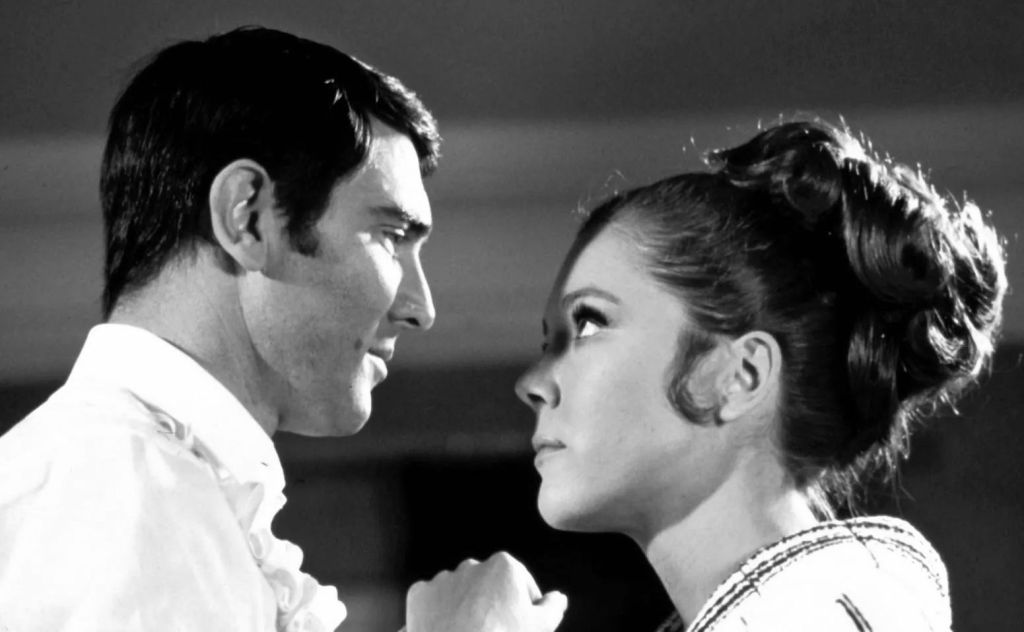
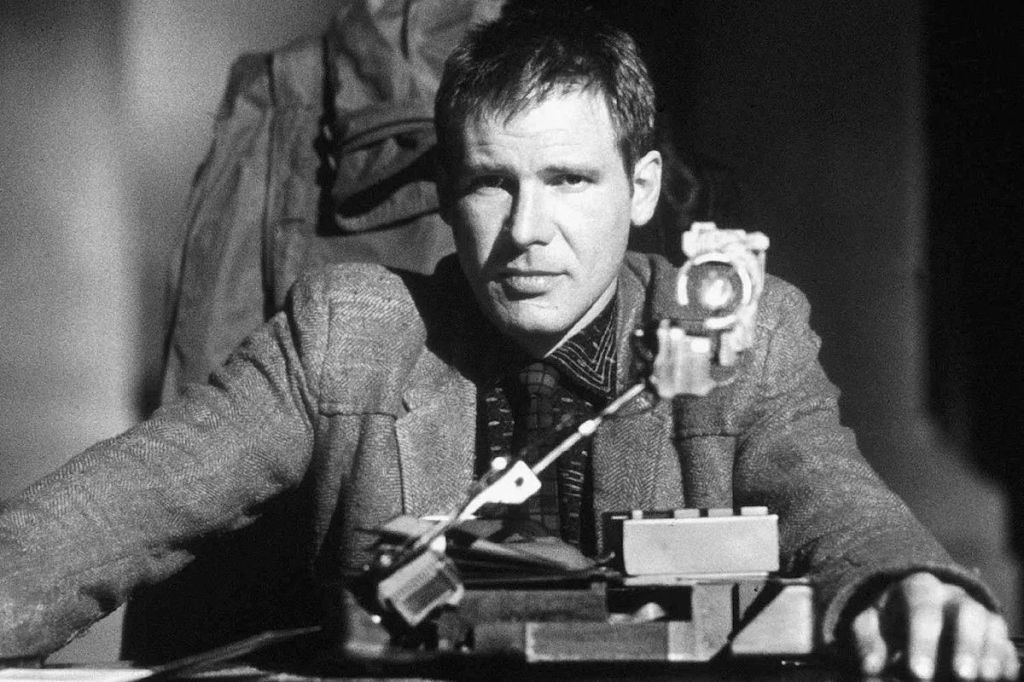
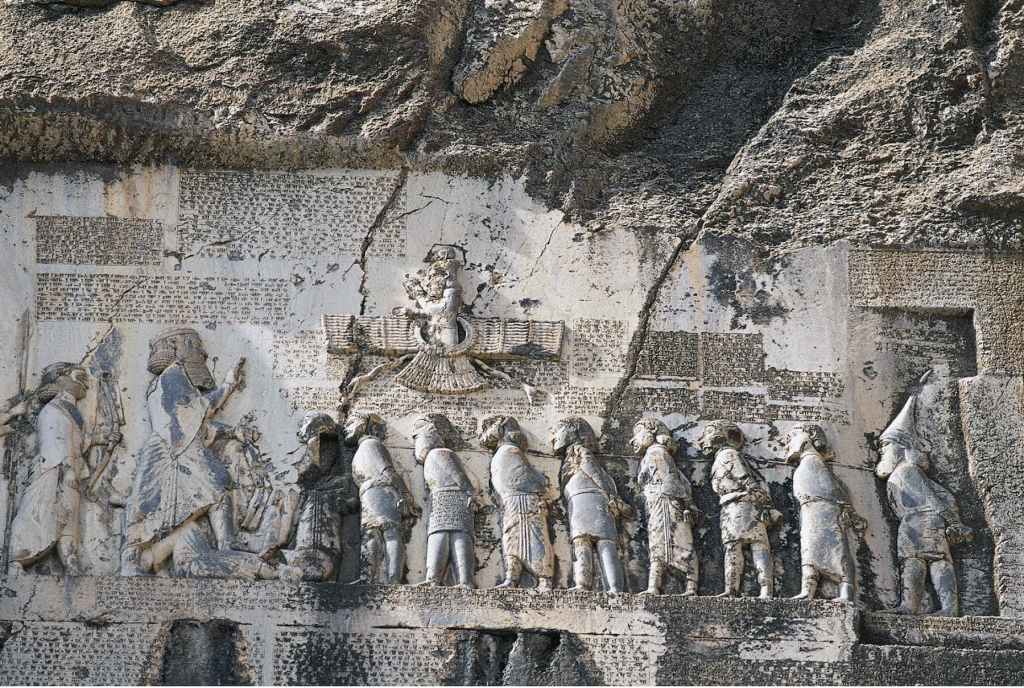
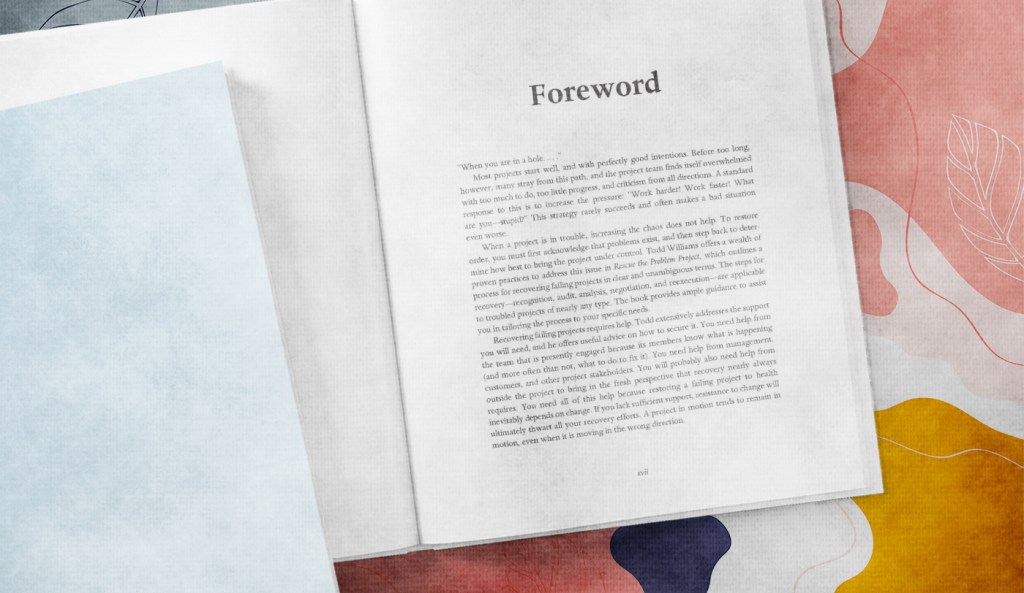

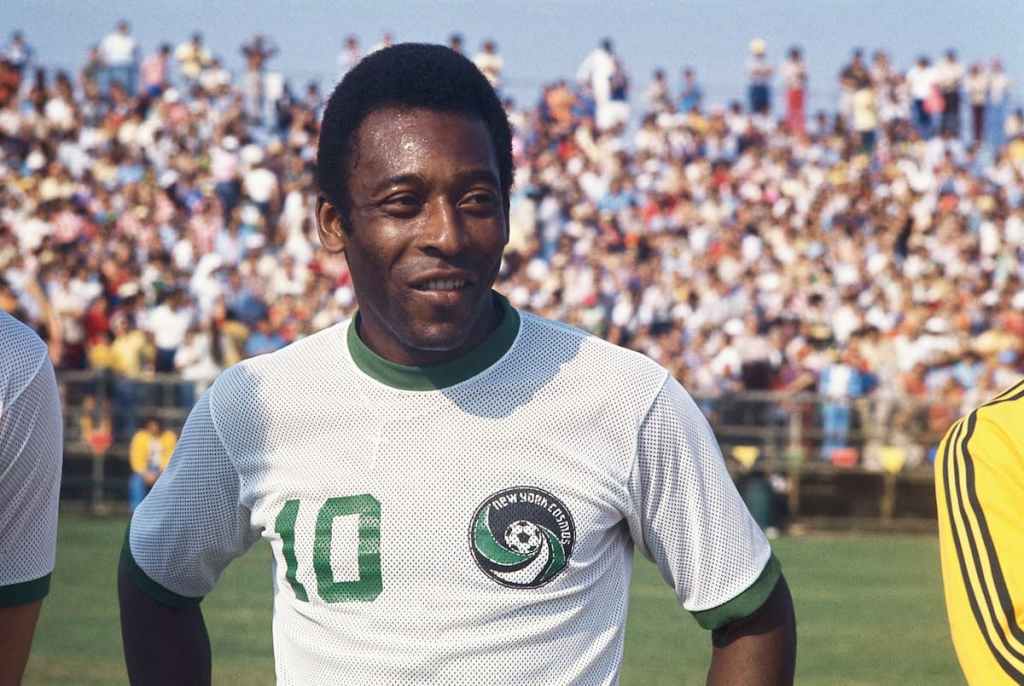


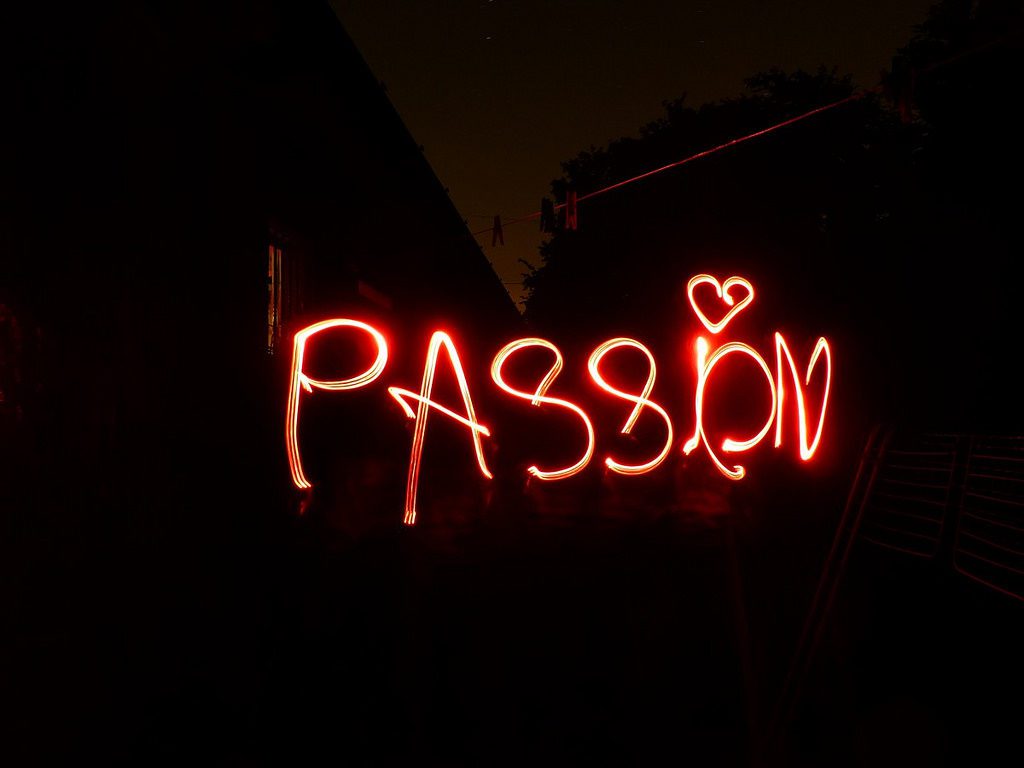
 matthewdillon.net