Lord of the rings

Bill Russell is remembered for his grace, his tenacity, but perhaps most of all, for his success.

Bill Russell competes against his great rival Wilt Chamberlain.

Legend. Icon. Titan. Such descriptors are splashed about with abandon these days, applied willy-nilly to any athlete who compiles a reasonable record of success.

Surely, however, they are appropriate for basketball’s Bill Russell, who passed away in 2022.

At 206cm, Russell used his height, long wingspan and athleticism to help transform the sport from one that had previously been somewhat earth-bound to one contested vertically, and at pace. He was said to be one of the first players in college basketball to leave his feet at the defensive end of the court to either block or alter field goal attempts.

Basketball is a sport whose champions’ worth is usually assessed by their scoring ability, with discussions about the sport’s GOAT (greatest of all time) usually boiling down to two names: Michael Jordan and LeBron James.

Russell, however, never mastered a decent shooting technique, and wasn’t known as a high scorer, with his game predicated on his defensive prowess, teamplay, and all-round play. The points he did score were usually close to the hoop, and often an emphatic dunk.

Yet Russell is synonymous with hoops success, having earned an astonishing 11 championship rings during his career in the NBA, spent entirely with the Boston Celtics as both player and coach (and as player/coach).

Before his professional playing career began, Russell was determined to participate in the Olympic Games, which he duly did in Melbourne in 1956.

Russell’s great professional rival Wilt Chamberlain was ineligible for Team USA, having forfeited his amateur status by leaving college early to play for the Harlem Globetrotters.

In fact, Russell’s own amateur credentials were bought into question by Avery Brundage, head of the International Olympic Committee (and like many sports administrators, doubtless a pain in the neck).

Having been drafted by the Celtics, Brundage argued that Russell’s amateur status was void.

Had he not been picked for the US basketball team, Russell’s plan was to compete in high jump, a sport in which he was ranked seventh internationally at the time.

Indeed, earlier in 1956 Russell had achieved a mark of 2.06m at a track and field meet, a result good enough to tie with Charlie Dumas, who went on to become the gold medal winner in Melbourne.

Of course, sanity prevailed, and it was in his beloved basketball rather than high jump in which Russell competed in Melbourne.

Alongside his college teammate at the University of San Francisco and future Celtic KC Jones, Russell led the Americans to an 8–0 record, including a decisive 89–55 triumph against the Soviet Union in the final.

As host nation, Australia competed in basketball for the first time, but with the team only coming together once a week before the Games (which were held in October and November during Melbourne’s spring) finished 12th of 15 teams, registering wins against Thailand and Singapore.

The venue for Olympic basketball in 1956 was the historic Exhibition Building. Grainy footage depicts an open court, with plenty of room for spectators to witness the US seize gold.

Russell valued his Olympic experience highly, even in light of the considerable success he later enjoyed.

“It was just fun to be a part of that,” he said of the ’56 Olympics. “And the gold medal is very, very, very precious to me. In terms of trophies and things, it’s probably my most prized possession.”

Top 10 films for 2023

Usually, this annual list has more variety in it – a touch of arthouse, a romantic comedy or coming-of-age film or two, a soupçon of foreign movies, a hint of something hard to categorise. Oh well. Although not all these films were outstanding artistically, they did all provide something – entertainment, diversion, viewing pleasure – perhaps at the expense of intellectual engagement. I would have liked to include the latest instalment from the Mission Impossible franchise in this list, but alas, departed about two-thirds of the way though. These are the best films I kept viewing until the final credits rolled.

Living
In 1950s post-war London, civil servant Mr Williams (Bill Nighy) is part of an obstructionist government department that exists within an oblique Kafkaesque apparatus, seemingly with the goal of achieving as little as possible. Until that is, an epiphany changes things. Based on an Akira Kurosawa film of the 50s (Ikiru), with a script by Kazuo Ishiguro and boasting a wonderfully nuanced and subtle performance from Nighy, I found this so moving it warranted a return trip to the cinema for a second viewing.

John Wick 4
Hey boppers, the last instalment of the canine-related revenge epic is an opera of violence that takes in Tokyo, Berlin and Paris – a greatest hits of the best set-pieces from the previous three. The grandest of the series, it might also be the most moving since the first.

Oppenheimer
There is so much going on in Christopher Nolan’s exploration of the legendary particle physicist Robert Oppenheimer. You’ll find history, war, love, death, betrayal and politics – all wrapped up in an alluring cinematic package shot by the great Hoyte Van Hoytema. A (cliché alert) cavalcade of stars – look, there’s young Han Solo, and there’s Bill Conti – helps deliver one of those powerful, impactful experiences that was astonishing the first time around, yet I have no desire to see again.

Equalizer 3
Antoine Fuqua and Denzel Washington have been doing this kind of thing, and doing it rather well, since Training Day. This time our eponymous hero executes his efficient MO in small town Italy, to bloody and picturesque effect.

Marlowe
Liam Neeson plays cynical, world-weary gumshoe Phillip Marlowe, who has his own particular set of skills: smoking, drinking, immunity to being fooled by high-class dames, and a facility for cutting through to what matters.

Sisu
In this Tarantinoesque sanguinary free-for-all, a plucky and gnarly gold prospector in Finland near the conclusion of World War II might just be hiding a military past. This comes in handy during encounters with selfish Nazis, who (spoiler alert), get what they deserve.

The Deepest Breath
This visually impressive documentary provides insight into the cult-like world of free diving, and the tragedy surrounding the record attempts of Italian Alessia Zecchini. Free diving is truly an extreme sport, explored here in a film whose similarities to Luc Besson’s classic The Big Blue are remarkable.

Ferrari
Not so much a conventional biopic of the Italian sportscar maestro, Ferrari explores a pivotal few weeks in the life of legendary car maker Enzo Ferrari (Adam Driver), culminating in the running of the Mille Miglia cross-country car race in 1957. Incredibly tense and slow-moving at times, elsewhere the film thrums and hums. What is rather odd is that director Michael Mann cast the tall, young US born-and-raised Driver (perhaps nominative determinism at work there) to play the diminutive, older Italian.

The Killer
David Fincher directs Michael Fassbender as a meticulous international assassin (they are thick on the ground these days) who compensates for a lack of empathy with bloody efficiency.

Barbie
Funny, clever and droll, Barbie is one of the best ever films to have been inspired by a doll. I enjoyed this film when I saw it, but it’s been so overhyped since that this may actually have detracted from that original screening (and feeling).

The absence of Maris

Some TV programs have characters that aren’t played by actors – or anyone, really.

In the world of Frasier, a spinoff from storied US sitcom Cheers, the eponymous character’s sister-in-law Maris is the butt of many jokes from the show’s main characters, radio psychotherapist Dr Frasier Crane (Kelsey Grammar) and his equally snobby and uptight brother Niles (David Hyde Pearce).

Let’s face it: Niles might just be one of the more exacting, neurotic, and pretentious characters to have graced the small screen.

We can glean this from Niles’ tastes (opera, fine wine, Italian tailoring), and also his predilections, for instance how he orders his steak.

“Not so lean it lacks flavour,” he insists, “but not so fat that it leaves dripping on the plate … not true pink, but not a mauve either, bearing in the mind the slightest error either way and it’s ruined.”

We also learn a considerable amount about Niles from Maris and the manner in which the show’s characters observe and comment on her (despite, you know, her perpetual absence). Niles may be somewhat stuffy and difficult; Maris is impossibly insufferable.

In fact, Maris we are told, is “like the sun, but without the warmth”.

As domineering and demanding as she is, Maris also happens to be completely unseen – always. She is in fact what’s known in the business as an “unseen character”. Not only does the audience never see her nor hear her voice, no actor portrays Maris on the show.

The audience is in on the gag, of course. The absence of Maris is usually explained away because she’s resting in another room, recovering from an unusual malady, or otherwise preoccupied.

So why not have an actress playing the part? Evidently that was the original intention of the program’s showrunners. As time went on, however, and descriptions of Maris and her behaviour became increasingly ridiculous, not only did the part become harder to cast, it was more humorous not to.

“We felt it was better if she was left unseen,” says program co-creator Peter Casey. “It was much funnier adding new and outrageous descriptions.”

Perhaps in this instance it’s a case of the character viewers have constructed in their imaginations being far more memorable than one that might actually have been depicted. What the mind creates is more vivid than what a flesh-and-blood thespian could likely portray.

Consider the classic creature feature Jaws, which is extremely scary, almost unbearably so, until you eventually see the rubber animatronic shark created by the film’s special effects team, which dubbed the model “Bruce”, and which is about as scary as that name might suggest.

Unseen characters existed well before the Seattle-set Frasier. In the aforementioned Cheers, in fact, we often hear about Vera, long-suffering wife of corpulent bar denizen Norm Peterson (George Wendt), who is usually depicted dodging his wife’s phone calls.

But we never actually see Vera (well, there is one episode where an actress playing Vera appears, but her face is completely obscured, keeping the joke alive).

Deceptively perspicacious LA police detective Columbo (Peter Falk) caught perpetrators off guard by asking “just one more question” as he departed from an interview.

The trench-coat-attired sleuth regularly refers to “Mrs Columbo”, a supportive partner who features in the detective’s anecdotes.

From early episodes we are informed the lieutenant’s spouse provides him with a pencil every day, which he invariably manages to lose. So, we learn that Mrs Columbo (in the original Columbo we never learn her first name), considers her husband forgetful, and would prefer that he smoke a pipe rather than the cigars he favours. She’s also sceptical about his police skills.

Could our lead character have been making up these stories (and the wife who tells them) as part of a strategy to lull felons into a false sense of security? The stories, definitely, but the way in which the show unfolds would suggest we are meant to think Columbo’s spouse is real but simply hidden from view.

In Minder, dodgy and scheming second-hand car dealer Arthur Daley acts in a less-than-scrupulous manner, bending laws to suit his needs. But there is one authority he will not mess with, and that is his spouse, who he less-than-lovingly refers to as “’er Indoors”.

It’s a sign of how deeply the show resonated that ’er Indoors was officially entered into the Oxford English Dictionary of Modern Slang, where it is defined as “one’s wife or girlfriend, a domineering woman.”

Fond of malapropisms such as, “the world’s my lobster”, Arthur maintained that ‘er Indoors was the bane of his (somewhat disreputable) existence.

In Magnum PI, the titular character, Thomas Magnum (Tom Selleck), has the use of a guest house and Ferrari courtesy of the generous and enigmatic novelist Robin Masters. The luxury digs are part of an estate known as Robin’s Nest.

Mr Masters might be very elusive and not actually seen, but in early episodes audiences could clearly hear conversations estate manager Higgins (John Hillerman) was having with him over the phone and intercom. The voice heard in those conversations, which take place over half a dozen or so episodes, was none other than Hollywood titan Orson Welles, who in his later years did plenty of voice work, including for the Transformers franchise.

Unfortunately that means Magnum PI is more of a footnote than entry in this story.

Eventually the Frasier writers orchestrated a divorce for Niles and Maris, paving the way for the former to pursue his infatuation with his father Martin’s (John Mahoney) live-in carer, Daphne Moon (Jane Leeves).

And what of Maris? Well, she went from unseen to completely absent – from, ubiquitous and dominant (albeit invisible) to barely mentioned, and then forgotten. Fortunately, no actors lost their job in the process.

Stay or go?

You can walk out of a movie in a huff, or recognise that you’re making a boss move.

Is it OK to walk out on a film that you’re not enjoying?

It might happen during the opening scene or credits. Realisation may dawn halfway through a movie or five minutes from the end.

Knowledge could crystalise gradually, or be achieved in a dazzling epiphany. You have come to understand that the movie unfolding before you in the cinema is not up to scratch. It’s short of the mark. It might be lacking in some essential component – a plot perhaps – or possibly surfeited in undesirable aspects, say poor dialogue or annoying mannerisms from the actors involved.

Or perhaps the movie you have paid to see is offensive, puerile, excessively esoteric, self-indulgent, or worse still, boring. Some films are “sickening, utterly worthless, shameless trash”.*

What then to do? Do you sit it out, patiently and stoically, a bit like remaining at a game your football team is destined to lose ignominiously? Or do you simply grin and bear it, gnashing your teeth all the while?

There are two schools of thought that might be applied here.

One posits that all cultural objects, having been started must then be concluded, whatever the cost. The author/director/maker put a lot of time and effort into the book, film or sculpture, and you’re going to enjoy it, dammit. Sometimes art can be difficult or challenging, and you might not fully appreciate it until much later. Should you leave early, this understanding may never be achieved.

Another approach, and the one to which I am more inclined to adhere the older I get, says otherwise. Realising that our time here is limited, it’s OK to apply a reasonable standard of quality to the films we’re viewing – regardless or perhaps even because of the ticket price.

I haven’t always been an early departer. Part of the reasoning that might have kept me stuck to a seat in the past is the hope a film will improve. It may not have shown much in the time you have given it, but it’s still possible for it to get better.

This, or course, flies in the face of the maxim that past performance in the best indicator of future form.

Lately I have begun to fully embrace the early departure when confronted with an ordinary film. There is power in this move, and boldness too. It says to the saps watching poor films through to the end that you will not embrace their groupthink, regardless of what a particular reviewer says.

Hey, you can think for yourself, and what you’re thinking is that a particular movie does not deserve your time. And that’s OK. You made a mistake. We all do it.

Is it acceptable to walk out on a movie, leaving behind those who accompanied you to the cinema? Well, this is the definitive statement, actually. It says that putting up with whatever your friends say afterwards is better than remaining for even a single minute more. My partner Lucy up and left Wes Anderson’s The French Despatch before it even reached the one-third mark. And this at a premier opening-night screening, with a bunch of chi chi gourmet snacks and a special magazine tie-in issued.

But I wasn’t disappointed with Lucy, because I could see she was finally getting on board with the leave-early concept.

During previous cinema forays we’d stayed the course with such eminently departable fare as The Lobster, Dog Man and Murder on the Orient Express.

The first was a disastrously self-indulgent opus from critical darling Yorgos Lanthimos, and as humourless as it was unpleasant.

The second was an unremittingly grim neo-realistic slice of Neapolitan life, and the third a somnolence-inducing whodunnit, the best thing about which could be said was that Kenneth Branagh’s moustache deserved its own credit.

It’s been said that The French Despatch is the most “Wes Anderson” of Wes Anderson’s films, replete with the minutiae and tropes that have made The Life Aquatic with Steve Zissou and The Royal Tenenbaums the enjoyably quirky films they are.

But when I Googled “Films that have been most walked out on”, The French Despatch was right up there, so a lot of people obviously share Lucy’s disdain and impatience.

There is an inclination to think that those of us who can’t sit through unpleasurable (I won’t say “bad” because opinions are always provisional, and some bad films can be terribly good fun to watch. Classic example: Dante’s Peak) lack forbearance in other areas of our lives. With this I can’t concur. Disappointment is the prevailing sensation at play here. We expect a modicum of quality in the art we experience, and hope for the best.

Sitting in a cinema allowing sound and images to float over you may be one of the great simple pleasures in life, so an incidence that doesn’t allow this to proceed is going to be jarring.

Here are 10 films that had that effect.

Operation Fortune: Ruse de Guerre (2023)
It’s possible that this Guy Richie/Jason Statham actioner is passable. I have enjoyed Richie’s recent offerings such as The Gentleman, and Wrath of Man, in which Statham was impressive.
But the sound levels at the labyrinthine Lido cinema where I saw (some of ) this film were so ear-drum-splittingly loud that I will likely never know.
Yes, I could probably check this one out via streaming, but Statham did appear to be phoning it in, Hugh Grant and his egregious mockney accent were grating, and the whole thing had a by-the-numbers feel to it. It was good to see Josh Hartnett back on the big screen (albeit somewhat briefly given the early exit). Mr Hartnett delivers a very solid performance as part of the ensemble cast in Oppenheimer – and that is one film for which it is worth staying the distance.
This one, not so much.

The Solitude of Prime Numbers (2010)
If the title of this movie sounds a touch pretentious, that’s because this Italian art film, screening as part of the MIFF a few years back, was pretentious, and not just a touch.
My memory is a bit hazy on the plot, but I can recall an 80s setting, a thumpingly insistent (possibly incongruous) techno soundtrack, and a sense of foreboding around an ill-advised skiing sortie down a challenging-to-the-point-of foolhardy ski run.
Disfiguring injuries may have been involved.
Were integers divisible only by themselves and one critical to the plot? This has escaped in the mists of time. Speaking of which, there was a lot of mist, fog and other assorted atmospheric vapour floating about.
It took my friend Liz a bit of convincing to up and leave early. But once we observed the film’s stars and director vamoose about halfway through, all bets were off.

Julien Donkey-Boy (1999)
Again, my memories of this one are sketchy. This tends to happen when you make a habit of not staying until the very end. Anyway, I can recall dragging my friend Dave along to a screening at what must have been one of the early iterations of The Melbourne Underground Film Festival (MUFF).
Dave suffers from a form of sleep apnoea, nodding off at the drop of a hat, and he was snoring within minutes of the opening title sequence. A good thing for Dave.
Though my memories lack clarity, a quick internet search tells me the plot concerns Julien, “a disturbed young man”, and his efforts to deal with his “nightmarish family life”.
Teutonic titan Werner Herzog plays an emotionally abusive father. A younger brother spends most of his time practising wrestling moves against rubbish bins. A pregnant (to Julien?) sister (Chloë Sevigny) logs considerable screen time looking at baby outfits.
Spoiler alert: The baby, as yet unborn, dies in an ill-advised ice-skating episode (Alpine sports accidents being a recurring theme of my early departures from films, it would seem).
I can recall being drawn to this one because it was part of the much-hyped Dogme 95 manifesto, which had self-imposed rules about lighting, editing, budgets and such.
This film involved murder and tragedy. Yet it was a figurative bullet that was dodged – by me, and Dave. I feel only relief and smug self-satisfaction, even a quarter of century later.
Director Harmony Korrine is renowned for his edgy and experimental approach, but at least one of his films has been described as “an unintelligible mess”.
This was a solid “no-brainer” walkout.

Promising Young Woman (2020)
Cary Mulligan in the lead role and an Oscar win for Best Original Screenplay had me thinking this might be worth a look. But it turned out that Mulligan was not quite right in the lead despite her considerable talent and versatility, and the script was nothing special, involving a baroque revenge plot. Clancy Brown (hard to believe he was the villain in Highlander all those years ago) plays Mulligan’s dad.
Some jarring set and production design is distracting, possibly on purpose.
Eventually it became impossible to suspend disbelief. At that point, the exit sign beckoned.

Downtown Abbey (2019)
Now, having never watched even a single minute of the historical TV drama that inspired this film, you may well ask what prompted a visit to the cinema to check out Downton Abbey the movie? It’s a very good question. The answer is a combination of a drizzly evening, a desire to go to the cinema more than to see a particular film, and the uber-optimistic notion that a genteel British historical drama set in a country manor early last century might very well translate to the big screen. Alas it did not, apart from being an effective soporific.

Main Street (2010)
Colin Firth makes a rare misstep, his attempt at executing a US Southern accent poor at best. That said, I probably would have made it to the end had I not been seated in the very front row of the theatre, representing an excruciating assault on comfort in which Cinema Nova specialises, or at least used to. From memory there wasn’t much of a gap between the screen and the front row of seats, so unfortunately, I did disturb a few patrons at this RRR subscriber screening on the way out.

Tabu (2012)
The word that pops into my head at the memory of this movie is “vague”. Black and white cinematography, African vistas, some sort of post-colonial plot … that’s it really.
At a certain point in this messy, leisurely paced, perhaps artfully edited filmic excursion, I looked across to my friend Rachel and asked, “Wanna leave?”
“Definitely,” was the reply. And we were gone.
You never like to waste money in this way, but it’s even worse to wait it out, I think. In those circumstances you can consider the experience to be about paying to be confused, bored, or (as in this case) both. One need not pay for this. It is freely available outside the cinema.

Antman and the Wasp: Quantumania (2022)
There are times when it seems like a good idea to see an undemanding film predicated on special effects rather than on its script, plot, scenery or acting.
A small – though no doubt profitable – component of the Marvel Cinematic  Universe, the original instalment in the series was an unexpected delight and commercial success. The eponymous character (Paul Rudd) is a likeable down-on-his-luck single dad – an accidental hero whose powers are supplied by a special suit and a large dose of pluck.
Unfortunately, in this instalment, the whole gestalt has an “accidental” feel to it.
The green screen component is as expected, but the plot meanders. It dilly-dallies and falters. In fact, it has the feel of being written in someone’s trailer before each day’s shooting.
There are, of course, many references to the multiverse, which has surely had a good go of it by now.
This was an easy walkout decision, for sure, but an expensive one, having made an impulsive decision to see the film at IMAX.

The Witch (2016)
In the manner of Lars Von Trier (who, incidentally, added the “Von” for effect) Darren Aronofsky or John Waters, director Robert Eggers likes to provoke and/or disgust.
His films such as The Lighthouse are frequently associated with the phrase “a harrowing experience”.
You could say that the tone is set in this, Eggers’ first directorial outing.
Set in the frontiers of the US on an isolated farm, this is one creepy and disturbing film I saw no need to endure through to the end.
But hey, perhaps watching scenes of baby-snatching and eating is your thing.

Mission: Impossible – Dead Reckoning Part One (2023)
The plot in this meandering actioner focused on something called the Entity, an AI-type scenario. Yawn. As usual, Tom Cruise in his guise as Ethan Hunt gets to run and squint a lot.
Jeez, they really have run out of ideas in this franchise, which apart from the noticeable misstep on the set-in-Sydney second outing, I’ve thoroughly enjoyed.
Post departure at the two-hour mark, I read a review that suggests the final third makes up for what came before. But there’s a lot to compensate for there.

So, there you have it: my top 10 films worth skipping out on before the final credits roll. Indeed, the earlier the better.

Did I use well the time I saved by not sitting in the dark experiencing these movies all the way through? It’s an irrelevant question. The benefit is more in the vein of “addition by subtraction”.

Because you are no longer captive to a terrible film, your life is immeasurably better.

This is the ethos behind a new organisation I’m forming: Cinephiles Inclined Not to Endure Movies that are Appalling, or C.I.N.E.M.A.

Join me in C.I.N.E.M.A as we rise as one and take leave of underperforming or unenjoyable films!

Now I realise that as one half of a childless couple, I’m in a different position to many others.

For a start, some people rarely get an opportunity to see a film in the cinema, the optimal way to experience it.

And consider the Antman fiasco. Now if Ms Lucy and I had a couple of teenagers in tow, I doubt that we could have convinced them to up and leave with us. We would have to come back for them later.

Going to the cinema to check out a film is one of life’s affordable luxuries. Leaving early is another.

*Apparently these were the words that renowned film critic Roger Ebert used to describe Caligula.

Watch every scene – the best films of 2022

There was plenty of good viewing last year, but not necessarily from films in contention for an Oscar.

Every year my friend Derek and I post our top 10 films from the previous 12 months or so. There is a little bit of wriggle room on the timing. Our usual practice is to wait until Australia Day (January 26) to allow more time to catch up on films introduced in time for the awards season (BAFTAs, Academy et al). Yet there’s no guarantee a film highly regarded by cinema’s critical cognoscenti will resonate with either of us.

Indeed, in the recent past there has been an almost complete disconnect between what the film festival juries, academy committees and critics’ associations dub worthy of praise and what has provided pleasurable viewing.

A classic example is the highly regarded opus, Triangle of Sadness, from Scandinavian enfant terrible (there’s probably a better Swedish expression) Ruben Ostlund.

The Cannes Film Festival jury awarded the contemporary riff on Lord of the Flies its highest honour. I saw it as a means of taking refuge on a hot Melbourne day (along with my partner Lucy), but found it equal parts pretentious, irksome and risible, boasting a cast of thoroughly unlikeable characters.

Yet 2022 also offered plenty of thrilling, engaging and entertaining films. There were more than enough to fill a top 10. So no, I did not watch every scene of every film, but did manage to check out some good ones.

Turn Every Page
This absorbing documentary explores the extraordinary working relationship between octogenarian writer Robert Caro and editor Bob Gottlieb, a professional partnership that has stretched over 50 years, and continues apace as Caro attempts to put the finishing touches to his landmark five-book exploration of power as manifested in the career of US President Lyndon Baines Johnson.

True, it isn’t exactly hard-hitting, and this is explained by the fact that at the helm of the movie project was Lizzie Gottlieb, Bob’s daughter.

But through Lizzie’s insistence – both Caro and Bob are extremely guarded about their privacy – we are provided some fascinating insights into Caro’s astonishing persistence, dedication and perfectionism, and into Bob’s own remarkable career.  

After Yang
Featuring nuanced, delicate performances from its small cast, particularly Colin Farrell, After Yang is a science fiction film that approaches the question of artificial humanity with no small amount of imagination and curiosity, posing questions about identity, family, memory, and much more.*

The Lost King
The eponymous monarch of the title is Richard III, much maligned throughout history as an evil hunchback villain – and that’s certainly how he’s depicted in the Shakespeare play. But was he? Based on a true story, the film explores how amateur historian Sally Hawkins (Philippa Langley) pours through old records, maps and books in search of the king’s misplaced skeleton so that he might be given an appropriate interment.

Top Gun: Maverick
I thoroughly enjoyed this film even though – or perhaps because – it is so derivative of the original, in terms of plot, style and tone. There is even a beach scene depicting athletic young pilots playing sports (in this case US football rather than volleyball as in the original). The cinematography is amazing, the technical achievement astonishing. And you may well find yourself involuntarily punching the air by the end. But – and it’s a big but – there is nothing at all revisionist in this egregious piece of propaganda celebrating US capability with such jingoistic vervour. It is unapologetically even “more Top Gun” than the original. That’s a bit of a problem.

The North Man
This is the first film from director Robert Eggers I haven’t walked out on (or, if you are my friend Bernard reading this, “on which I haven’t walked out”). I heard it referred to as “arthouse Conan the Barbarian” (actually Derek coined that phrase, hoping the film could live up to it). It’s not quite that, lacking as it does a certain something. Verisimilitude, perhaps.

The Gray Man
In his first mainstream action film, Ryan Gosling plays a Nikita-like blunt instrument of espionage. Rescued from unfair incarceration in the US penal system, he’s moulded into a covert black ops assassin for the CIA. But when corruption reaches the upper levels of the agency and our hero Court Gentry is himself earmarked for termination, his adroit skills come to the fore, across (of course) numerous picturesque international locales.

The Man from Toronto
Yes, my third “Man” film for the year, a comedy/action caper featuring endearingly hopeless athletic industry entrepreneur Teddy (Kevin Hart), who through a “printer toner situation” finds himself at the wrong address, and mistaken for the eponymous hombre (Woody Harrelson), an assassin renowned for his skill and cruelty.

Bullet Train
A yappy new age hitman known as Ladybug (Brad Pitt) takes a job on a, yes, Japanese fast-moving train (bullet, get it?) in this “crazy mix of Snatch, Kill Bill, John Wick and Murder on the Orient Express” according to one online review, which pretty much captures it. There are also shades of Snakes on a Plane, El Mariachi, Layer Cake, Grosse Pointe Blank, and any other flick featuring fast-talking killers for hire. Somewhat derivative, but an enjoyable, er, ride, nonetheless.

Glass Onion: a Knives Out Mystery
Master sleuth Benoit Blanc (Daniel Craig) is on the case again in this twisty tale of murder involving billionaire tech mogul Miles Bron (Edward Naughton). Bron invites five friends to his Greek mansion, Glass Onion, where murder most foul is committed, and of course, with the renowned Bayou detective on the case, elegantly solved.      

Hustle
Featuring a cast of NBA players and an authentic b’ball story brought to screen (although this one focuses more on the business than playing side of hoops) Hustle tells the story of lifelong basketball lover Stanley Sugerman (Adam Sandler), a career scout who has always wanted to coach, but because he’s so skilled at spotting talent, has never made the transition to the coaches’ bench. In Spanish playground legend Bo Cruz (Juancho Hernangomez), perhaps he’s found a path there?

Everything Everywhere All at Once**
Everyone’s favourite metaverse-set action-comedy is bought to life by a fantastic performance by Michelle Yeoh, who as mild-mannered laundry owner Evelyn Quan Wang must liaise with the many versions of herself to save the fate of the multiverse, or some such thing.

*After Yang was a buzzer beater, after Derek gave me the heads-up on Australia Day. Thanks D,

**This is actually no 11.

The Hoopocratic Oath

Image: IStock

Junior basketball coaches are charged with quite a responsibility. As they help mold young players, they are shaping young people.

In order to become bona fide doctors of medicine, suitably qualified medical professionals must swear the Hippocratic Oath of “primum non nocere,” – that in their roles as care givers, they will strive to first do no harm. They pledge that the individuals in their care will be no worse off after treatment.

I’m wondering if a similar pledge could apply to basketball coaches – let’s call this the Hoopocratic Oath. Hear me out.

Now I know that basketball isn’t a matter of life and death (although some might say that b’ball is far more important than that). But it is important to those who play it, especially junior ballers.

And the sport has exploded in recent years. All across Melbourne, and indeed the country, you’ll find multicourt stadia filled on weekends with the sound of leather slapping the floor, whistles shrieking, coaches bellowing.

Given the steep rise in playing numbers, there is also a continuing demand for mentors; someone has to teach the young hoopsters the basics such as correct shooting form, plays such as the old give-and-go and screen-and-roll, and of course to do the subbing and allocate court time.

It’s a task that requires a considerable time commitment, and no small amount of effort. Certainly, those selfless individuals who take on these responsibilities deserve the sports’ thanks.

With basketball’s rise, however, so too have ascended professional opportunities for coaches. Even outside of the elite echelons, it’s possible to make a career from coaching basketball, one way or another. Secondary schools, semi-professional leagues such as the NBL1 or state leagues, or working directly for associations all provide opportunities.

Therein exists some tension. Coaches may see their roles as that which advances their own careers – winning for instance, or having a certain number of players graduate to elite programs. Ensuring that all those in their charge enjoy and benefit from the coaching experience may not figure prominently in their overall plans.

These types of coaches become more conspicuous at representative level. A giveaway might be the use of vernacular such as “put heat on the rim” and “stick it” rather than “drive” and “shoot”. They often know their win-loss record, and will be ruthless to preserve or better it.

Meanwhile, half their squad might barely break a sweat, and can spend games looking glum.

The Hoopocratic Oath, therefore, is about ensuring that all junior coaches understand they are leading youngsters in a game, and must therefore strive to keep the “fun” in “fundamentals”.

With this in mind, the oath would have to address appropriate coaches’ talk to players.

I’ve seen coaches of junior teams call timeouts, angrily point at players, and then quickly start designing complex plays.

Surely at junior level the conversation needs to start with a positive – recognition of what worked well in the first instance. There should be acknowledgement of effort – filling the lanes on a break, blocking out, helping out on D – and not simply a rant accompanied by a clipboard-focused communication.

Out-of-game talk is also vitally important. I heard a troubling story recently from a young Australian whose US college scholarship was rescinded (which happens more often that might widely be known) after three years.

“I think the team would be better off without you on it,” was how the coach broke the devastating news to the young man.

There is a better way to discuss such matters, especially at universities that pride themselves on developing “the whole person”. (Or is this college hoops’ fiendish plan for preparing young people for a ruthless and heartless world?)

When it comes to training, the Hoopocratic Oath would put a line through the “three Ls” – lines, laps and lectures.

There are alternatives to forcing young players to line up to do drills (and spending more time waiting than participating), run laps of the court as punishment for a misdemeanour or infraction, or compelling them to listen to a long coach’s peroration.

How about having them participate in game action, and learn while doing? Or, for novice players, setting aside time for drills that either don’t require a ball, or where every player has their own?

Where coaches spot something technically awry, some helpful guidance could be proffered. Yet I have seen kids come back from elite camps and squads with worse skills than before they left, which make you wonder what was taught.

It goes without saying that coaches, even young athletic ones, should refrain from participating directly in game-action drills, and certainly from dominating when numbers demand their inclusion.

For games, coaches – if not clubs – might consider having reduced numbers in uniform. Is it really necessary for junior teams to have five to seven players on the bench?

And what could be learned from all this, you might ask?

Hopefully, that at its best basketball is truly the beautiful game – a team pursuit whose elements, almost uniquely among team sports, can be practised alone.

These days at the elite level – NBA and international hoops – basketball is dominated by three-point shooting and dunks, with diminished emphasis on the mid-range game, and on ball and player movement.

For junior players, however, the three-point arc is located a formidable distance from the basket. Given so few junior hoopsters would be capable of making one-third of even completely unmolested attempts from beyond the arc , surely it makes more sense to encourage the search for the deuce?

Perhaps inspired by the likes of rare talents such as Stephen Curry and Damien Lillard, junior basketball is dominated by scoring-oriented and dribble-dominant guards. It’s rare these days to encounter a game played among participants with a pass-first mindset.

Perhaps as part of the Hoopocratic Oath, it’s the coach’s role to remind players they are playing a team sport, and to discuss now-exotic concepts such as ball movement, moving without the ball, making the extra pass, giving the ball off early (a la Josh Giddey), making the pass before an assist (the so-called “ice-hockey assist”), competing for rebounds …

We know that not every player on every team will reach elite status, or even progress beyond the level at which they’re currently playing. That’s why it’s important to try to make each outing fun and rewarding.

Is this all a bit idealistic and unrealistic? Perhaps.

However, it could be worth keeping in mind the advice offered by basketball’s founder, Dr James Naismith: “Be strong in body, clean in mind, lofty in ideals.”

Heads in the sand

The extraordinary power of false narratives.

Perhaps it’s simply part of human nature to want to hear and tell stories. Like the “fight or flight instinct”, maybe its hardwired into us. Inchoate. Part of our essence.

Long before we were a written culture, humans shared tales via the spoken word. As our ancestors sat around fires or huddled in caves, they told stories of battles, lineages, creation myths, tales of the hunt, the dreaming, of past conquests, vanquishments and lessons learned. We dreamed up gods to worship and prophecies of things to come.

Ghost stories, parables, fables, myths and sagas explained our history and made sense of it.

We learned that stories have power (which is doubtless why politicians are always trying to “control the narrative”). Even as they enthral, our tales can also evoke, provoke, excite, amuse, entertain – even control. When a story is sufficiently potent, it can draw masses to houses of worship, or even inspire them to sacrifice their lives for the promise of something better in the hereafter.

Consider the egregious story of the “stolen” US election, which built such momentum that it led – unprecedentedly – to a throng descending on the US Capitol Building, with dire results.

It would seem false stories are just as potent as the genuine article, and maybe even more so.

Most of us have been warned at one time or another not to stick our heads in the sand, or worse, accused of doing the same.

The phrase refers to the supposed practice of the flightless African bird, the ostrich, of plunging its head into soil in an ill-fated attempt to avoid danger.

According to the Cambridge Dictionary, the phrase has come to mean “to refuse to think about unpleasant facts, although they will have an influence on your situation.”

A classic Warner Bros cartoon featured Foghorn Leghorn and his “son,” a misplaced ostrich, who emerged from his oversized egg only to thrust his head earthwards at the merest hint of discomfort.

It’s a phrase that’s in common parlance.

Here’s the thing, however: Ostriches don’t bury their hands to avoid danger, and never have.

The untruth relates to a fantastical piece of travel journalism from ancient historian Pliny the Elder (23–79 AD).

In Book 10, Chapter 1 he writes of ostriches, “they imagine when they thrust their head and neck into a bush, that the whole of their body is concealed.”

It’s thought this single sentence is the source of the misunderstanding, which has now lasted about 2,000 years. It’s very evocative, which might help explain its “stickiness”.

The way you hear gun-toting Americans talking about their Second Amendment rights, one might imagine that the framers of the US Constitution had in mind a society where everyone has a legal right, if not responsibility, to own and carry their own firearms. Indeed, the story many Americans understand is that these sacred words allow just that.

I’m not sure that this is the case, but then again, I’m not a US citizen nor a pettifogging shyster, merely someone interested in language.

“A well regulated Militia, being necessary for the security of a free State, the right of the people to keep and bear Arms, shall not be infringed.”

Stunning in its brevity, the Second Amendment also stands out for its lack of clarity and for its disjointedness.

Since it’s but a single sentence, one might think the second part is connected with what comes before – that the right to bear arms is dependent on the arms-bearer being part of a militia, and a well-organised one at that.

Ratified in late 1791,  the most influential framer of the Second Amendment was said to be James Madison, whose primary concern was that a federal army could be kept in check by state militias if necessary.

Still, in 2008 a conservative-dominated US Supreme Court held that the amendment protects an individual’s right to keep a gun for self-defence.

The idea that the second amendment protects an individual’s right to bear arms, however, is a relatively recent phenomenon. Research by Robert Spitzer found that every single law journal article discussing the Second Amendment through to 1959 “reflected the Second Amendment affects citizens only in connection with citizen service in a government-organised-and-regulated militia.”

The “individualist” reading is a recent phenomenon, and decidedly not what the framers intended, regardless of that recent ruling.

In a book calling for the US Constitution to be changed, Justice John Paul Stevens (a Reagan administration appointee, so hardly a liberal bleeding heart) submits a revised Second Amendment:

“A well-regulated militia, being necessary to the security of a free state, the right of the people to keep and bear arms when serving in the militia shall not be infringed.”

Firearms rights is a cause positioned at the heart of the conservative authoritarian political right in the US. It seems incongruous, somehow, that Christian tenets also sit within the potpourri of conservatism beliefs, whose espousal of the free market and pro big-business policies seem counter – if not diametrically opposed – to the Bible’s teachings.

I’m thinking here of “Do unto others …”, “Turn the other cheek …”, “The meek shall inherit the Earth …”.

The stark words from Matthew 19:24 state clearly that the Biblical Jesus had little truck with materialism.

“It is easier for a camel to go through the eye of a needle than for a rich man to enter the kingdom of God,” the passage states.

(Before I quote any more biblical passages, I should state that my own beliefs run to agnostic.)

Some years ago, prominent rugby union player Israel Falau was banned from playing following a controversy over some homophobic social media posts. Folau had posted on Instagram that gay people were destined for hell.

At around the same time Folau gave a sermon in his Sydney church linking the bushfires ravaging parts of Australia at the time (in 2019) to legalisation of same-sex marriage and the decriminalisation of abortion.

Meanwhile, however, Folau was signed to a four-year $4m pact with Australian rugby, surely placing him in the camel-competing cohort as outlined in the Book of Matthew quote above.

Not only that, but Folau, like many professional athletes, is bedecked in tattoos, which according to the Old Testament’s Book of Leviticus (19:28), are strictly taboo.

“Do not cut your bodies for the dead or put tattoo marks on yourselves,” the passage says.

What made Folau think he was a Christian, when clearly he was in contravention of his religion’s own rules? His obscene wealth and ink made sure of that.

Surely kindness and acceptance rather than judgementalism and hostility should be top of the tree when it comes to preferred Christian characteristics? Jesus was a friend to prostitutes and the destitute, and thought the world of commerce had no place in the house of God.

Sadly, though, the major religions have logged a long and inglorious history of acts based on their faiths’ superstitions and myths rather than depredations (from above, where else?) to mean well and do good.

I didn’t set out to write a piece about deplorable Christian brothers or Nazi-funding popes, but it’s fair to see the “big three” religions have committed their share of repugnant acts. Only considerable cognitive dissonance makes such duality possible. And as Philip Adams reminds us, arguing about religion is like arguing about who has the best imaginary friend.

Other well-known facts that are not true: that a frog will allow itself to be boiled alive if the cooking process is gradual (the frog will hop out when it gets sufficiently uncomfortable); that 10,000 steps per days is optimal for human health (the number is based on a 1960s study of Japanese factory workers and has no real-world corollary – although it probably isn’t a bad idea); and that we humans use only 10 per cent of our considerable brain power (debunking the films Lucy and Limitless, and putting in jeopardy our overperforming future selves).

Acquiescent amphibians, cowardly flightless birds, even unkind and uninformed so-called Christians – one can to a degree understand how such misunderstandings developed over time.

But how should we think about those who believe not just those misnomers, malapropisms and false narratives that have found their way into our culture, but have actually gone further and embraced a pack of lies – say that COVID vaccinations contain nanobots, or that a paedophile ring is operating among “elites” – politicians, actors and those in their community?

In her book Qanon and On, Van Badham details cases of non-radical individuals being sucked in by the vortex of online cults such as Qanon and others via chat rooms such as 4Chan.

Such realms provide a degree of comfort and sense of control for marginalised and vulnerable individuals. And because they are ring-fenced from reality (for instance claiming the ABC or the New York Times are skewed to the left and full of untruths), all the forms of media these folks access contain confirmation bias.

Some of those who marched in the Capitol riots on January 6, 2001, had undergone a deep radicalisation and conversion within months of first venturing into the online conspiracy cults.

I have a science teacher friend who, once a member of the Greens, morphed into a conservative and anti-vaxxer over the past few years. During one of Melbourne’s several lockdowns, he was extremely concerned and agitated that the lockdowns were merely an excuse for the state government to impose a police state.

Badham’s advice is to keep such individuals engaged but don’t attempt to dissuade them of their strange beliefs. Stay in neutral conversational territory.

In other words: Don’t bury your head in the sand.

No time to watch bad movies

The pandemic and resultant lockdowns meant that for the second year in a row the release of films was regularly readjusted throughout 2021. Film aficionados had to regularly recalibrate their expectations as distributors altered schedules to maximise returns.

Originally my plan was for this list to be an assembly of the 10 best films I saw for the first time last year. With those limitations it would have included such classics as To Catch a Thief (1955), Roman Holiday (1952), and Dunkirk (2017).  

Yet as the year wore on and cinemas opened, I changed tack, realising there were plenty of new films from which to choose. That said, I twisted the rules slightly to accommodate a few movies stumbled upon on SBS on Demand, a fantastic resource for film lovers.

Interestingly enough, the only film on my list mentioned in Oscar conversations was Dune. The Academy, however, has different criteria to me, with my list based only on viewing enjoyment.

No Time to Die was my favourite for the year, with the others in no particular order.

No Time to Die
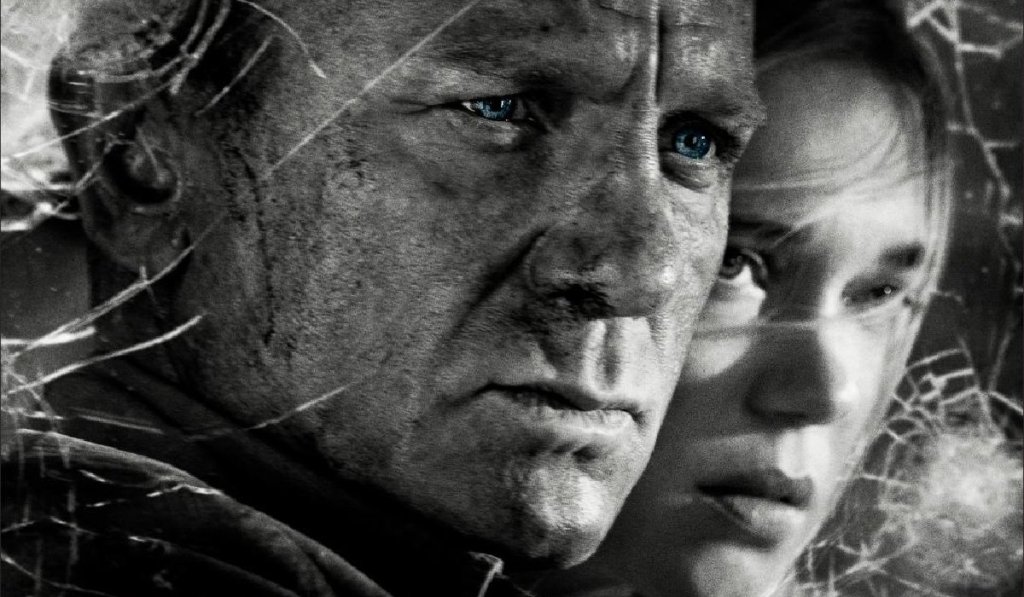
The last Bond outing for Daniel Craig sees a retired 007 (his number has even been re-assigned), enjoying a minimalistic solitary (though eminently stylish) life in Jamaica when once again he’s called upon to save the world, rescuing us all from the mad delusions of an insane megalomaniac.

Yes, yes, we’ve seen it before, but somehow the 25th iteration of the superspy franchise is rather a bit more moving, engaging and nuanced than expected, honouring Craig’s own tuxedoed era, but also that of his predecessors.

Dune
Who would have thought that the thick pulpy Frank Herbert sci-fi novels with panel van art on the covers, which had their heyday in the 1970s, could be so absorbing on screen? Clearly the potential was seen by helmsman Denis Villeneuve, who has learned from his mistakes on the extravagantly dystopic Blade Runner sequel and silly Arrival (come on, how do cephalopods construct spacecraft; they can’t even hold a screwdriver!) to make this thoroughly thrilling space epic.

Perhaps there is some truth to what they say about books and covers.

In Order of Disappearance (Kraftidioten,2014)
In this Norse action/thriller Stellan Skarsgård plays a mourning snowplough driver (Nils) hell-bent on revenging his son’s murder at the hands of a ruthless drug cartel. There are unexpected laughs aplenty in this unconventional blacker-than-black Scandi noirish outing.

The Girl in the Fog (La Ragazza Nella Nebbia, 2017)
After a long hiatus, the MO of a notorious serial killer is once again being observed in the fog-shrouded and ominous climes of the Italian Alps. Is a local teacher the unlikely perpetrator, or is he being set up? The great Toni Servillo and Jean Reno feature.

Wrath of Man
Guy Ritchie and Jason Statham reunite from their Lock, Stock days in this tricky Tarantinoesque action outing. Statham plays H, who is clearly over-qualified for his new gig as a security van guard, perhaps pursing his own agenda, with vengeance very possibly on his mind.

The French Dispatch
Once again Wes Anderson delights and divides with this most Andersonian fun and fastidious Francophile film. The attention to detail is astonishing, the plots meandering, the gestalt pleasing.

Army of Thieves
An aspiring Teutonic safe cracker with a historian’s appreciation of the skill-set hooks up with a gang of hip young international millennial thieves to execute the heist of heists in Europe’s picturesque cities. This was one the best of the original Netflix kinetic actioners, which also include 6 Underground, Red Notice, Kate, and The Misfits – all great and all super enjoyable.

Boss Level
A tie with Army of Thieves (and another Netflix high-concept offering), you might describe Boss Level as Groundhog Day meets John Wick, with perhaps a soupçon of Grosse Pointe Blanke and a dash of Kill Bill added. As my good friend D put it this is a “muscular throwback action movie, personified in the stubble and grit of leading man Frank Grillo”. Yes it is, and mighty entertaining too.

Pig
Nicolas Cage puts in his best performance in years as a dishevelled truffle-scrounging loner in this stylish though uneven epicurean outing. When his eponymous truffle pig is stolen Robin (Cage) heads to the big(ish) smoke, layers peeling away as his sad story is slowly revealed.

Riders of Justice
The great Mads Mikkelsen plays a distraught army veteran whose path of rough justice is set out following an encounter with a trio of conspiracy-minded IT geeks.

Free Guy
Surprisingly delightful family-friendly escapade, featuring Reynolds as a character (Guy) within a video game who insists on his right to grow and change.

Six film classics to explore in lockdown six

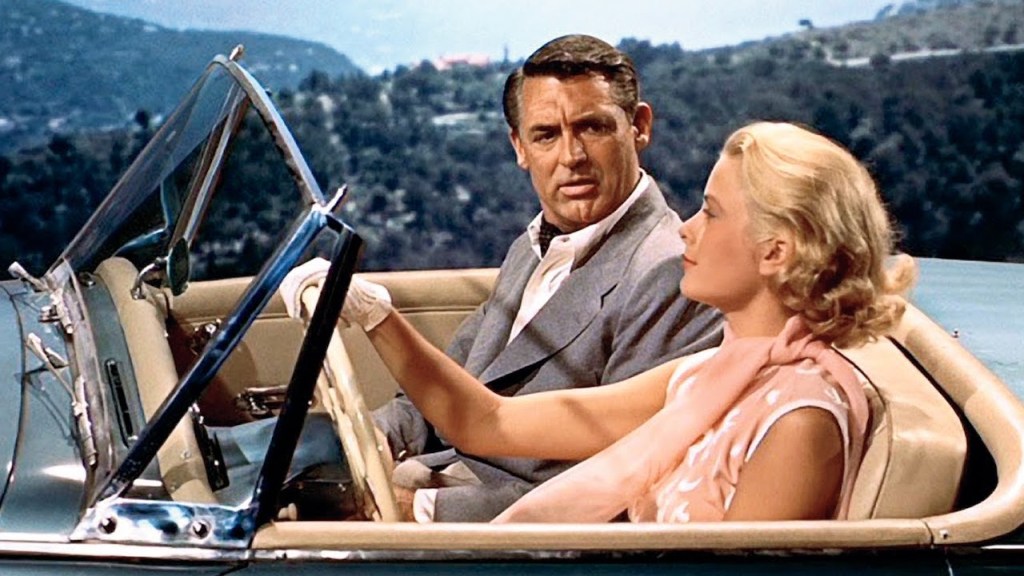
Cary Grant and Grace Kelly in To Catch a Thief.

It’s taken me some time to come around to the appeal of “old” movies. There was a time when I thought there wasn’t much worth watching before, say, the late 60s. The charisma of the Golden Age stars, the antique production methods, the of-their-time plots – I was unimpressed. Yet as I have gotten a bit older and begun to understand the arc of recent history a little better, my eyes have been opened to the gems I may have neglected.
The world was still recovering from the devastation of the Second World War in the 1950s and early 60s. Life was uncertain for many, tenuous even. Having lived through such testing times, with its absences and loss of life, it’s little wonder audiences craved escapism, colour, romance and whimsy on screen.
Perhaps in our own unusual moment, the old movie classics may still have a place and a purpose.

Calamity Jane (1953)
Musicals may not be your thing (they’re certainly not mine) but in this age of cynicism and fear, watching a film in which characters spontaneously burst into song and dance may be just the salve you didn’t know you needed until you experienced it. This delightfully diverting bonbon starring the astonishingly talented Doris Day is thoroughly entertaining – and deserving of multiple adverbs. If it’s authenticity about the old, lawless west and the Black Hills of Dakota in the 1850s you seek, the sublime Deadwood may be more to your liking. This, however, is unalloyed entertainment from the Golden Age of Hollywood. Whip crack-away!

To Catch a Thief (1955)
When a series of jewel thefts on the French Riviera bear a familiar modus operandi, suave retired burglar John “the Cat” Robie (Cary Grant) is immediately suspected by the authorities. To prove his innocence, Robie sets out to catch the new Cat in the act. Along the ways he meets wealthy heiress Francie Stevens (Grace Kelly, in her final film with director Alfred Hitchcock). Romance and intrigue collide. This is a beautiful film to look at, with the amazing costumes by Edith Head as spectacular as the picturesque French seaside locales and the appealing cast.

The Court Jester (1955)
The film title may not be instantly recognisable, but the sparkling dialogue in this clever dose of medieval mayhem and skulduggery almost certainly would be. A classic scene involves shenanigans surrounding a poisoned pre-joust toast in which Danny Kaye’s eponymous character must recall that while the chalice from the palace contains a pellet with poison, the vessel with the pestle has a brew that is true. But of course, the chalice from the palace breaks, replaced by a flagon with a dragon …

The Nutty Professor (1963)
What it lacks in flatulence and fat suits, the original iteration of this Jekyll-and-Hyde tale more than makes up for with the wit, charm and talent of Mr Jerry Lewis, who plays both the delightfully square but kind Professor Julius F Kelp, and his alter-ego, the too-smooth crooner and lothario, Buddy Love. Alas, the potion responsible for transforming the dorky academic into a handsome aggressive jerk only lasts a limited time. This leads to all sorts of confusion on campus and at local club the Purple Pit, and a showdown between Love and love.

The Thomas Crown Affair (1968)
Gentleman thief Thomas Crown (Steve McQueen, the “King of Cool”) gets his kicks, and part of his company’s revenue, by designing elaborate heists. But will he be brought undone by savvy and sassy insurance investigator Vicky Anderson (Faye Dunaway)? Dunaway, incidentally, also turns up in the excellent 1999 remake, playing a psychotherapist. This is one cool, even slightly cold film. From the split-screen opening credits and jazzy soundtrack to the fantastic wardrobe of the leads, the cars, and the depiction of Crown’s enviable lifestyle, this is one smooth, stylish escapade.

The Italian Job (1969)
Not to be outshone by what was happening in Hollywood, in the last decade of the 60s, the Brits produced this highly stylised and engaging heist classic. Charlie (Michael Caine) is just released from prison when he finds out about his associates’ unsuccessful attempt to pull a once-in-a-lifetime job in Italy (hence the title). Setting about organising the job himself, Charlie pulls together a misfit crew of specialists and oddballs, with a squadron of sporty Minis taking centre stage. There are songs (“Self-Preservation Society”), the mafia, cockney rhyming slang, Benny Hill and great lines (“You were only supposed to blow the bloody doors off”) involved.

Hard nuts, clangers and the fat side

The obscure language of Australian rules footy often confuses rather than clarifies.

Every sport has its own special language and terminology to describe play and rules. This lingo helps those who participate make sense of the game, to make play possible.

Some of these are basic and widely known – baseball’s home run, cricket’s leg before wicket, and rugby’s scrum come easily to mind. Others are more complex or arcane, such as the terms used in royal (aka real) tennis, such as penthouse and tambour, or polo, with its chukkas, hooks and bumps.

Tennis has its deuces and half-volleys, and golf its albatrosses, plus-fours and mashie-niblicks. Basketball features double-dribbles, alley-oops and pick-and-rolls.

Australian rules football (not to be confused with the AFL, which is merely the name of the elite national competition) has its own rich cache of terms. Consider torpedo punts, kicking through the big sticks, shepherds (nothing to do with flocks), handballs and ruck-rovers. These are all time-honoured terms those familiar with the game would doubtless have heard many times.

Yet the specialist language associated with our national game seems to be expanding, and at a rapid rate over the past couple of years.

Kicking to the fat side (that is, where fewer players are gathered), underground handballs, scoreboard pressure (aka scoring), frontal pressure, pressure acts, scoreboard relief, elite disposal skills by hand or foot (i.e., being skilled at kicking and handballing), slingshot football, strategic leading patterns, clangers (kicks that are intercepted or sent out of bounds), unrewarded running, conversion ratios, defensive unit or back six …

These are terms that would leave old-time aficionados of the more-then-100-year-old game nonplussed, if not angry.

It should be noted that the game’s official glossary of terms has probably not altered all that much in the past 20 years. Rather, it’s ad hoc terms perhaps invented by the AFL’s considerable coaching fraternity that could be to blame.

In times of yore (say the 50s, 60s and 70s) the elite competition for the sport was the semi-professional VFL. In those days nearly all the players and coaches worked day jobs; sport was a part-time commitment.

With the advent of the national competition in 1990, considerably more money arrived from television deals. Coaching staffs rapidly expanded, as did the remit. In the past coaches had been expected to do little more than put out the witches’ hats at training and provide mangled halftime speeches.

Despite COVID-related cost-cutting trimming overall personnel counts, every AFL club has a huge non-playing contingent of administration and medical staff, trainers, and assistant and specialist coaches.

A barely understandable patois allows these professionals to communicate with one another, and sometimes, the outside world, too.

Now coaches bang on about metres gained, playing through “the corridor” (the middle of the ground), players building tanks (aka running capacity), and doing the “one per centers”. The last is a statistic that relates to a variety of actions that benefit a team, but are infrequent or defensive, including knock-ons, spoils, smothers, and shepherds.

Having attended a corporate or academic short course in the offseason, you might also hear a coach pepper his postgame media conference with references to the “journey” (which might refer variously to a game, season, career or perhaps simply a kick), and “learnings” taken on board (i.e., lessons, or things the team has learned).

The sport’s professional commentariat is complicit in the creation, use and expansion of this alternative specialist language, perhaps to help justify its existence.

Is there a sports league more commentated upon, analysed and subject to post-mortem than the AFL? It’s hard to think of one. Some games have a panel of four or more commentators calling the play, with a few “boundary riders” also shoving microphones into players’ faces.

In contrast, long-time soccer commentator Martin Tyler manages to call games by himself, often in a studio on the other side of the world from which a game is played. He describes the action, but also provides the expert or “colour” commentary too. If there are any tidbits to share about coaches’ comments from during the week, or the inside scuttlebutt about the clubs and players, Tyler has that in spades and on demand. Tyler is also unafraid to let the action on screen speak for itself, understanding that sometimes on TV, silence is golden.

Some terms seem to be more popular with commentators than elsewhere in the footy realm. The implausible “gut running” is one of these. Surprisingly, this does not mean “running down the guts”, because (see earlier reference), the middle of the ground is referred to as the sacred corridor. No, “gut running” is something else entirely, defined by the Urban Dictionary as a “form of high-speed, long-term bipedal perambulation apparently performed only by AFL players. What other kinds of ‘running’ there are is not entirely clear.”

Commentators are also fond of “hard nuts” of which there seem to be fewer around these days. A hard nut is a player of limited skill, talent and polish, but who maintains his place in a team based on his aggressive, committed and/or sometimes dirty play. Hard nuts (erstwhile St Kilda player Stephen Baker is a classic example) are defensive specialists, and often assigned negating roles, usually on players with “silky skills”.

Silkily skilled players lacking toughness and more concerned with their looks and taking speccies than anything else might derisively be referred to as a “prancing pony” – although I’m willing to admit this term might not have much currency outside the Dillon family. Geoff Raines and Warwick Capper were textbook examples.

Sublimely skilled players possessing adequate toughness but equal parts fairness and “class” are considered “ornaments to the game”. Melbourne great Robbie Flower, Kangaroo legend Keith Grieg and St Kilda icon Rob Harvey are ornaments worth celebrating.

And of course, ornaments to the game minimise the clangers and execute the one per centers.