What makes a good question? The answer depends very much on context and objectives.
At sustainability-related events over the past two decades or so, one thing could be predicted with a rather high degree of probability. If he were present, consultant Jeff Robinson would almost certainly pose the first enquiry of a presenter following a talk.
This was might you might call a welcome inevitability. It’s so often the case that even the most engaging and informative of speakers face a silent void when questions are called for following a talk. Yet with Jeff in the house, you knew there would be at least one intelligent, robust enquiry, and often this would prompt further comments and queries from those present. The conversation would continue, which means the original presentation would resonate more.
“Judge a man by his questions,” says Voltaire, “rather than by his answers.”
In Jeff’s case the questions were often issued in two parts. The first component took the form of a statement, with some context-setting exposition. The second part was usually more probing. Together, the double-pronged enquiry demonstrated an understanding of the issue at hand, and an appetite for further exploration. It was also an opening up: an invitation to converse.
The questions were prepared in advance, and carefully thought about, which obviously required some research and preparation.
Jeff tragically passed away earlier this year, but incredibly (although perhaps not surprisingly), one of his questions was posed posthumously some weeks later at a MECLA* event he had been helping to organise before his demise. Jeff, of course, had prepared the question well in advance.
Just what constitutes a good question was something to which Jeff dedicated no small amount of consideration, even discussing it at length with Aurecon colleague Jamali Kigotho.
“I don’t think there is a definitive answer,” says Jamali when asked what makes a decent enquiry. “Jeff and I were similar in the fact we both love questions without a certain answer, but for slightly different reasons.
“My main reason for liking these sorts of questions is that it allows me to let my curiosity and creativity free to see what I can come up with. I think for Jeff those sorts of questions meant an opportunity to collaborate to try and find the answer.”
For a journalist – a professional inquisitor, in other words – a good question is one that elicits an interesting response. It’s about the answer more than the process.
Working as a sportswriter long ago, I learned on the job that one can prepare thoroughly for events such as press conference or interviews, but that sometimes it’s a bad, lazy or spontaneous question that draws the best response.
I can recall simply asking a coach for his thoughts after his team lost a hard-fought contest, only to be met with anger and contempt.
“I have many thoughts,” he grumbled. “Be specific.”
And there was the gift: I had been granted a glimpse behind the curtain of this carefully constructed professional façade.
One of the most important lessons a journalist will absorb is to learn to listen, and to do so without interrupting.
“You have two ears and one mouth,” according to the old maxim, “and they should be used in that order.”
“When people talk, listen completely,” advised writer Ernest Hemingway. “Most people never listen.”
I made some critical mistakes as a nascent professional, such as interrupting just when someone was about to say something interesting, not asking pertinent follow-up questions, or perhaps not recognising when a conversation had either veered off track or ventured down a path worth exploring. These mistakes nearly all relate to not listening.
Sometimes the best way of drawing an answer is not to pose a question, but to pause. To know when to remain silent, and create space for a response to emerge.
It’s something practised by UK journalist Kirsty Young, perhaps best known for the often intensely personal Desert Island Discs BBC radio program, which delves deeply into its subjects’ lives.
“Sometimes there is that moment,” she says of remaining silent during an interview. “I hope it’s not a glib trick, but I use it when I think there’s more. If I must sit, maybe you’ll go there. Sometimes people don’t; they just look right back at you.”
There is always the chance that an enquiry will elicit an unsatisfactory response, a bumbling answer, or silence. That’s the danger. Yet there exists, too, the tantalising possibility that something else results: a startling revelation, a hitherto unimagined pathway, or the simple pleasure of a considered conversation.
It all starts with a question.
*MECLA is the Materials and Embodied Carbon Leaders Alliance
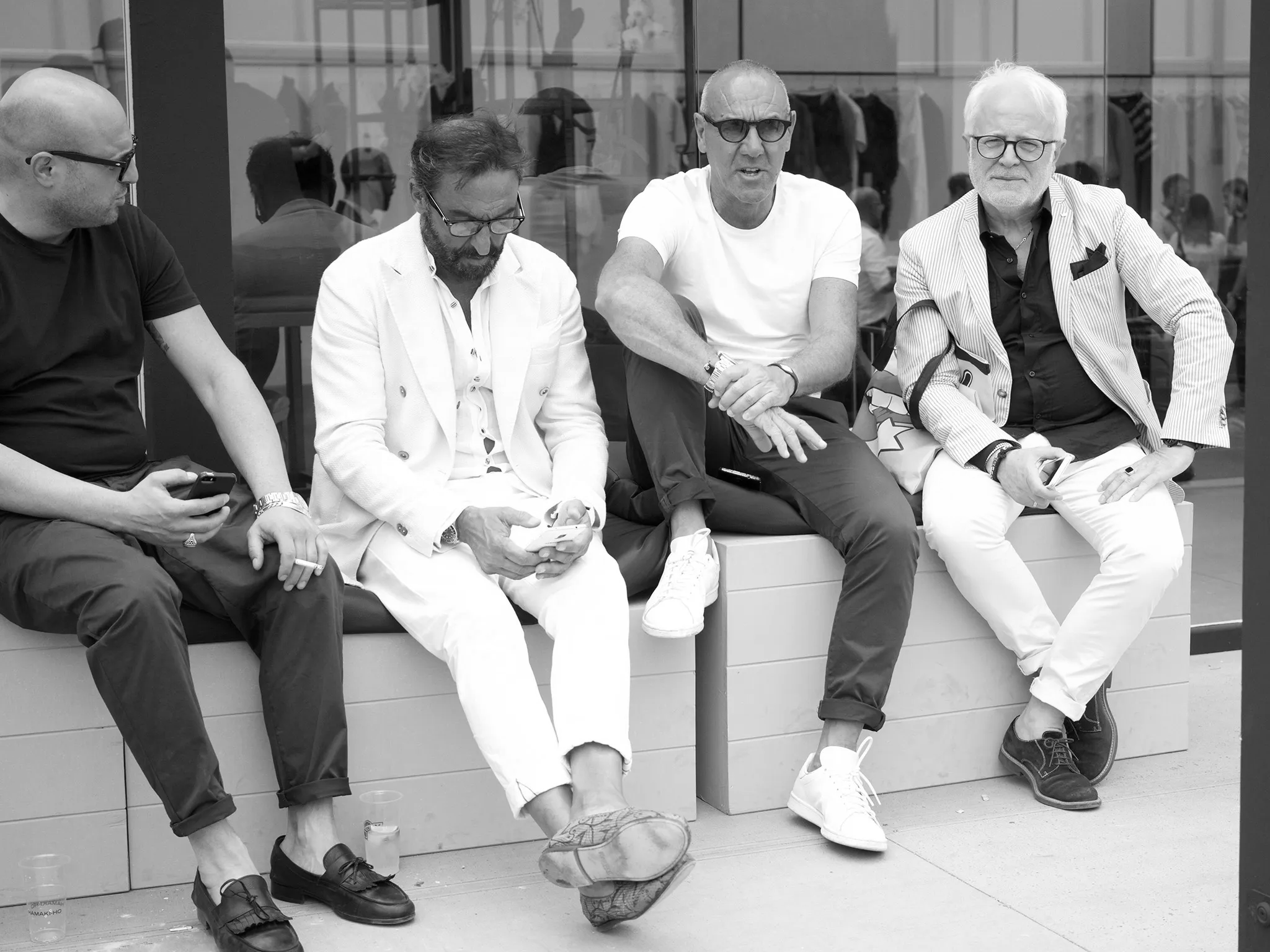
Is it better for men to dress for style, or follow fashion’s fickle gaze? Or should we simply dress for comfort?Andwhat does it really mean to dress well, anyway?
“Style is an opportunity” proclaims the tagline of long-established Melbourne menswear store The Coachman, located in Hampton.
An opportunity, yes, but to do what? Certainly, style represents a chance to express yourself through clothes, to make a statement about your station in the world, to dress to impress (even if it’s simply for oneself), to protect your person against the weather.
Dressing well also presents an opportunity to practise self-kindness – a form of looking after yourself and making an effort.
“I don’t like to be overdressed,” says Italian shoemaker Giuseppe Santoni. “The fact that I feel good about myself is important: I’m more positive, I’m more productive, and my brain works better. If I don’t dress properly, I’m in disarray.”
For many, the approach to style can best be summed up by three words: less is more. Less effort, that is, not fewer clothes. Less drama and carry on. We’re not professionals from Milan or Florence after all, where dressing with flair is seen as entirely natural for gentlemen – a manifestation of sprezzatura.
Avoiding the complicated, the elaborate and embracing restraint are key to this mindset.
“Simplicity, to me,” said style icon Cary Grant, “has always been the essence of good taste.”
In Australia, most gents don’t want to be seen to be trying too hard, but to look good at the same time. It’s a tricky balance. And meanwhile the trend of dressing more casually at work – a tie and jacket are not required in most offices these days – has only increased since lockdown, rendering the term “white-collar environment” all but redundant.
So yes, style is an opportunity, but it’s also a quest, and if you are on a mission to spruce up your individual sartorial approach even a touch, it is possible to achieve.
Perhaps the first step is to understand the difference between fashion and style.
The former is usually defined as what’s in now – what the kids are wearing, street culture, what’s being sported on the catwalks and perhaps nightclubs, haunts at which you will never find most men of a certain age (including yours truly). Fashion is ephemeral, can appear silly or flamboyant, and is often not built to last, particularly if it’s “fast fashion”.
“Fashion can be bought,” said Edna Woolman Chase. “Style one must possess.”
Style is usually defined as something more intangible and individual – a way of dressing in which you’re comfortable and which says something about who you are. It is more enduring than fashion, more resonant.
“Fashion is the collective salivary reflex of the witless whelps of Pavlovian consumerism,” wrote the late Nick Tosches. “A fashionable man is a hollow man. Style is the cultivation of a look, an air. A man’s style reflects how he should like to be perceived by others, and by himself.”
Tosches was neither a fan of fashion nor style, by the way, but more of this later.
For UK influencer and impresario Jason Jules, style is all about subtlety.
“For those of us into style, the goal is often to go unnoticed by the crowd,” he says, “deriving pleasure from being an almost indecipherable whisper behind fashions’ great wall of sound.”
Esquire creative director Nick Sullivan believes style and fashion shouldn’t be viewed as mutually exclusive entities, but rather two phenomena that interact and affect each other.
“To me, the difference between style and fashion is less important than what they add to each other,” he told Mr Porter. “There are two camps: One worships fashion, and the other worships style, which I don’t really love as a word. But the truth is style doesn’t really stay the same, even if people think it does.
“Style, if you look at movies through the years, has evolved. And it doesn’t evolve without some input from fashion.”
And similarly, Sullivan says, fashion doesn’t really mean anything unless it has basis behind it, which is how garments are made and cut.
“And you can play with it all you like, ” he says, “but still the best most revolutionary fashion designers are the ones who know how to make a suit.”
Both fashion and style are about making a statement before even opening your mouth.
“You can be whatever you want to be,” said legendary Hollywood costume designer Edith Head, “so long as you’re prepared to dress for it.”
Ask the fashion afficionados who attend the Florence Pitti Uomo trade show, and they might say that it’s impossible to try too hard or venture too far sartorily: hats, spats, braces, bespoke, and spectacularly loud colours and patterns. All are in play.
Here, self-expression may triumph over comfort. This is the realm of the fop, the rake and the popinjay, after all.
Another theory posits that dressing well is all about improvement and self-actualisation, and helping you feel more like yourself.
“I believe a man, whether 22 or 42 or 62, should dress for his personal sartorial expression. Not some trend or random ‘must’ list,” says model and influencer Eric Rutherford. “My golden rule is find your style that fits your life and sets you up to represent your best self with great fun, flair and fit.”
Beyond style and taste, beyond fashion, even beyond elegance perhaps, there exists a sense of cool. However much care has been taken to produce a certain look, the implication of cool is that it should nonetheless seem effortless. Nonchalant.
Acting titans Paul Newman and Steve McQueen embodied a particular form of low-key cool, where their look somehow managed to evoke a way of life and of seeing the world. They achieved this feat sporting simple, understated and often utilitarian clothes, with perhaps the addition of a small sartorial flourish that set them apart.
“A man,” said fashion heavyweight Hardy Amies, “should look as if he has bought his clothes with intelligence, put them on with care, and then forgotten all about them.”
Amies authored the original book on men’s style, ABC of Men’s Fashion, which outlines everything (and then some) a British gentleman of the 50s, 60s and 70s might need to know about dressing for style and elegance. It still has currency and relevance.
Shoe manufacturer Tim Little of Grenson agrees that subtlety is key, and that it is sometimes tempting to go too far with one’s sartorial choices. This urge, he says, should be resisted.
“You don’t realise that a man is beautifully dressed until you’ve been in his company for 15 minutes,” he says. “If people notice your clothes immediately, you’ve overdone it.”
Other invaluable tips from Mr Little: Don’t wear too much brown (25 per cent of your outfit, tops), mixing old and new often works really well, and your socks should never be funnier than you are.
For fashion influencer and tailor Freddie Nieddu, style is something a man does for himself – above all others.
“Style is something natural to the individual, wearing things that feel comfortable and make you feel like yourself and at ease,” he says. “I can usually tell when someone is dressed in a way that is authentic to them, rather than copying a style they have seen on someone else. In my opinion when you are dressing for yourself and not someone else, then … you become truly stylish.”
Jason Jules agrees with this sentiment.
“Copying someone else’s style is like going to the gym and getting your fitness coach to do your workout for you,”he says. “Developing personal style is a ‘no pain, no gain’ type thing. The good news is that no one can be you better than you.”
An elegant look achieved without seeming to try too hard, requires (ironically, perhaps) some degree of effort. But according to Matts Klingberg, owner of London emporium Trunk, dressing well should not cause duress.
“The term ‘smart casual’ gets used a lot, and I know it’s something that confuses a lot of guys but, for me, it’s pretty clear what it is,” Klingberg says. “I’m very often in a pair of chinos, an oxford or chambray shirt, maybe a sweater, a grey or navy jacket. Rather than ‘smart casual’, I prefer to call it ‘effortless elegant’. It’s a look that fits into most situations – you’re never overdressed or underdressed.”
Klingberg says there is still considerable anxiety for many men over buying new clothes, which is why gents often prefer to bring along someone – a partner, friend or wingman – to assist with this tortuous ordeal.
“There’s so much contradictory advice out there, there’s genuine anxiety about getting it wrong and not fitting in,” he says. “This should be quite simple and fun and make you feel good.”
Fashion industry legend Tom Ford concurs.
“First, relax,” says Ford. “Style and fashion should enhance your life, and not cause you more stress.”
If an ensemble or garment doesn’t feel right, perhaps don’t go there. As the old saying puts it, “Wear the clothes, don’t let your clothes wear you”.
Another axiom applies to clothes buying – and indeed any item available for purchase: “You get what you pay for”. Usually. Sure, there are bargains to be had on occasion, but for the most part, items of quality are more expensive.
Grenson’s Tim Little has some thoughts about this.
“It’s a bit obvious, but always spend good money on your shoes and your bed,“ he says, “because if you’re not in one, you’re in the other.”
Informale co-founder Steve Calder parses everything he buys through a simple set of questions.
“I apply this test whenever it’s time to spend my hard-earned money buying anything from laptops to clothes: Where and how is it made? Is it the very best quality I can afford? Does the company align with my values? And will I truly enjoy using it for years to come?
“Buying something of great value and quality will always cost more,” says the Melbourne-based retailer and designer. “And on that note, if the price seems too good to be true, it usually is.”
Another thing about style, according to some, is that it’s never just about what one is wearing, but always concerns how you comport yourself and the manner in which you treat others. Style reflects character and attitude. The outer and inner are aligned.
“Elegance is a manner, an attitude, a way of carrying oneself that’s totally unrelated to clothing,” says legendary designer Giorgio Armani. “Elegance to me means effortlessness and kindness.”
Melbourne designer Samuel Diamond says manners don’t cost anything and will get you far in life.
“Manners must match your outfit. Always,” agrees former Vogue Thailand editor Ston Tantraporn. “There is no point wearing Liverano & Liverano but being a douchebag.”
Paul Stuart creative director Ralph Auriemma says looking good is an added benefit that can occur when style is expressed.
“When I think of style, I don’t necessarily think of runway-style shows,” he says. “It’s about the individual. Style is (having) great manners and (being) well groomed. Style is being polite to people.
“The cherry on top is that you also look good – while you’re being polite and nice to people. And that to me is style.”
British fashion journalist Faye Fearon concurs.
“Men with style have a very grounded sense of self, and their clothes are just the cherry on the cake,” Fearson says. “I tend not to think of style in terms of clothes – it’s more about a person’s intellectual quality and how they choose to engage with you. I won’t necessarily find someone stylish until I’ve had a conversation with them and seen what they’re into.”
WeTransfer co-founder Damian Bradfield says style goes beyond how one is attired.
“Style isn’t just about what you wear,” he says, “but how you carry yourself.”
Philip Stanhope, the 4th Earl of Chesterfield, understood the importance of dressing well, but didn’t think it should be tied to a man’s sense of self-worth.
“The difference between a man of sense and a fop is is that the fop values himself upon his dress, and the man of sense laughs at it,” he said. “At the same time, he knows he must not neglect it.”
Tap-dancer Joshua Webb says style is who you are. Your essence.
“When you’re in your style and in your groove,” he says, “you feel good.”
And surely feeling good is the entire point of dressing well?
That’s certainly what the self-styled Nick Tosches thought. You might recall Tosches from the beginning of this piece talking about style and fashion, but ultimately dismissing both as ephemeral and unimportant.
For Mr Tosches, it’s all about class, which he says has nothing to do with fashion or style.
“The attire of a man of class is selected and worn for comfort alone,” he declared. “If he dresses comfortably, he’ll be well dressed, for the most comfortable of fabrics makes for the finest of clothes.”
It’s an opinion broadly shared by John Pearson, credited as being the world’s first male super model, and founder of the Mr Feelgood website, newsletter and podcast.
Pearson says a man should always look like he participates in life with enthusiasm, genuine curiosity, and confidence.
And the three essential things a man should know about style?
“Be yourself. Be clean. Be polite.”
Like Tosches, he agrees that comfort is essential to style. The latter without the former makes no sense.
Class. Confidence. Nonchalance. An eye for detail. Elegance. Taste. Calmness. Perhaps these words are simply synonyms for style. Certainly, those individuals who manage to exude a certain “something” nearly always seem to possess a combination of these traits.
The good news for the rest of us is that establishing a sense of style is a lifetime project to which you can continue to add, subtract, improve at, and otherwise modify. There is no upper-age limit.
“Style is a dialogue between the person you were and the person you are becoming,” says influencer Derrick B Smith.
So your personal style can and maybe should evolve over time.
“Style is a journey, the culmination of all life’s experiences,” says Informale’s Steve Calder. “There is no end point – it evolves as you do. And your style should be your own, too, just as your life is your own.”
Sport, artform, or perhaps an alloy of both? Whichever way you define it, breakdancing (aka breaking) certainly had a moment during the Paris Olympics, perhaps its last appearance at the Games.
Image: Anna Frizen via Unsplash.
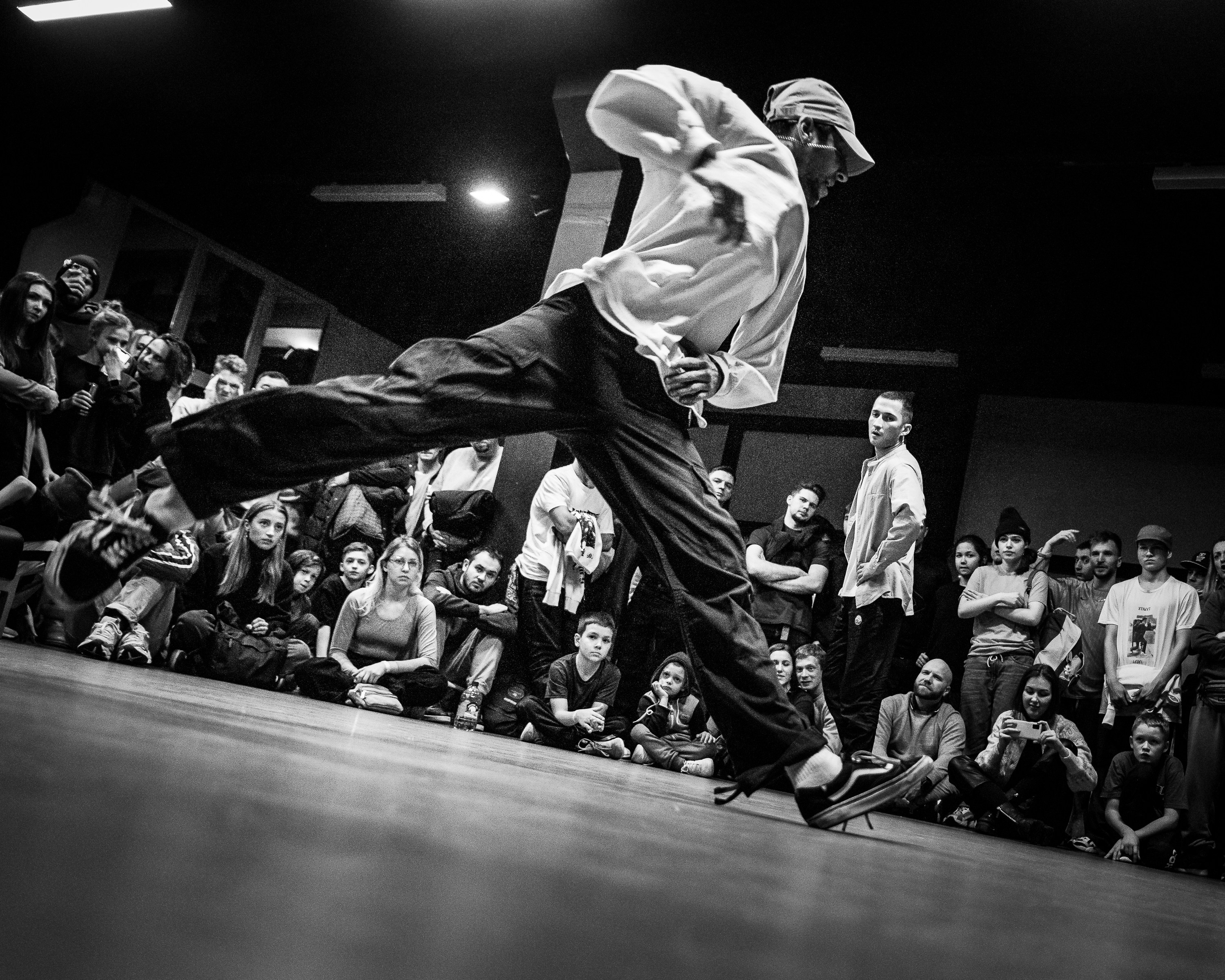
Watching the breaking competition at the Paris Olympics was to bear witness to some astonishingly athletic and entertaining dance moves.
At the Games, B-boys and B-girls (the preferred nomenclature for breakdancers) executed manoeuvres that at times resembled a combination of a whirling dervish, capoeira, gymnastics, fighting ninjas, and the Warner Brothers’ Tasmanian Devil – all with the backing of hip-hop beats.
Some of the dance moves seemed to defy the limits of human anatomy, and it should be said, good sense. The one-handed full-body balances and head spins looked like they were one false move away from serious, life-altering injury. The risk, of course, is part of the appeal for breaking’s afficionados and true believers.
Ultimately, the first – and possibly last – gold medals in Olympic breaking (the term “breakdancing” has had a rebrand) were earned by Canada’s Phil “Wizard” Kim and Japan B-girl Ami Yuasa, known simply as Ami.
What the competition did not resemble so much was anything like my memory of breakdancing from the 1980s, when the popular artform first caught my attention – via acts such as the Rock Steady Crew on Countdown, and then later when my friends and cousins started replicating the moves.
Apart from my lame attempts at the “robot”, I have offered little to breakdancing, lacking a character trait essential for hip-hop competence: attitude, moxie or chutzpah. Righteous moves were not busted by yours truly, nor did I exhibit lyrical flow.
In my recollection, the artform back then was equally divided between standing and prone moves. The former, which were in scant evidence in Paris, were all about “popping and locking”, the latter characterised by the helicopter or “frog in a blender” gravity-defying elements executed on the ground – or on a mat or cardboard back in the day.
Yet the only performer I saw do the “energy wave” move at the Games was Olympic mascot Snoop Dogg*, when he sashayed onto stage at the start of the second evening to introduce the medal rounds.
Let’s face it, it’s a long way – geographically, culturally and otherwise – from the New York City borough of the Bronx in the 1970s to the Paris Olympics of 2024. But that is the formidable distance traversed in time and distance by breaking.
The original artform emerged alongside the music it was spontaneously performed to, in which singers rapped lyrics over the top of beats produced by DJs. Artists such as Grand Master Flash, the Sugar Hill Gang, and Kool Moe Dee were the early progenitors, paving the way for crossover acts such as Run DMC, Public Enemy and the Beastie Boys.
After its shining zenith in the 80s when several breakdancing-themed films were made, the pursuit went underground – performed on street corners, high school gyms and wherever a ghettoblaster and willing participants could be found.
Re-emergence occurred in the early 2000s via competitions sponsored by Red Bull, with these now contested annually as the “BC One”.
In modern competition, protagonists take roughly one-minute turns, trying to do as much as possible in that 60 seconds to out-do their opponents. It’s mano a mano. It’s willing. And there is considerable attitude, not to mention athleticism, on display.
“I love keeping the tradition of breaking alive,” says the USA’s Victor Montalvo, who seized bronze in Paris. “Your body is the instrument, and you’re bringing that instrument out.”
But should that instrument have been played at the Olympics at all?
Well, the Games these days are a long way removed from their ancient Hellenic traditions, when young athletes competed sans clothes.
Breaking, surfing, speed climbing and skateboarding were included in Paris by the International Olympic Committee (IOC), which was doubtless hoping these sports would make the Games more appealing for younger viewers. Skateboarding, sport climbing and surfing all first appeared at the 2020 Tokyo Olympics.
The IOC has form when it comes to experimenting with different sports in the Olympic line-up, and of modifying rules to fit the times.
At the second Modern Olympic Games held in 1900 (also in Paris), competitors fought for medals in angling, motor racing, ballooning, cricket, croquet, Basque, pelota, a swimming obstacle race, and underwater swimming. Live pigeons were used in the shooting events, and there was a tug-of-war competition.
In the next Olympic Games, the Modern Pentathlon will be modified. The equestrian component is out, replaced by an Australian Ninja-like obstacle course. It’s hoped the change will make the event, which was conceived by Modern Olympics founder Pierre de Coubertin, more egalitarian.
So, events come and go. It’s par for the course (with golf back in for the past few Olympics as well, incidentally).
Yet the decision to include breaking by the French did seem particularly quixotic, and more than a little odd.
Not withstanding that breaking has been officially classified by an international governing body, if a competitive dance sport was to be included in the Games, perhaps ballroom dancing might have made more sense, given its global popularity and awareness.
Somehow, codifying breakdancing sullies the idea of two competitors throwing down one on one out on the street. But I’m biased; I also feel like rock climbing should be a contest of climber and rockface, and that surfing is best when it’s a challenge between wave and board rider, with crowds, prizemoney and trophies absent from the event. Don’t get me started on BMX or skateboarding.
However, the crowds at Paris for all these sports would suggest that popular opinion is otherwise, and has been for some time.
Much of the talk about Olympic breaking in Paris focused on Australian B-Girl competitor Dr Rachael “Raygun” Gunn, who was certainly not the best dancer at the Games, but undoubtedly owns the premier nickname among competitors.
Negative feedback focused on Gunn’s age, lack of athleticism and her unique moves, including one that evoked a kangaroo.
But as Te Hiiritanga Wepiha, who was on the judging panel that selected Gunn for the Olympics, says, Raygun’s efforts represented a form of courage.
Gunn competed despite knowing “she was going to get smashed”, and tried to build a routine that played to her strengths, which are artistic more than athletic. Alas, this wasn’t enough to progress past the preliminary rounds. She’ll always be an Olympian, however, and has a lucrative after-dinner speaker career awaiting should she wish it.
And it’s not Gunn’s fault that another, that a more acrobatic B-girl failed to rise and seize the female Oceania breaking spot allocated for Paris. The IOC can probably accept the blame here, because it allowed entry to a sport that lacks sufficiently high global participation numbers to produce a critical mass of elite performers.
In any case, Gunn won’t be preparing for the next Olympics in Los Angeles in 2028. No breaker will, in fact, because the sport won’t be contested in LA.
It’s been jettisoned by the IOC and LA organising committee in favour of squash, lacrosse (sixes), T20 cricket, flag football (a grid iron/NFL derivative) and baseball/softball.
“The choice of these five new sports is in line with the American sports culture, and will showcase iconic American sports to the world, while bringing international sports to the United States,” says IOC President Thomas Bach. “These sports will make the Olympic Games LA28 unique. Their inclusion will allow the Olympic movement to engage with new athlete and fan communities in the US and globally.”
Breakdancing has had its time on the Olympic stage. With DJs spinning records, the B-boys and B-girls flipped, spun, twisted, pointed and air flared. There were freezes, tricks, handglides, head spins, transitions and go-downs galore. As an Olympic sport, however, it is no more.
*How the Snoop D-Oh-Double-G became such a fixture in Paris is a little mystifying. Snoop’s whole vibe seems incongruent with the spirit of the Olympics.
Bill Russell is remembered for his grace, his tenacity, but perhaps most of all, for his success.
Bill Russell competes against his great rival Wilt Chamberlain.
Legend. Icon. Titan. Such descriptors are splashed about with abandon these days, applied willy-nilly to any athlete who compiles a reasonable record of success.
Surely, however, they are appropriate for basketball’s Bill Russell, who passed away in 2022.
At 206cm, Russell used his height, long wingspan and athleticism to help transform the sport from one that had previously been somewhat earth-bound to one contested vertically, and at pace. He was said to be one of the first players in college basketball to leave his feet at the defensive end of the court to either block or alter field goal attempts.
Basketball is a sport whose champions’ worth is usually assessed by their scoring ability, with discussions about the sport’s GOAT (greatest of all time) usually boiling down to two names: Michael Jordan and LeBron James.
Russell, however, never mastered a decent shooting technique, and wasn’t known as a high scorer, with his game predicated on his defensive prowess, teamplay, and all-round play. The points he did score were usually close to the hoop, and often an emphatic dunk.
Yet Russell is synonymous with hoops success, having earned an astonishing 11 championship rings during his career in the NBA, spent entirely with the Boston Celtics as both player and coach (and as player/coach).
Before his professional playing career began, Russell was determined to participate in the Olympic Games, which he duly did in Melbourne in 1956.
Russell’s great professional rival Wilt Chamberlain was ineligible for Team USA, having forfeited his amateur status by leaving college early to play for the Harlem Globetrotters.
In fact, Russell’s own amateur credentials were bought into question by Avery Brundage, head of the International Olympic Committee (and like many sports administrators, doubtless a pain in the neck).
Having been drafted by the Celtics, Brundage argued that Russell’s amateur status was void.
Had he not been picked for the US basketball team, Russell’s plan was to compete in high jump, a sport in which he was ranked seventh internationally at the time.
Indeed, earlier in 1956 Russell had achieved a mark of 2.06m at a track and field meet, a result good enough to tie with Charlie Dumas, who went on to become the gold medal winner in Melbourne.
Of course, sanity prevailed, and it was in his beloved basketball rather than high jump in which Russell competed in Melbourne.
Alongside his college teammate at the University of San Francisco and future Celtic KC Jones, Russell led the Americans to an 8–0 record, including a decisive 89–55 triumph against the Soviet Union in the final.
As host nation, Australia competed in basketball for the first time, but with the team only coming together once a week before the Games (which were held in October and November during Melbourne’s spring) finished 12th of 15 teams, registering wins against Thailand and Singapore.
The venue for Olympic basketball in 1956 was the historic Exhibition Building. Grainy footage depicts an open court, with plenty of room for spectators to witness the US seize gold.
Russell valued his Olympic experience highly, even in light of the considerable success he later enjoyed.
“It was just fun to be a part of that,” he said of the ’56 Olympics. “And the gold medal is very, very, very precious to me. In terms of trophies and things, it’s probably my most prized possession.”
Usually, this annual list has more variety in it – a touch of arthouse, a romantic comedy or coming-of-age film or two, a soupçon of foreign movies, a hint of something hard to categorise. Oh well. Although not all these films were outstanding artistically, they did all provide something – entertainment, diversion, viewing pleasure – perhaps at the expense of intellectual engagement. I would have liked to include the latest instalment from the Mission Impossible franchise in this list, but alas, departed about two-thirds of the way though. These are the best films I kept viewing until the final credits rolled.
Living In 1950s post-war London, civil servant Mr Williams (Bill Nighy) is part of an obstructionist government department that exists within an oblique Kafkaesque apparatus, seemingly with the goal of achieving as little as possible. Until that is, an epiphany changes things. Based on an Akira Kurosawa film of the 50s (Ikiru), with a script by Kazuo Ishiguro and boasting a wonderfully nuanced and subtle performance from Nighy, I found this so moving it warranted a return trip to the cinema for a second viewing.
John Wick 4 Hey boppers, the last instalment of the canine-related revenge epic is an opera of violence that takes in Tokyo, Berlin and Paris – a greatest hits of the best set-pieces from the previous three. The grandest of the series, it might also be the most moving since the first.
Oppenheimer There is so much going on in Christopher Nolan’s exploration of the legendary particle physicist Robert Oppenheimer. You’ll find history, war, love, death, betrayal and politics – all wrapped up in an alluring cinematic package shot by the great Hoyte Van Hoytema. A (cliché alert) cavalcade of stars – look, there’s young Han Solo, and there’s Bill Conti – helps deliver one of those powerful, impactful experiences that was astonishing the first time around, yet I have no desire to see again.
Equalizer 3 Antoine Fuqua and Denzel Washington have been doing this kind of thing, and doing it rather well, since Training Day. This time our eponymous hero executes his efficient MO in small town Italy, to bloody and picturesque effect.
Marlowe Liam Neeson plays cynical, world-weary gumshoe Phillip Marlowe, who has his own particular set of skills: smoking, drinking, immunity to being fooled by high-class dames, and a facility for cutting through to what matters.
Sisu In this Tarantinoesque sanguinary free-for-all, a plucky and gnarly gold prospector in Finland near the conclusion of World War II might just be hiding a military past. This comes in handy during encounters with selfish Nazis, who (spoiler alert), get what they deserve.
The Deepest Breath This visually impressive documentary provides insight into the cult-like world of free diving, and the tragedy surrounding the record attempts of Italian Alessia Zecchini. Free diving is truly an extreme sport, explored here in a film whose similarities to Luc Besson’s classic The Big Blue are remarkable.
Ferrari Not so much a conventional biopic of the Italian sportscar maestro, Ferrari explores a pivotal few weeks in the life of legendary car maker Enzo Ferrari (Adam Driver), culminating in the running of the Mille Miglia cross-country car race in 1957. Incredibly tense and slow-moving at times, elsewhere the film thrums and hums. What is rather odd is that director Michael Mann cast the tall, young US born-and-raised Driver (perhaps nominative determinism at work there) to play the diminutive, older Italian.
The Killer David Fincher directs Michael Fassbender as a meticulous international assassin (they are thick on the ground these days) who compensates for a lack of empathy with bloody efficiency.
Barbie Funny, clever and droll, Barbie is one of the best ever films to have been inspired by a doll. I enjoyed this film when I saw it, but it’s been so overhyped since that this may actually have detracted from that original screening (and feeling).
Some TV programs have characters that aren’t played by actors – or anyone, really.
In the world of Frasier, a spinoff from storied US sitcom Cheers, the eponymous character’s sister-in-law Maris is the butt of many jokes from the show’s main characters, radio psychotherapist Dr Frasier Crane (Kelsey Grammar) and his equally snobby and uptight brother Niles (David Hyde Pearce).
Let’s face it: Niles might just be one of the more exacting, neurotic, and pretentious characters to have graced the small screen.
We can glean this from Niles’ tastes (opera, fine wine, Italian tailoring), and also his predilections, for instance how he orders his steak.
“Not so lean it lacks flavour,” he insists, “but not so fat that it leaves dripping on the plate … not true pink, but not a mauve either, bearing in the mind the slightest error either way and it’s ruined.”
We also learn a considerable amount about Niles from Maris and the manner in which the show’s characters observe and comment on her (despite, you know, her perpetual absence). Niles may be somewhat stuffy and difficult; Maris is impossibly insufferable.
In fact, Maris we are told, is “like the sun, but without the warmth”.
As domineering and demanding as she is, Maris also happens to be completely unseen – always. She is in fact what’s known in the business as an “unseen character”. Not only does the audience never see her nor hear her voice, no actor portrays Maris on the show.
The audience is in on the gag, of course. The absence of Maris is usually explained away because she’s resting in another room, recovering from an unusual malady, or otherwise preoccupied.
So why not have an actress playing the part? Evidently that was the original intention of the program’s showrunners. As time went on, however, and descriptions of Maris and her behaviour became increasingly ridiculous, not only did the part become harder to cast, it was more humorous not to.
“We felt it was better if she was left unseen,” says program co-creator Peter Casey. “It was much funnier adding new and outrageous descriptions.”
Perhaps in this instance it’s a case of the character viewers have constructed in their imaginations being far more memorable than one that might actually have been depicted. What the mind creates is more vivid than what a flesh-and-blood thespian could likely portray.
Consider the classic creature feature Jaws, which is extremely scary, almost unbearably so, until you eventually see the rubber animatronic shark created by the film’s special effects team, which dubbed the model “Bruce”, and which is about as scary as that name might suggest.
Unseen characters existed well before the Seattle-set Frasier. In the aforementioned Cheers, in fact, we often hear about Vera, long-suffering wife of corpulent bar denizen Norm Peterson (George Wendt), who is usually depicted dodging his wife’s phone calls.
But we never actually see Vera (well, there is one episode where an actress playing Vera appears, but her face is completely obscured, keeping the joke alive).
Deceptively perspicacious LA police detective Columbo (Peter Falk) caught perpetrators off guard by asking “just one more question” as he departed from an interview.
The trench-coat-attired sleuth regularly refers to “Mrs Columbo”, a supportive partner who features in the detective’s anecdotes.
From early episodes we are informed the lieutenant’s spouse provides him with a pencil every day, which he invariably manages to lose. So, we learn that Mrs Columbo (in the original Columbo we never learn her first name), considers her husband forgetful, and would prefer that he smoke a pipe rather than the cigars he favours. She’s also sceptical about his police skills.
Could our lead character have been making up these stories (and the wife who tells them) as part of a strategy to lull felons into a false sense of security? The stories, definitely, but the way in which the show unfolds would suggest we are meant to think Columbo’s spouse is real but simply hidden from view.
In Minder, dodgy and scheming second-hand car dealer Arthur Daley acts in a less-than-scrupulous manner, bending laws to suit his needs. But there is one authority he will not mess with, and that is his spouse, who he less-than-lovingly refers to as “’er Indoors”.
It’s a sign of how deeply the show resonated that ’er Indoors was officially entered into the Oxford English Dictionary of Modern Slang, where it is defined as “one’s wife or girlfriend, a domineering woman.”
Fond of malapropisms such as, “the world’s my lobster”, Arthur maintained that ‘er Indoors was the bane of his (somewhat disreputable) existence.
In Magnum PI, the titular character, Thomas Magnum (Tom Selleck), has the use of a guest house and Ferrari courtesy of the generous and enigmatic novelist Robin Masters. The luxury digs are part of an estate known as Robin’s Nest.
Mr Masters might be very elusive and not actually seen, but in early episodes audiences could clearly hear conversations estate manager Higgins (John Hillerman) was having with him over the phone and intercom. The voice heard in those conversations, which take place over half a dozen or so episodes, was none other than Hollywood titan Orson Welles, who in his later years did plenty of voice work, including for the Transformers franchise.
Unfortunately that means Magnum PI is more of a footnote than entry in this story.
Eventually the Frasier writers orchestrated a divorce for Niles and Maris, paving the way for the former to pursue his infatuation with his father Martin’s (John Mahoney) live-in carer, Daphne Moon (Jane Leeves).
And what of Maris? Well, she went from unseen to completely absent – from, ubiquitous and dominant (albeit invisible) to barely mentioned, and then forgotten. Fortunately, no actors lost their job in the process.
You can walk out of a movie in a huff, or recognise that you’re making a boss move.
Is it OK to walk out on a film that you’re not enjoying?
It might happen during the opening scene or credits. Realisation may dawn halfway through a movie or five minutes from the end.
Knowledge could crystalise gradually, or be achieved in a dazzling epiphany. You have come to understand that the movie unfolding before you in the cinema is not up to scratch. It’s short of the mark. It might be lacking in some essential component – a plot perhaps – or possibly surfeited in undesirable aspects, say poor dialogue or annoying mannerisms from the actors involved.
Or perhaps the movie you have paid to see is offensive, puerile, excessively esoteric, self-indulgent, or worse still, boring. Some films are “sickening, utterly worthless, shameless trash”.*
What then to do? Do you sit it out, patiently and stoically, a bit like remaining at a game your football team is destined to lose ignominiously? Or do you simply grin and bear it, gnashing your teeth all the while?
There are two schools of thought that might be applied here.
One posits that all cultural objects, having been started must then be concluded, whatever the cost. The author/director/maker put a lot of time and effort into the book, film or sculpture, and you’re going to enjoy it, dammit. Sometimes art can be difficult or challenging, and you might not fully appreciate it until much later. Should you leave early, this understanding may never be achieved.
Another approach, and the one to which I am more inclined to adhere the older I get, says otherwise. Realising that our time here is limited, it’s OK to apply a reasonable standard of quality to the films we’re viewing – regardless or perhaps even because of the ticket price.
I haven’t always been an early departer. Part of the reasoning that might have kept me stuck to a seat in the past is the hope a film will improve. It may not have shown much in the time you have given it, but it’s still possible for it to get better.
This, or course, flies in the face of the maxim that past performance in the best indicator of future form.
Lately I have begun to fully embrace the early departure when confronted with an ordinary film. There is power in this move, and boldness too. It says to the saps watching poor films through to the end that you will not embrace their groupthink, regardless of what a particular reviewer says.
Hey, you can think for yourself, and what you’re thinking is that a particular movie does not deserve your time. And that’s OK. You made a mistake. We all do it.
Is it acceptable to walk out on a movie, leaving behind those who accompanied you to the cinema? Well, this is the definitive statement, actually. It says that putting up with whatever your friends say afterwards is better than remaining for even a single minute more. My partner Lucy up and left Wes Anderson’s The French Despatch before it even reached the one-third mark. And this at a premier opening-night screening, with a bunch of chi chi gourmet snacks and a special magazine tie-in issued.
But I wasn’t disappointed with Lucy, because I could see she was finally getting on board with the leave-early concept.
During previous cinema forays we’d stayed the course with such eminently departable fare as The Lobster, Dog Man and Murder on the Orient Express.
The first was a disastrously self-indulgent opus from critical darling Yorgos Lanthimos, and as humourless as it was unpleasant.
The second was an unremittingly grim neo-realistic slice of Neapolitan life, and the third a somnolence-inducing whodunnit, the best thing about which could be said was that Kenneth Branagh’s moustache deserved its own credit.
It’s been said that The French Despatch is the most “Wes Anderson” of Wes Anderson’s films, replete with the minutiae and tropes that have made The Life Aquaticwith Steve Zissou and The Royal Tenenbaums the enjoyably quirky films they are.
But when I Googled “Films that have been most walked out on”, The French Despatch was right up there, so a lot of people obviously share Lucy’s disdain and impatience.
There is an inclination to think that those of us who can’t sit through unpleasurable (I won’t say “bad” because opinions are always provisional, and some bad films can be terribly good fun to watch. Classic example: Dante’s Peak) lack forbearance in other areas of our lives. With this I can’t concur. Disappointment is the prevailing sensation at play here. We expect a modicum of quality in the art we experience, and hope for the best.
Sitting in a cinema allowing sound and images to float over you may be one of the great simple pleasures in life, so an incidence that doesn’t allow this to proceed is going to be jarring.
Here are 10 films that had that effect.
Operation Fortune: Ruse de Guerre (2023) It’s possible that this Guy Richie/Jason Statham actioner is passable. I have enjoyed Richie’s recent offerings such as The Gentleman, and Wrath of Man, in which Statham was impressive. But the sound levels at the labyrinthine Lido cinema where I saw (some of ) this film were so ear-drum-splittingly loud that I will likely never know. Yes, I could probably check this one out via streaming, but Statham did appear to be phoning it in, Hugh Grant and his egregious mockney accent were grating, and the whole thing had a by-the-numbers feel to it. It was good to see Josh Hartnett back on the big screen (albeit somewhat briefly given the early exit). Mr Hartnett delivers a very solid performance as part of the ensemble cast in Oppenheimer – and that is one film for which it is worth staying the distance. This one, not so much.
The Solitude of Prime Numbers (2010) If the title of this movie sounds a touch pretentious, that’s because this Italian art film, screening as part of the MIFF a few years back, was pretentious, and not just a touch. My memory is a bit hazy on the plot, but I can recall an 80s setting, a thumpingly insistent (possibly incongruous) techno soundtrack, and a sense of foreboding around an ill-advised skiing sortie down a challenging-to-the-point-of foolhardy ski run. Disfiguring injuries may have been involved. Were integers divisible only by themselves and one critical to the plot? This has escaped in the mists of time. Speaking of which, there was a lot of mist, fog and other assorted atmospheric vapour floating about. It took my friend Liz a bit of convincing to up and leave early. But once we observed the film’s stars and director vamoose about halfway through, all bets were off.
Julien Donkey-Boy (1999) Again, my memories of this one are sketchy. This tends to happen when you make a habit of not staying until the very end. Anyway, I can recall dragging my friend Dave along to a screening at what must have been one of the early iterations of The Melbourne Underground Film Festival (MUFF). Dave suffers from a form of sleep apnoea, nodding off at the drop of a hat, and he was snoring within minutes of the opening title sequence. A good thing for Dave. Though my memories lack clarity, a quick internet search tells me the plot concerns Julien, “a disturbed young man”, and his efforts to deal with his “nightmarish family life”. Teutonic titan Werner Herzog plays an emotionally abusive father. A younger brother spends most of his time practising wrestling moves against rubbish bins. A pregnant (to Julien?) sister (Chloë Sevigny) logs considerable screen time looking at baby outfits. Spoiler alert: The baby, as yet unborn, dies in an ill-advised ice-skating episode (Alpine sports accidents being a recurring theme of my early departures from films, it would seem). I can recall being drawn to this one because it was part of the much-hyped Dogme 95 manifesto, which had self-imposed rules about lighting, editing, budgets and such. This film involved murder and tragedy. Yet it was a figurative bullet that was dodged – by me, and Dave. I feel only relief and smug self-satisfaction, even a quarter of century later. Director Harmony Korrine is renowned for his edgy and experimental approach, but at least one of his films has been described as “an unintelligible mess”. This was a solid “no-brainer” walkout.
Promising Young Woman (2020) Cary Mulligan in the lead role and an Oscar win for Best Original Screenplay had me thinking this might be worth a look. But it turned out that Mulligan was not quite right in the lead despite her considerable talent and versatility, and the script was nothing special, involving a baroque revenge plot. Clancy Brown (hard to believe he was the villain in Highlander all those years ago) plays Mulligan’s dad. Some jarring set and production design is distracting, possibly on purpose. Eventually it became impossible to suspend disbelief. At that point, the exit sign beckoned.
Downtown Abbey (2019) Now, having never watched even a single minute of the historical TV drama that inspired this film, you may well ask what prompted a visit to the cinema to check out Downton Abbey the movie? It’s a very good question. The answer is a combination of a drizzly evening, a desire to go to the cinema more than to see a particular film, and the uber-optimistic notion that a genteel British historical drama set in a country manor early last century might very well translate to the big screen. Alas it did not, apart from being an effective soporific.
Main Street (2010) Colin Firth makes a rare misstep, his attempt at executing a US Southern accent poor at best. That said, I probably would have made it to the end had I not been seated in the very front row of the theatre, representing an excruciating assault on comfort in which Cinema Nova specialises, or at least used to. From memory there wasn’t much of a gap between the screen and the front row of seats, so unfortunately, I did disturb a few patrons at this RRR subscriber screening on the way out.
Tabu (2012) The word that pops into my head at the memory of this movie is “vague”. Black and white cinematography, African vistas, some sort of post-colonial plot … that’s it really. At a certain point in this messy, leisurely paced, perhaps artfully edited filmic excursion, I looked across to my friend Rachel and asked, “Wanna leave?” “Definitely,” was the reply. And we were gone. You never like to waste money in this way, but it’s even worse to wait it out, I think. In those circumstances you can consider the experience to be about paying to be confused, bored, or (as in this case) both. One need not pay for this. It is freely available outside the cinema.
Antman and the Wasp: Quantumania (2022) There are times when it seems like a good idea to see an undemanding film predicated on special effects rather than on its script, plot, scenery or acting. A small – though no doubt profitable – component of the Marvel Cinematic Universe, the original instalment in the series was an unexpected delight and commercial success. The eponymous character (Paul Rudd) is a likeable down-on-his-luck single dad – an accidental hero whose powers are supplied by a special suit and a large dose of pluck. Unfortunately, in this instalment, the whole gestalt has an “accidental” feel to it. The green screen component is as expected, but the plot meanders. It dilly-dallies and falters. In fact, it has the feel of being written in someone’s trailer before each day’s shooting. There are, of course, many references to the multiverse, which has surely had a good go of it by now. This was an easy walkout decision, for sure, but an expensive one, having made an impulsive decision to see the film at IMAX.
The Witch(2016) In the manner of Lars Von Trier (who, incidentally, added the “Von” for effect) Darren Aronofsky or John Waters, director Robert Eggers likes to provoke and/or disgust. His films such as The Lighthouse are frequently associated with the phrase “a harrowing experience”. You could say that the tone is set in this, Eggers’ first directorial outing. Set in the frontiers of the US on an isolated farm, this is one creepy and disturbing film I saw no need to endure through to the end. But hey, perhaps watching scenes of baby-snatching and eating is your thing.
Mission: Impossible – Dead Reckoning Part One (2023) The plot in this meandering actioner focused on something called the Entity, an AI-type scenario. Yawn. As usual, Tom Cruise in his guise as Ethan Hunt gets to run and squint a lot. Jeez, they really have run out of ideas in this franchise, which apart from the noticeable misstep on the set-in-Sydney second outing, I’ve thoroughly enjoyed. Post departure at the two-hour mark, I read a review that suggests the final third makes up for what came before. But there’s a lot to compensate for there.
So, there you have it: my top 10 films worth skipping out on before the final credits roll. Indeed, the earlier the better.
Did I use well the time I saved by not sitting in the dark experiencing these movies all the way through? It’s an irrelevant question. The benefit is more in the vein of “addition by subtraction”.
Because you are no longer captive to a terrible film, your life is immeasurably better.
This is the ethos behind a new organisation I’m forming: Cinephiles Inclined Not to Endure Movies that are Appalling, or C.I.N.E.M.A.
Join me in C.I.N.E.M.A as we rise as one and take leave of underperforming or unenjoyable films!
Now I realise that as one half of a childless couple, I’m in a different position to many others.
For a start, some people rarely get an opportunity to see a film in the cinema, the optimal way to experience it.
And consider the Antman fiasco. Now if Ms Lucy and I had a couple of teenagers in tow, I doubt that we could have convinced them to up and leave with us. We would have to come back for them later.
Going to the cinema to check out a film is one of life’s affordable luxuries. Leaving early is another.
*Apparently these were the words that renowned film critic Roger Ebert used to describe Caligula.
There was plenty of good viewing last year, but not necessarily from films in contention for an Oscar.
Every year my friend Derek and I post our top 10 films from the previous 12 months or so. There is a little bit of wriggle room on the timing. Our usual practice is to wait until Australia Day (January 26) to allow more time to catch up on films introduced in time for the awards season (BAFTAs, Academy et al). Yet there’s no guarantee a film highly regarded by cinema’s critical cognoscenti will resonate with either of us.
Indeed, in the recent past there has been an almost complete disconnect between what the film festival juries, academy committees and critics’ associations dub worthy of praise and what has provided pleasurable viewing.
A classic example is the highly regarded opus, Triangle of Sadness, from Scandinavian enfant terrible (there’s probably a better Swedish expression) Ruben Ostlund.
The Cannes Film Festival jury awarded the contemporary riff on Lord of the Flies its highest honour. I saw it as a means of taking refuge on a hot Melbourne day (along with my partner Lucy), but found it equal parts pretentious, irksome and risible, boasting a cast of thoroughly unlikeable characters.
Yet 2022 also offered plenty of thrilling, engaging and entertaining films. There were more than enough to fill a top 10. So no, I did not watch every scene of every film, but did manage to check out some good ones.
Turn Every Page This absorbing documentary explores the extraordinary working relationship between octogenarian writer Robert Caro and editor Bob Gottlieb, a professional partnership that has stretched over 50 years, and continues apace as Caro attempts to put the finishing touches to his landmark five-book exploration of power as manifested in the career of US President Lyndon Baines Johnson.
True, it isn’t exactly hard-hitting, and this is explained by the fact that at the helm of the movie project was Lizzie Gottlieb, Bob’s daughter.
But through Lizzie’s insistence – both Caro and Bob are extremely guarded about their privacy – we are provided some fascinating insights into Caro’s astonishing persistence, dedication and perfectionism, and into Bob’s own remarkable career.
After Yang Featuring nuanced, delicate performances from its small cast, particularly Colin Farrell, After Yang is a science fiction film that approaches the question of artificial humanity with no small amount of imagination and curiosity, posing questions about identity, family, memory, and much more.*
The Lost King The eponymous monarch of the title is Richard III, much maligned throughout history as an evil hunchback villain – and that’s certainly how he’s depicted in the Shakespeare play. But was he? Based on a true story, the film explores how amateur historian Sally Hawkins (Philippa Langley) pours through old records, maps and books in search of the king’s misplaced skeleton so that he might be given an appropriate interment.
Top Gun: Maverick I thoroughly enjoyed this film even though – or perhaps because – it is so derivative of the original, in terms of plot, style and tone. There is even a beach scene depicting athletic young pilots playing sports (in this case US football rather than volleyball as in the original). The cinematography is amazing, the technical achievement astonishing. And you may well find yourself involuntarily punching the air by the end. But – and it’s a big but – there is nothing at all revisionist in this egregious piece of propaganda celebrating US capability with such jingoistic vervour. It is unapologetically even “more Top Gun” than the original. That’s a bit of a problem.
The North Man This is the first film from director Robert Eggers I haven’t walked out on (or, if you are my friend Bernard reading this, “on which I haven’t walked out”). I heard it referred to as “arthouse Conan the Barbarian” (actually Derek coined that phrase, hoping the film could live up to it). It’s not quite that, lacking as it does a certain something. Verisimilitude, perhaps.
The Gray Man In his first mainstream action film, Ryan Gosling plays a Nikita-like blunt instrument of espionage. Rescued from unfair incarceration in the US penal system, he’s moulded into a covert black ops assassin for the CIA. But when corruption reaches the upper levels of the agency and our hero Court Gentry is himself earmarked for termination, his adroit skills come to the fore, across (of course) numerous picturesque international locales.
The Man from Toronto Yes, my third “Man” film for the year, a comedy/action caper featuring endearingly hopeless athletic industry entrepreneur Teddy (Kevin Hart), who through a “printer toner situation” finds himself at the wrong address, and mistaken for the eponymous hombre (Woody Harrelson), an assassin renowned for his skill and cruelty.
Bullet Train A yappy new age hitman known as Ladybug (Brad Pitt) takes a job on a, yes, Japanese fast-moving train (bullet, get it?) in this “crazy mix of Snatch, Kill Bill, John Wick and Murder on the Orient Express” according to one online review, which pretty much captures it. There are also shades of Snakes on a Plane, El Mariachi, Layer Cake, Grosse Pointe Blank, and any other flick featuring fast-talking killers for hire. Somewhat derivative, but an enjoyable, er, ride, nonetheless.
Glass Onion: a Knives Out Mystery Master sleuth Benoit Blanc (Daniel Craig) is on the case again in this twisty tale of murder involving billionaire tech mogul Miles Bron (Edward Naughton). Bron invites five friends to his Greek mansion, Glass Onion, where murder most foul is committed, and of course, with the renowned Bayou detective on the case, elegantly solved.
Hustle Featuring a cast of NBA players and an authentic b’ball story brought to screen (although this one focuses more on the business than playing side of hoops) Hustle tells the story of lifelong basketball lover Stanley Sugerman (Adam Sandler), a career scout who has always wanted to coach, but because he’s so skilled at spotting talent, has never made the transition to the coaches’ bench. In Spanish playground legend Bo Cruz (Juancho Hernangomez), perhaps he’s found a path there?
Everything Everywhere All at Once** Everyone’s favourite metaverse-set action-comedy is bought to life by a fantastic performance by Michelle Yeoh, who as mild-mannered laundry owner Evelyn Quan Wang must liaise with the many versions of herself to save the fate of the multiverse, or some such thing.
*After Yang was a buzzer beater, after Derek gave me the heads-up on Australia Day. Thanks D,
Junior basketball coaches are charged with quite a responsibility. As they help mold young players, they are shaping young people.
In order to become bona fide doctors of medicine, suitably qualified medical professionals must swear the Hippocratic Oath of “primum non nocere,” – that in their roles as care givers, they will strive to first do no harm. They pledge that the individuals in their care will be no worse off after treatment.
I’m wondering if a similar pledge could apply to basketball coaches – let’s call this the Hoopocratic Oath. Hear me out.
Now I know that basketball isn’t a matter of life and death (although some might say that b’ball is far more important than that). But it is important to those who play it, especially junior ballers.
And the sport has exploded in recent years. All across Melbourne, and indeed the country, you’ll find multicourt stadia filled on weekends with the sound of leather slapping the floor, whistles shrieking, coaches bellowing.
Given the steep rise in playing numbers, there is also a continuing demand for mentors; someone has to teach the young hoopsters the basics such as correct shooting form, plays such as the old give-and-go and screen-and-roll, and of course to do the subbing and allocate court time.
It’s a task that requires a considerable time commitment, and no small amount of effort. Certainly, those selfless individuals who take on these responsibilities deserve the sports’ thanks.
With basketball’s rise, however, so too have ascended professional opportunities for coaches. Even outside of the elite echelons, it’s possible to make a career from coaching basketball, one way or another. Secondary schools, semi-professional leagues such as the NBL1 or state leagues, or working directly for associations all provide opportunities.
Therein exists some tension. Coaches may see their roles as that which advances their own careers – winning for instance, or having a certain number of players graduate to elite programs. Ensuring that all those in their charge enjoy and benefit from the coaching experience may not figure prominently in their overall plans.
These types of coaches become more conspicuous at representative level. A giveaway might be the use of vernacular such as “put heat on the rim” and “stick it” rather than “drive” and “shoot”. They often know their win-loss record, and will be ruthless to preserve or better it.
Meanwhile, half their squad might barely break a sweat, and can spend games looking glum.
The Hoopocratic Oath, therefore, is about ensuring that all junior coaches understand they are leading youngsters in a game, and must therefore strive to keep the “fun” in “fundamentals”.
With this in mind, the oath would have to address appropriate coaches’ talk to players.
I’ve seen coaches of junior teams call timeouts, angrily point at players, and then quickly start designing complex plays.
Surely at junior level the conversation needs to start with a positive – recognition of what worked well in the first instance. There should be acknowledgement of effort – filling the lanes on a break, blocking out, helping out on D – and not simply a rant accompanied by a clipboard-focused communication.
Out-of-game talk is also vitally important. I heard a troubling story recently from a young Australian whose US college scholarship was rescinded (which happens more often that might widely be known) after three years.
“I think the team would be better off without you on it,” was how the coach broke the devastating news to the young man.
There is a better way to discuss such matters, especially at universities that pride themselves on developing “the whole person”. (Or is this college hoops’ fiendish plan for preparing young people for a ruthless and heartless world?)
When it comes to training, the Hoopocratic Oath would put a line through the “three Ls” – lines, laps and lectures.
There are alternatives to forcing young players to line up to do drills (and spending more time waiting than participating), run laps of the court as punishment for a misdemeanour or infraction, or compelling them to listen to a long coach’s peroration.
How about having them participate in game action, and learn while doing? Or, for novice players, setting aside time for drills that either don’t require a ball, or where every player has their own?
Where coaches spot something technically awry, some helpful guidance could be proffered. Yet I have seen kids come back from elite camps and squads with worse skills than before they left, which make you wonder what was taught.
It goes without saying that coaches, even young athletic ones, should refrain from participating directly in game-action drills, and certainly from dominating when numbers demand their inclusion.
For games, coaches – if not clubs – might consider having reduced numbers in uniform. Is it really necessary for junior teams to have five to seven players on the bench?
And what could be learned from all this, you might ask?
Hopefully, that at its best basketball is truly the beautiful game – a team pursuit whose elements, almost uniquely among team sports, can be practised alone.
These days at the elite level – NBA and international hoops – basketball is dominated by three-point shooting and dunks, with diminished emphasis on the mid-range game, and on ball and player movement.
For junior players, however, the three-point arc is located a formidable distance from the basket. Given so few junior hoopsters would be capable of making one-third of even completely unmolested attempts from beyond the arc , surely it makes more sense to encourage the search for the deuce?
Perhaps inspired by the likes of rare talents such as Stephen Curry and Damien Lillard, junior basketball is dominated by scoring-oriented and dribble-dominant guards. It’s rare these days to encounter a game played among participants with a pass-first mindset.
Perhaps as part of the Hoopocratic Oath, it’s the coach’s role to remind players they are playing a team sport, and to discuss now-exotic concepts such as ball movement, moving without the ball, making the extra pass, giving the ball off early (a la Josh Giddey), making the pass before an assist (the so-called “ice-hockey assist”), competing for rebounds …
We know that not every player on every team will reach elite status, or even progress beyond the level at which they’re currently playing. That’s why it’s important to try to make each outing fun and rewarding.
Is this all a bit idealistic and unrealistic? Perhaps.
However, it could be worth keeping in mind the advice offered by basketball’s founder, Dr James Naismith: “Be strong in body, clean in mind, lofty in ideals.”
Perhaps it’s simply part of human nature to want to hear and tell stories. Like the “fight or flight instinct”, maybe its hardwired into us. Inchoate. Part of our essence.
Long before we were a written culture, humans shared tales via the spoken word. As our ancestors sat around fires or huddled in caves, they told stories of battles, lineages, creation myths, tales of the hunt, the dreaming, of past conquests, vanquishments and lessons learned. We dreamed up gods to worship and prophecies of things to come.
Ghost stories, parables, fables, myths and sagas explained our history and made sense of it.
We learned that stories have power (which is doubtless why politicians are always trying to “control the narrative”). Even as they enthral, our tales can also evoke, provoke, excite, amuse, entertain – even control. When a story is sufficiently potent, it can draw masses to houses of worship, or even inspire them to sacrifice their lives for the promise of something better in the hereafter.
Consider the egregious story of the “stolen” US election, which built such momentum that it led – unprecedentedly – to a throng descending on the US Capitol Building, with dire results.
It would seem false stories are just as potent as the genuine article, and maybe even more so.
Most of us have been warned at one time or another not to stick our heads in the sand, or worse, accused of doing the same.
The phrase refers to the supposed practice of the flightless African bird, the ostrich, of plunging its head into soil in an ill-fated attempt to avoid danger.
According to the Cambridge Dictionary, the phrase has come to mean “to refuse to think about unpleasant facts, although they will have an influence on your situation.”
A classic Warner Bros cartoon featured Foghorn Leghorn and his “son,” a misplaced ostrich, who emerged from his oversized egg only to thrust his head earthwards at the merest hint of discomfort.
It’s a phrase that’s in common parlance.
Here’s the thing, however: Ostriches don’t bury their hands to avoid danger, and never have.
The untruth relates to a fantastical piece of travel journalism from ancient historian Pliny the Elder (23–79 AD).
In Book 10, Chapter 1 he writes of ostriches, “they imagine when they thrust their head and neck into a bush, that the whole of their body is concealed.”
It’s thought this single sentence is the source of the misunderstanding, which has now lasted about 2,000 years. It’s very evocative, which might help explain its “stickiness”.
The way you hear gun-toting Americans talking about their Second Amendment rights, one might imagine that the framers of the US Constitution had in mind a society where everyone has a legal right, if not responsibility, to own and carry their own firearms. Indeed, the story many Americans understand is that these sacred words allow just that.
I’m not sure that this is the case, but then again, I’m not a US citizen nor a pettifogging shyster, merely someone interested in language.
“A well regulated Militia, being necessary for the security of a free State, the right of the people to keep and bear Arms, shall not be infringed.”
Stunning in its brevity, the Second Amendment also stands out for its lack of clarity and for its disjointedness.
Since it’s but a single sentence, one might think the second part is connected with what comes before – that the right to bear arms is dependent on the arms-bearer being part of a militia, and a well-organised one at that.
Ratified in late 1791, the most influential framer of the Second Amendment was said to be James Madison, whose primary concern was that a federal army could be kept in check by state militias if necessary.
Still, in 2008 a conservative-dominated US Supreme Court held that the amendment protects an individual’s right to keep a gun for self-defence.
The idea that the second amendment protects an individual’s right to bear arms, however, is a relatively recent phenomenon. Research by Robert Spitzer found that every single law journal article discussing the Second Amendment through to 1959 “reflected the Second Amendment affects citizens only in connection with citizen service in a government-organised-and-regulated militia.”
The “individualist” reading is a recent phenomenon, and decidedly not what the framers intended, regardless of that recent ruling.
In a book calling for the US Constitution to be changed, Justice John Paul Stevens (a Reagan administration appointee, so hardly a liberal bleeding heart) submits a revised Second Amendment:
“A well-regulated militia, being necessary to the security of a free state, the right of the people to keep and bear arms when serving in the militia shall not be infringed.”
Firearms rights is a cause positioned at the heart of the conservative authoritarian political right in the US. It seems incongruous, somehow, that Christian tenets also sit within the potpourri of conservatism beliefs, whose espousal of the free market and pro big-business policies seem counter – if not diametrically opposed – to the Bible’s teachings.
I’m thinking here of “Do unto others …”, “Turn the other cheek …”, “The meek shall inherit the Earth …”.
The stark words from Matthew 19:24 state clearly that the Biblical Jesus had little truck with materialism.
“It is easier for a camel to go through the eye of a needle than for a rich man to enter the kingdom of God,” the passage states.
(Before I quote any more biblical passages, I should state that my own beliefs run to agnostic.)
Some years ago, prominent rugby union player Israel Falau was banned from playing following a controversy over some homophobic social media posts. Folau had posted on Instagram that gay people were destined for hell.
At around the same time Folau gave a sermon in his Sydney church linking the bushfires ravaging parts of Australia at the time (in 2019) to legalisation of same-sex marriage and the decriminalisation of abortion.
Meanwhile, however, Folau was signed to a four-year $4m pact with Australian rugby, surely placing him in the camel-competing cohort as outlined in the Book of Matthew quote above.
Not only that, but Folau, like many professional athletes, is bedecked in tattoos, which according to the Old Testament’s Book of Leviticus (19:28), are strictly taboo.
“Do not cut your bodies for the dead or put tattoo marks on yourselves,” the passage says.
What made Folau think he was a Christian, when clearly he was in contravention of his religion’s own rules? His obscene wealth and ink made sure of that.
Surely kindness and acceptance rather than judgementalism and hostility should be top of the tree when it comes to preferred Christian characteristics? Jesus was a friend to prostitutes and the destitute, and thought the world of commerce had no place in the house of God.
Sadly, though, the major religions have logged a long and inglorious history of acts based on their faiths’ superstitions and myths rather than depredations (from above, where else?) to mean well and do good.
I didn’t set out to write a piece about deplorable Christian brothers or Nazi-funding popes, but it’s fair to see the “big three” religions have committed their share of repugnant acts. Only considerable cognitive dissonance makes such duality possible. And as Philip Adams reminds us, arguing about religion is like arguing about who has the best imaginary friend.
Other well-known facts that are not true: that a frog will allow itself to be boiled alive if the cooking process is gradual (the frog will hop out when it gets sufficiently uncomfortable); that 10,000 steps per days is optimal for human health (the number is based on a 1960s study of Japanese factory workers and has no real-world corollary – although it probably isn’t a bad idea); and that we humans use only 10 per cent of our considerable brain power (debunking the films Lucy and Limitless, and putting in jeopardy our overperforming future selves).
Acquiescent amphibians, cowardly flightless birds, even unkind and uninformed so-called Christians – one can to a degree understand how such misunderstandings developed over time.
But how should we think about those who believe not just those misnomers, malapropisms and false narratives that have found their way into our culture, but have actually gone further and embraced a pack of lies – say that COVID vaccinations contain nanobots, or that a paedophile ring is operating among “elites” – politicians, actors and those in their community?
In her book Qanon and On, Van Badham details cases of non-radical individuals being sucked in by the vortex of online cults such as Qanon and others via chat rooms such as 4Chan.
Such realms provide a degree of comfort and sense of control for marginalised and vulnerable individuals. And because they are ring-fenced from reality (for instance claiming the ABC or the New York Times are skewed to the left and full of untruths), all the forms of media these folks access contain confirmation bias.
Some of those who marched in the Capitol riots on January 6, 2001, had undergone a deep radicalisation and conversion within months of first venturing into the online conspiracy cults.
I have a science teacher friend who, once a member of the Greens, morphed into a conservative and anti-vaxxer over the past few years. During one of Melbourne’s several lockdowns, he was extremely concerned and agitated that the lockdowns were merely an excuse for the state government to impose a police state.
Badham’s advice is to keep such individuals engaged but don’t attempt to dissuade them of their strange beliefs. Stay in neutral conversational territory.