
The best books of the 21st century so far

If you’ve been counting – and even if you haven’t – the 21st century has ticked over 25 years. In fact, if we’re marking the year 2000 as the first year of the new century and millennium, as per convention, this milestone was passed at the end of last year. Some literary-inclined publications have used the occasion to publish “best of” lists for the past quarter century. The books below represent my attempt at organising and ranking my favourite reads – fiction and non-fiction – published since 2000. It is not a list compiled after considerable rumination, late-night teeth gnashing or references to past notes. Rather, the first place I consulted was my bookshelf: which books published in recent times have been revisited – and enjoyed on re-read? Which had me admiring the craft on display, the storytelling? Which brought me pleasure? These were the criteria.

Empires of the Plains, by Lesley Adkins
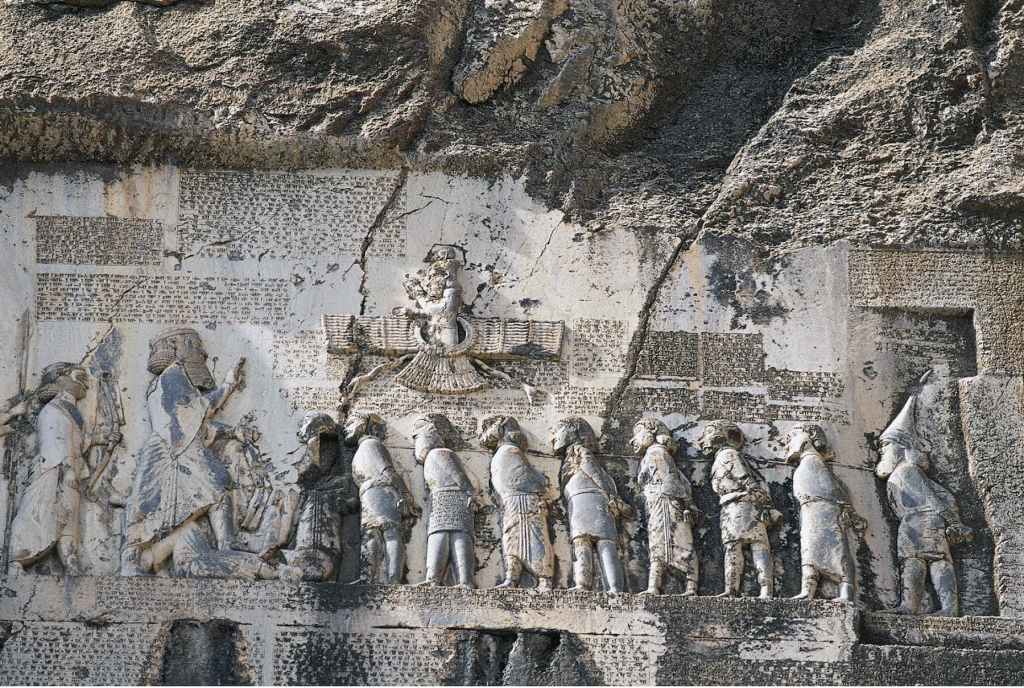
Providing insight into the origins of written language, Empires of the Plains is an extraordinary true story, excellently told, of a real-life Indiana Jones, one Henry Rawlinson, who used an amazing facility for ancient languages and a taste for adventure to make enormous strides during the 19th century in the understanding of cuneiform, a type of written language that predates hieroglyphics. The “plains” of the title are those that exist between the Tigris and Euphrates, the site of many cultures that rose and fell over the past 10,000 years. Rawlinson’s efforts were focused on a monument carved into rock vertiginously high on a cliffside at Behistun in western Iran. There, Darius the Great ordered a tribute to his conquests, carved in three ancient languages: Old Persian, Elamite and Babylonian. With grit, nous, bravery and determination, Rawlinson led a charge to decipher the text and shed light on a chapter of history little was known about. This is an edifying yet rollicking read.

Wolf Hall, by Hilary Mantell
What an incredibly evocative wordsmith Hilary Mantel was. A two-time winner of the Booker Prize for Wolf Hall and Bring Up the Bodies, Mantel was perhaps unfairly denied a third bauble for the final book in the trilogy, The Mirror & the Light. Wolf Hall tells the story of the murderous Henry VIII, but with Henry’s major domo, Thomas Cromwell, front and centre. In the past Cromwell has typically been depicted as a villain, but here he is a family man, working behind the scenes to minimise the damage from Henry’s impulses, and to (of course) maximise the profit.

The Year of Reading Dangerously, by Andy Miller
After graduating with a degree in literature from prestigious Cambridge University, aspiring writer Andy Miller finds his professional life on a limited, predictable trajectory of customer service in a high street bookstore, literary ambitions on permanent hold as a grinding daily commute exacts its toll. Deciding that something must be done, Miller sets out to reignite his love of words and books, by dedicating his quotidian train time to consuming the great tomes of the Western Canon that he claims at parties to have read, but never actually got around to. There hasn’t been a book this exciting about one man’s reading adventure since Peter Robb’s Midnight in Sicily.

The Havana Room, by Colin Harrison
The plots and characters (apart from the city of New York) vary from tome to Harrison tome, but often it’s a case of rearranging the ingredients: a generous helping of shady/dislikeable characters trying to cut corners and get what’s theirs, a past that can’t be outrun, a soupcon of sex, a dollop of power, a central character dealing with challenges beyond his control – all told in Harrison’s high style and hung around a propulsive plot. After losing his high-paying job, luxury house and then his family, untethered Bill Wyeth finds himself drawn daily to a chi chi Manhattan steakhouse whose denizens seek a taste of forbidden pleasure in the exclusive eponymous space. But just what exactly is going on in the Havana Room?

Cultural Amnesia: Notes in the Margin of My Time, by Clive James
Polymath, writer, critic, aphorist, cad, genial TV talk show host, fierce intellectual – Mr Clive James must surely be one of the sharpest minds to have emerged from the colonies. This is a book that James spent a professional lifetime preparing to write. It’s an A–Z of cultural, scientific and political figures prominent, as the subtitle suggests, in the margins of James’ version of the 20th century. He was keeping detailed notes. Some of these individuals are prominent, iconic even. Titans. Others would doubtless have been consigned to more obscure compendiums had they not been included here, or perhaps forgotten altogether. There are chapters dedicated to such towering souls as Albert Einstein, but others to names such as Zinka Milanov, an opera singer who was once said to have uttered, “Either you got the voice, or you don’t got the voice: and I got the voice”. A chapter might start as an exploration of a historical figure, but veer off in a different direction, settle certain points, reference a bunch of names or works with which I might only have been vaguely familiar, and then return to the original narrative strand and conclude in James’ satisfyingly heady style.

Strange Bodies, by Marcel Theroux
You might recognise the surname of writer Marcel Theroux, the eldest son of renowned scribe Paul Theroux (Mosquito Coast), brother of documentary maker and podcaster Louis, and cousin of Hollywood actor and scriptwriter Justin (who has Tropic Thunder among his scriptwriting credits). Marcel’s oeuvre is the unsettling, clever and compelling literary novel. Yes, that is a thing. And perhaps it’s the best way of describing Strange Bodies, which is as unnerving as it is moving. The novel opens with a knock on a woman’s door by an odd-looking stranger claiming to be academic Nicholas Slopen, one of her old beaus, despite bearing no physical resemblance to him. A carefully concealed memory stick left behind turns out to be the story we have in our hands – and what a page-turner it is!

Heresy: Jesus Christ and the Other Sons of God, by Catherine Nixey
As the progeny of a former nun and former monk, writer Catherine Nixey has some bona fides for writing about religion. In this, her second book, Nixey does a deep dive into the many alternative versions of Christianity that proliferated in the centuries following Jesus’ life and death. The Ophites, for example, believed that Christ had appeared on Earth in the form of a serpent. They therefore celebrated mass by encouraging a snake to crawl over the altar on which loaves had been placed, consecrating them in the process. Another sect dating from the first century AD believed that King Herod rather than Jesus was the Messiah for whom they had been waiting. There are, in fact, plenty of conflicting tales about Jesus to be found, and apparently more than one charismatic bearded young man performing miracles and collecting acolytes while roaming around the Middle East in the first century. Certainly, more than enough for Nixey to start asking questions and looking through files, synthesising the findings into this fascinating read.

Station Eleven, by Emily St. John Mandel
How prescient and well timed was this take from Canadian scribe Emily St. John Mandel, which depicts a near future in which a potent virus wipes out vast swathes of humanity. In such challenging circumstances would we rise to the occasion by forming into cooperative communities to feed, clothe and defend ourselves, or would we descend, a la Cormac McCarthy’s The Road, to our base instincts?

Soon, by Andrew Santella
In my small library there are some fantastic non-fiction and reference books published in the past 25 years that have become cherished resources or often-returned-to reads. The Field Guide to Typography by Peter Dawson is one I love flicking through even though I can’t help but think focusing on getting to know a handful of typefaces would probably serve me better that being exposed to them all. I was impressed by Impossible City: Paris in the Twenty-First Century by Simon Kuper. It is as informative as it is engaging. Another Gallic tome, The French Art of Not Trying Too Hard by Ollivier Pourriol, provided some nuggets (or petit four, perhaps) of wisdom. Morning by Allan Jenkins made we want to (one day) start setting my alarm earlier. But a book that spoke to me and my life-long proclivity for scheduling a better (i.e., later) time for tasks was Soon, an exploration of procrastination throughout history. Beautifully written by Andrew Santella, the book sets out to find out why the will to delay has been the signal habit of such luminaries as Leonardo Da Vinci, Charles Darwin and Frank Lloyd Wright, and what, if anything, can be done to overcome it.

A Gentleman in Moscow, by Amor Towles
There is one remaining slot on the list of 10, which has allocated five each of fiction and non-fiction (my self-imposed rules for this compilation). It could easily have been taken by The Amazing Adventures of Kavalier & Clay by Michael Chabon, or The Shadow of the Wind by Carlos Ruiz Zafon. I also inhaled Creation Lake by Rachel Kushner and was thoroughly entranced by The Empusium by Olga Tokorczuk. The House of Silk by Anthony Horowitz was a most excellent addition to the Sherlock Holmes canon. The Wizard of the Kremlin by Giuliano Da Empoli, inspired by Vladimir Putin’s major domo Vladisav Surkov, was consumed in a few short sessions. Yet at a time when inspiration rather than darkness and grimness was called for, A Gentleman in Moscow answered this call. The novel tells the story of the charming and stoic Russian aristocrat Count Alexander Ilyich Rostov, who is deigned by the Bolshivik authorities to live out his days in Moscow’s Metropol Hotel, where he remains under house arrest for 30 years. Rather than succumbing to self-pity, he finds pleasure in reading and food – it is a luxury hotel in which he is ensconced, after all – and in cultivating friendships with staff and guests. His life becomes one of service. A former financier, Mr Towles has an authoritative but engaging writing style, and has our main character share many useful aphorisms, such as “Imagining what might happen if one’s circumstances were different was the only sure route to madness.” Perhaps it is time to read A Gentleman in Moscow again.



Life sentence

Subject, verb, predicate – what makes one group of words sound better than another, have more resonance, greater meaning or deeper impact? This post explores the sentences that sustain us.

Every year the cultural cognoscenti gather to award the literary arts’ most prestigious baubles: the Nobel, the Man Booker, the Miles Franklin.

There is criteria by which the awarded tomes are judged, but also intangibles. No one can say definitively what made one book prove more alluring, dazzling or intriguing than another. Yet a consensus is reached, somehow.

It’s certainly not judged solely on technical merit – on the quality, say, of individual sentences. And that makes sense. Sentences are writing’s basic building blocks, and you don’t assess the quality of a skyscraper merely on the impressiveness of its stone, steel and glass.

Also, what metric or index could be applied to assess sentence quality? Trying to explain what makes one group of words more memorable, meaningful or powerful than any other is incredibly elusive. Most people when asked can’t say why something sticks in their mind, or why it sounds “nicer” to them. They just know.

“I’m not sure how to describe what makes a good sentence for me,” says graphic designer Frank Ameneiro, a prolific reader. “I just feel it.”

Frank really likes this quote from Rosencrantz & Guildenstern are Dead:

“We cross our bridges as we come to them and burn them behind us, with nothing to show for our progress except a memory of the smell of smoke, and the presumption that once our eyes watered.”

There is considerable restraint in that group of words, and as much power in what’s left unwritten as what’s penned. It’s also skillful in the manner in which it evokes smells and sensations and a sense of wanton destruction. Why were they burning bridges? Why only a guess as to lachrymose eyes?

Still working the Bard angle (Rosencrantz and Guildenstern are side characters in Hamlet that Tom Stoppard put centrestage) Jonathan Irwin, a senior sub-editor at The Sunday Times, references a line from Shakespeare, a snippet from The Tempest spoken by Prospero:

“We are such stuff/As dreams are made on, and our little life/Is rounded with a sleep.”

Jonathan says, “For me it sums up the beauty, wonder and sadness of human existence, whilst inspiring by its genius and eloquence. I find the thought of sleep being our before and after very comforting too. It also implies an atheism that reflects my own.”

Sentences, Jonathan says, are good for different reasons. Text needs context. A group of words in isolation, however appealing, often won’t have resonance.

“My favourite sentence is wonderful on its own,” he says. “But seen in the context of the whole speech by Prospero, it becomes more powerful … as it does seen in the context of the whole play … as it does seen in the context of Shakespeare’s whole oeuvre. The Tempest is about a magician who creates characters, and was written near the end of Shakespeare’s career and life, so the poignant parallels with him as a writer are clear.”

Without explanation, Sophie Patrick put forward two nominations for this prosaic pantheon. They are two more from “Capital L” literature.

The first is from Wolf Hall by Hilary Mantel.

“This is how the world changes: a counter pushed across a table, a pen stroke that alters the force of a phrase, a woman’s sigh as she passes and leaves on the air a trail of orange flower or rose water; her hand pulling close the bed curtain, the discreet sigh of flesh against flesh.”

The second is from Jonathan Franzen’s The Corrections.

“The correction, when it finally came, was not an overnight bursting of a bubble but a much more gentle let-down, a year-long leakage of value from key financial markets, a contraction too gradual to generate headlines and too predictable to seriously hurt anybody but fools and the working poor.”

Although neither of these offerings are what could be described as pithy – compare “Jesus wept”, and “Call me Ishmael” – they both offer astonishingly perceptive observations on the human condition in just a few simple lines.

They both have a certain something: cadence, flow, rhythm; call it what you will, both of these examples “sing” for want of a better expression. Sure, the sentiment they express could be conveyed more simply. But these are not sentences extracted from news stories, and their aim is not simply to pass on facts.

To return to the building analogy again: a nice sentence must have form as well as function. And while the former serves the latter, they both do matter.

Publisher James Weston has always liked this:

“Fame is fleeting, money has wings, popularity is yesterday’s child. The only thing that endures is strength of character.”

“Honestly, I have no idea where I read it,” James says. “It was in the front pages of a book – probably sport – that I read long ago, and it stuck with me.”

He has since discovered it was a derivation from a quote from Horace Greeley (1811–1872), editor of the New-York Tribune in the mid-1800s: “Fame is vapour, popularity an accident; riches take wings; those who cheer today will curse tomorrow, only one thing endures, and that is character.”

A couple of respondents to this article chose two samples of writing: one, like JW’s example, that means something to them, and inspires in moments when required – some words of wisdom. A maxim.

The other is an example of pretty prose that affects them in a way they can’t necessarily explain, in the same manner that great design might work its magic, even when you might not notice how.

Digital producer Finn Bradshaw provided two excellent examples, name-checking the great Dr J, non-fiction maestro David Halberstam, and the original gonzo scribe along the way.

“There’s a great quote by Julius Irving that went, ‘Being a professional is doing the things you love to do, on the days you don’t feel like doing them’,” says Finn, quoting Halberstam on the high-flying hoopster’s work ethic.

From a purely “I like the sound of it” point of view, Finn gives us this from Hunter S Thompson: “And that, I think, was the handle – that sense of inevitable victory over the forces of Old and Evil. Not in any mean or military sense; we didn’t need that. Our energy would simply prevail. There was no point in fighting – on our side or theirs. We had all the momentum; we were riding the crest of a high and beautiful wave …
“So now, less than five years later, you can go up on a steep hill in Las Vegas and look West, and with the right kind of eyes you can almost see the high-water mark ―that place where the wave finally broke and rolled back.”

Perhaps it’s best not to try to analyse or deconstruct Thompson; one could go crazy attempting this. And you’d be ill-advised to attempt to mimic it. Thompson took his craft seriously (at least as seriously as his pharmacological experiments).

Yet his was an approach that was as self-styled as it was perspicacious. Your regular scribes should no more attempt imitation than a local ‘baller try to copy the balletic grace of Dr J on the hardwood. Best advice: master the basic moves first.

Like Finn, writer and owner of Resonance Communications Diana Elliott also puts forward two samples.

“From the time I visited Abu Simbel I’ve forever thought about the quote I heard there: ‘For you, the one for whom the sun rises every morning.’ It was the dedication by the egomaniac Ramesses I to his wife – well one of them – whom he loved the most, Nefertiti,” Diana recalls. “I always thought it was beautiful, and still do.”

The second sentence Diana nominates – “Planes are ships on borrowed time” –  is from her favourite book, Still, by Adam Thorpe.

“It’s a funny quote,” Diana says, “and one that I often think about when I board a plane!”

Sometimes a compelling word combination will stick in one’s consciousness in a way you can’t explain properly. It doesn’t need context; it might not even make much sense. But there it is.

Writer Melinda Sweetnam likes Top Gun’s “I feel the need, the need for speed.” It gets her going.

I encountered this while reading Murray Bail’s The Pages: “Hemmed in countries produce all manner of limps and missing limbs in their men.” There is a whole anthropology in that sentence, and yet it is offered with no further explanation or qualification. It is what it is. You deal with it as you will.

After much prompting, musician and teacher Angus Grant offered this, from liner notes by Julian Budden from The Operas of Verdi, vol 1.

“The instrumental palette is calculated to bring out all the velvet depths of the baritone voice-clarinets, horns, bassoons and pizzicato cellos. Flute, oboe and violins give an added sense of plangency to Gilda. The mood is cathartic, one of grief purged by weeping and transfigured into serene melody.”

Someone, somewhere must have done a collection of the best record liner notes. The combination of (usually) journalists writing about subject matter about which they’re passionate is often irresistible.

This quote from a recent newspaper article (Caroline James, The Age, April 16) about how life is changing for Australian circus families jumped out at me. It quotes Anna Gasser from Silvers Circus: “There were a few operators here in the 70s. It was tough. We only had our eldest son, three donkeys, two ponies and a midget, and did everything ourselves.”

You wonder how the midget and the Gasser boy like being including among the circus inventory. Still, I love the incongruous inclusion.

If you keep your eyes and ears open, there are wonderful sentences everywhere.

Using the examples of Finn and Diana, I’m offering two examples too.

For my “wise words” sample I like this from Seneca: “Count each day a separate life.”  When I’ve struggled to reconcile mistakes I’ve made, sometimes huge life-changing blunders, or if I fret about what’s coming, I come back to these words, or try to. What if today is all that there is? No past, no tomorrow, but only this moment?

As for word combinations that appeal, I could have chosen one of many from Stephen Marlowe, or Peter Robb, or Evelyn Waugh, or Elmore Leonard, but I went for this from Colin Harrison’s Manhattan Nocturne:

“I sell mayhem, scandal, murder, and doom. Oh, Jesus I do, I sell tragedy, vengeance, chaos, and fate. I sell the sufferings of the poor and the vanities of the rich. Children falling from windows, subway trains afire, rapists fleeing into the dark. I sell anger and redemption. I sell the muscled heroism of firemen and the wheezing greed of mob bosses. The stench of garbage, the rattle of gold. I sell black to white, white to black. To Democrats and Republicans and Libertarians and Muslims and transvestites and squatters on the Lower East Side. I sold John Gotti and O.J. Simpson and the bombers of the World Trade Center, and I’ll sell whoever else comes along next. I sell falsehood and what passes for truth and every gradation in between. I sell the newborn and the dead. I sell the wretched, magnificent city of New York back to its people. I sell newspapers.”

It’s more than one sentence, of course. Indeed, it’s longer than a standard paragraph, but I like Harrison’s playful use of language, and his obvious reverence of it. I like its craft and heft, its rhythm and tone, its authority and acuity. I get drawn in by its sweep and scope, its roiling images and evocation of time and place. New York City as a character? It’s right there. And the idea that the narrator may not be upstanding and sincere; that’s there too.

The quest for a choice combination of words is one that doesn’t have to cease. I’ll keep looking and adding so long as I’m above ground, I suspect. By noticing what’s good in others’ writing, I hope I can improve my own.

And learning from wise words can’t hurt either. I love this simple philosophy found in The Sea, The Sea, from Iris Murdoch: “One of the secrets of a happy life is continuous small treats, and if some of them can be inexpensive and quickly procured, so much the better.”

And one more from Seneca: “As long as you are alive, keep learning how to live.” That’s a good one.