
The best books of the 21st century so far

If you’ve been counting – and even if you haven’t – the 21st century has ticked over 25 years. In fact, if we’re marking the year 2000 as the first year of the new century and millennium, as per convention, this milestone was passed at the end of last year. Some literary-inclined publications have used the occasion to publish “best of” lists for the past quarter century. The books below represent my attempt at organising and ranking my favourite reads – fiction and non-fiction – published since 2000. It is not a list compiled after considerable rumination, late-night teeth gnashing or references to past notes. Rather, the first place I consulted was my bookshelf: which books published in recent times have been revisited – and enjoyed on re-read? Which had me admiring the craft on display, the storytelling? Which brought me pleasure? These were the criteria.

Empires of the Plains, by Lesley Adkins
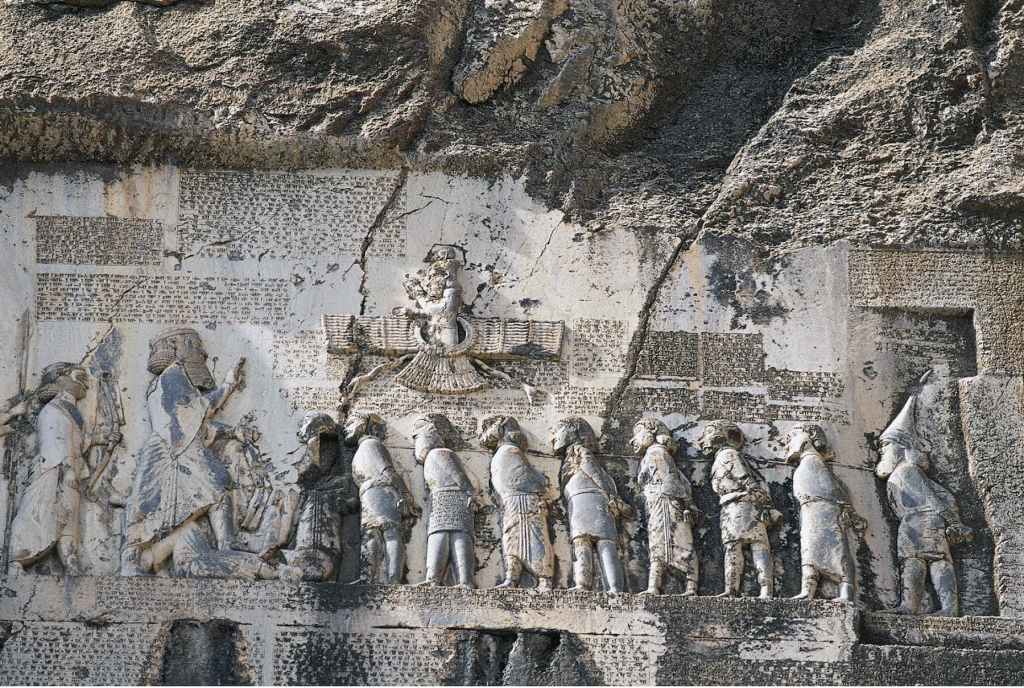
Providing insight into the origins of written language, Empires of the Plains is an extraordinary true story, excellently told, of a real-life Indiana Jones, one Henry Rawlinson, who used an amazing facility for ancient languages and a taste for adventure to make enormous strides during the 19th century in the understanding of cuneiform, a type of written language that predates hieroglyphics. The “plains” of the title are those that exist between the Tigris and Euphrates, the site of many cultures that rose and fell over the past 10,000 years. Rawlinson’s efforts were focused on a monument carved into rock vertiginously high on a cliffside at Behistun in western Iran. There, Darius the Great ordered a tribute to his conquests, carved in three ancient languages: Old Persian, Elamite and Babylonian. With grit, nous, bravery and determination, Rawlinson led a charge to decipher the text and shed light on a chapter of history little was known about. This is an edifying yet rollicking read.

Wolf Hall, by Hilary Mantell
What an incredibly evocative wordsmith Hilary Mantel was. A two-time winner of the Booker Prize for Wolf Hall and Bring Up the Bodies, Mantel was perhaps unfairly denied a third bauble for the final book in the trilogy, The Mirror & the Light. Wolf Hall tells the story of the murderous Henry VIII, but with Henry’s major domo, Thomas Cromwell, front and centre. In the past Cromwell has typically been depicted as a villain, but here he is a family man, working behind the scenes to minimise the damage from Henry’s impulses, and to (of course) maximise the profit.

The Year of Reading Dangerously, by Andy Miller
After graduating with a degree in literature from prestigious Cambridge University, aspiring writer Andy Miller finds his professional life on a limited, predictable trajectory of customer service in a high street bookstore, literary ambitions on permanent hold as a grinding daily commute exacts its toll. Deciding that something must be done, Miller sets out to reignite his love of words and books, by dedicating his quotidian train time to consuming the great tomes of the Western Canon that he claims at parties to have read, but never actually got around to. There hasn’t been a book this exciting about one man’s reading adventure since Peter Robb’s Midnight in Sicily.

The Havana Room, by Colin Harrison
The plots and characters (apart from the city of New York) vary from tome to Harrison tome, but often it’s a case of rearranging the ingredients: a generous helping of shady/dislikeable characters trying to cut corners and get what’s theirs, a past that can’t be outrun, a soupcon of sex, a dollop of power, a central character dealing with challenges beyond his control – all told in Harrison’s high style and hung around a propulsive plot. After losing his high-paying job, luxury house and then his family, untethered Bill Wyeth finds himself drawn daily to a chi chi Manhattan steakhouse whose denizens seek a taste of forbidden pleasure in the exclusive eponymous space. But just what exactly is going on in the Havana Room?

Cultural Amnesia: Notes in the Margin of My Time, by Clive James
Polymath, writer, critic, aphorist, cad, genial TV talk show host, fierce intellectual – Mr Clive James must surely be one of the sharpest minds to have emerged from the colonies. This is a book that James spent a professional lifetime preparing to write. It’s an A–Z of cultural, scientific and political figures prominent, as the subtitle suggests, in the margins of James’ version of the 20th century. He was keeping detailed notes. Some of these individuals are prominent, iconic even. Titans. Others would doubtless have been consigned to more obscure compendiums had they not been included here, or perhaps forgotten altogether. There are chapters dedicated to such towering souls as Albert Einstein, but others to names such as Zinka Milanov, an opera singer who was once said to have uttered, “Either you got the voice, or you don’t got the voice: and I got the voice”. A chapter might start as an exploration of a historical figure, but veer off in a different direction, settle certain points, reference a bunch of names or works with which I might only have been vaguely familiar, and then return to the original narrative strand and conclude in James’ satisfyingly heady style.

Strange Bodies, by Marcel Theroux
You might recognise the surname of writer Marcel Theroux, the eldest son of renowned scribe Paul Theroux (Mosquito Coast), brother of documentary maker and podcaster Louis, and cousin of Hollywood actor and scriptwriter Justin (who has Tropic Thunder among his scriptwriting credits). Marcel’s oeuvre is the unsettling, clever and compelling literary novel. Yes, that is a thing. And perhaps it’s the best way of describing Strange Bodies, which is as unnerving as it is moving. The novel opens with a knock on a woman’s door by an odd-looking stranger claiming to be academic Nicholas Slopen, one of her old beaus, despite bearing no physical resemblance to him. A carefully concealed memory stick left behind turns out to be the story we have in our hands – and what a page-turner it is!

Heresy: Jesus Christ and the Other Sons of God, by Catherine Nixey
As the progeny of a former nun and former monk, writer Catherine Nixey has some bona fides for writing about religion. In this, her second book, Nixey does a deep dive into the many alternative versions of Christianity that proliferated in the centuries following Jesus’ life and death. The Ophites, for example, believed that Christ had appeared on Earth in the form of a serpent. They therefore celebrated mass by encouraging a snake to crawl over the altar on which loaves had been placed, consecrating them in the process. Another sect dating from the first century AD believed that King Herod rather than Jesus was the Messiah for whom they had been waiting. There are, in fact, plenty of conflicting tales about Jesus to be found, and apparently more than one charismatic bearded young man performing miracles and collecting acolytes while roaming around the Middle East in the first century. Certainly, more than enough for Nixey to start asking questions and looking through files, synthesising the findings into this fascinating read.

Station Eleven, by Emily St. John Mandel
How prescient and well timed was this take from Canadian scribe Emily St. John Mandel, which depicts a near future in which a potent virus wipes out vast swathes of humanity. In such challenging circumstances would we rise to the occasion by forming into cooperative communities to feed, clothe and defend ourselves, or would we descend, a la Cormac McCarthy’s The Road, to our base instincts?

Soon, by Andrew Santella
In my small library there are some fantastic non-fiction and reference books published in the past 25 years that have become cherished resources or often-returned-to reads. The Field Guide to Typography by Peter Dawson is one I love flicking through even though I can’t help but think focusing on getting to know a handful of typefaces would probably serve me better that being exposed to them all. I was impressed by Impossible City: Paris in the Twenty-First Century by Simon Kuper. It is as informative as it is engaging. Another Gallic tome, The French Art of Not Trying Too Hard by Ollivier Pourriol, provided some nuggets (or petit four, perhaps) of wisdom. Morning by Allan Jenkins made we want to (one day) start setting my alarm earlier. But a book that spoke to me and my life-long proclivity for scheduling a better (i.e., later) time for tasks was Soon, an exploration of procrastination throughout history. Beautifully written by Andrew Santella, the book sets out to find out why the will to delay has been the signal habit of such luminaries as Leonardo Da Vinci, Charles Darwin and Frank Lloyd Wright, and what, if anything, can be done to overcome it.

A Gentleman in Moscow, by Amor Towles
There is one remaining slot on the list of 10, which has allocated five each of fiction and non-fiction (my self-imposed rules for this compilation). It could easily have been taken by The Amazing Adventures of Kavalier & Clay by Michael Chabon, or The Shadow of the Wind by Carlos Ruiz Zafon. I also inhaled Creation Lake by Rachel Kushner and was thoroughly entranced by The Empusium by Olga Tokorczuk. The House of Silk by Anthony Horowitz was a most excellent addition to the Sherlock Holmes canon. The Wizard of the Kremlin by Giuliano Da Empoli, inspired by Vladimir Putin’s major domo Vladisav Surkov, was consumed in a few short sessions. Yet at a time when inspiration rather than darkness and grimness was called for, A Gentleman in Moscow answered this call. The novel tells the story of the charming and stoic Russian aristocrat Count Alexander Ilyich Rostov, who is deigned by the Bolshivik authorities to live out his days in Moscow’s Metropol Hotel, where he remains under house arrest for 30 years. Rather than succumbing to self-pity, he finds pleasure in reading and food – it is a luxury hotel in which he is ensconced, after all – and in cultivating friendships with staff and guests. His life becomes one of service. A former financier, Mr Towles has an authoritative but engaging writing style, and has our main character share many useful aphorisms, such as “Imagining what might happen if one’s circumstances were different was the only sure route to madness.” Perhaps it is time to read A Gentleman in Moscow again.


Foreword ho

A good foreword – the pages at the front of a book, not the goal-scoring type (forward) – can tell you much about the story you are about to navigate, and enrich the reading experience, providing nuance and context. Or it may just make you think twice about continuing on with the tome in your hands.

There are two kinds of readers in the world. Those who read a book’s foreword (should it be available) and those who always eschew it. For the purposes of simplification, I’m referring to all varieties of the additional explanatory pages at the front of a book (fiction or non-) as a foreword, regardless of whether it is named an “introduction”, “preface”, “author’s note” or something else.

I’m in the former category, by the way: I always read a foreword when it’s available, or search out the afterword. Although my university study occurred at a time when theories such as semiotics and poststructuralism rose to prominence – when the author was declared “dead” – I enjoy finding out about the tidbits, factoids and contextualising information a foreword can provide.

Some forewords are excellent pieces of writing, independent of the book in which they appear. And this would seem to be even more the case when it is penned by a writer other than the book’s author – someone who was influenced by the book in question and whose experience with it was personal. Donna Tartt penned a fantastic foreword to True Grit, a small but powerful novella that impacted three generations of women in her family.

Indeed, there are forewords so well written that I sometimes wish I could simply keep reading it, were there more to take in. Forewords being what they are, however, they play a lower-priority role in the life of a book. And part of their beauty lies in their self-containment.

Even so, I’ve long wondered what it would be like to encounter a book made up entirely of these introductory, informative and complementary pieces of writing. In my mind Full Foreword (or maybe Foreword Ho is a better title – still thinking about that) might be a Borges-like reading experience, or perhaps something reminiscent of Italo Calvino’s postmodern exploration, If on a Winter’s Night a Traveller, a novel that can only allude to conclusions it will never reach, composed as it is of pieces of other books.

If the complicated rights and IP issues could be sorted for Full Foreword, I’m thinking you’d have to include the foreword to Lee Child’s Safe Enough, penned by the author himself. Safe Enough is a collection of Child’s short stories not featuring the literary creation with which the English expatriate is most closely associated: Jack Reacher.

Some of the stories are very tidily written and propulsive, others are entertaining, while some are simply competent. All are enjoyable. It’s at this point I should say I have not been a loyal reader of Reacher novels. So, what then attracted me to this book? Well, even if you’re not a Reacher aficionado, you must acknowledge that Lee Child has an extraordinary gift for storytelling. I’ve read one or two of the Reacher yarns and found them OK. Yet it was a Child short story published in Esquire a few years ago under erstwhile editor David Granger’s watch that made me look a little closer.

The foreword to Safe Enough contains some extraordinary facts. After teaching himself to read aged three and graduating to books without pictures a year later, Child’s love of books and reading led to him, he says, consuming about 10,000 long-form narrative works.

Much later, after it appeared his television producing career was drawing to a close, Child (whose real name is Andrew Grant) thought he had a reasonable chance of making it as a novelist. He had carefully crafted the first Reacher title and was halfway through the next when an opportunity was presented to write a short story.

In Child’s mind, the best short stories are like Fabergé eggs: “Small, intricate, perfectly formed items”. Lee’s short stories are more akin to very short novels, each with a beginning, middle and end. He delighted in punching out stories without having to plan carefully, or “parcel stuff out” – that is, “save” key plot points for the back end of a novel.

Child’s facility for getting down to business is admirable. The short stories in Safe Enough were written with abandon, usually in one sitting, and often in one take. This is not someone wrestling with confrontation of the blank page, and more power to him.

“Like I said,” Child writes, “It was fun.”

I never actually got around to reading Death in Venice by Thomas Mann, but I did read the foreword to a new translation by Michael Henry Hein, written by Hein himself, a highly esteemed translator capable of translating works in eight languages.

“All novels are translations, even in their original languages,” he writes, meaning that authors translate the raw material of ideas and inspiration and turn it into language.

There are some other pearls of wisdom in this edifying foreword.

“In its earliest form a novel is a cloud that hangs over a writer’s head.”

“A novel is an expression of unreasonable hopes.”

“We are creatures whose innate knowledge exceeds that which can be articulated.”

“Life is bigger than literature.”

Death in Venice is a novella of some 160 pages, so does not require a huge investment of time. It deals with an older chap, Gustav von Aschenbach, who takes a holiday to Venice to revive his enthusiasm for life. It ends with Gustav, cheeks rouged, face down in the sand, having not encountered the youth with whom he had become obsessed.

You could say that Hein’s foreword has done its job all too well, and after reading it, I no longer felt compelled to explore the novella it introduced.

It was in the foreword to A Tale of Two Cities that I read about Charles Dickens’ advice to fellow scribe Wilkie Collins. Boz advised Wilkie to make his audience “laugh, cry and wait”, which is about as good a description of the prolific Dickens’ modus operandi as one could hope for. Laugh? Who could suppress a titter after reading some of the dialogue of Oliver Twist’s Mr Gradgrind? I challenge you. Anyone who could read about the plight of Abel Magwich or Pip in Great Expectations and not become lachrymose must surely have a heart of stone. And “wait” … well, since Mr Dickens penned his novels in instalments, waiting was something to which his readers became most accustomed.

In the introduction to a new translation by Will Hobson of The Three Musketeers by French maestro Alexandre Dumas, you find out some things that help explain how Dumas was able to be so astonishingly prolific. And, mon Dieu, was he prolific. A month after serialisation of the 690-page The Three Musketeers wrapped up the tale (following six months of newspaper instalments), in August 1844 The Count of Monte Christo, also a doorstopper, began publication in a rival newspaper.

The sequel to The Three Musketeers, Twenty Years After, was released the following year. The third – and longest – of the D’Artagnan romances, The Viscount of Bragelonne, was released two years later.

In the same period Monsieur Dumas cranked out seven plays and 15 other novels!

“No wonder Dumas, who had always worked on several things at once but, even by his standards, was now in a golden period, was called the ‘inextinguishable volcano’ by a contemporary critic,” writes Hobson in the introduction to the new Vantage edition of the book.

How did Dumas do it? Well, he was quite open about using collaborators, most notably Auguste Maquet, who wrote drafts on instruction, created scenes and provided research.

Dumas, writes Hobson, “definitely signed his name to things he hadn’t written”. And sometimes his focus was obviously more attuned to production than punctuation.

“Dumas lets nothing get in the way of a good story, and spotting his historical inaccuracies, like his continuity errors, is one of the pleasures of reading him,” Hobson writes, in something of a back-handed compliment.

So, in some ways it might be useful to see Dumas as creative director of his own writing studio, or as a band leader. Yet everything produced under his name had the Dumas touch, flavour and je ne sais quo. It was his. And anything that did not, even written in the same tone, simply did not.

In the introduction to The Casebook of Sherlock Holmes, you definitely get a sense that the singular (it must be Arthur Conan Doyle’s favourite word, I swear) deerstalker-attired London sleuth had overstayed his welcome, like a messy tenant or colleague with halitosis. Despite the enormous financial rewards penning Holmes stories had wrought him, Sir Arthur had had a gutful.

In the intro, Doyle compares his literary creation to a tenor who finally takes a bow after outliving his time. In 1891 the first Sherlock Holmes tale – A Scandal in Bohemia – appeared in The Strand magazine. By 1893, a mere two years later, Doyle had wanted to bring the unique investigations to an end in The Memoirs of Sherlock Holmes. By then Doyle wished to concentrate on other writing and to explore extrasensory/supernatural matters. But it took until 1927 and The Casebook of Sherlock Holmes for this to occur, much to Doyle’s obvious glee.

“And so, reader,” he writes in the introduction, “farewell to Sherlock Holmes!”

It was not so much a goodbye, of course, as a “so long for now”. A century later and in various guises across a range of media, the private detective is still looking for clues, analysing evidence and, yes, solving crimes. Neither Doyle’s intentions, nor a tumble off the Reichenbach Falls, cocaine and tobacco habits, chronic insomnia – or our changing reading and viewing habits – could kill off the self-styled sleuth. The game is still afoot.

The truth is, however, the tales in the Casebook are somewhat lacklustre. Although Watson is as slow on the uptake as ever (how he earned his medical degree is anyone’s guess), and Holmes’ observations as perspicacious as they are unlikely, the writing and the plots that it serves are not much chop.

Forewords, introductions and author notes abound – so much so that one volume of Full Foreword may not suffice. There would need to be room for Mark Billingham’s thoughts about Raymond Chandler’s creation, Phillip Marlowe, who Billingham describes as a lonely “shop-soiled Galahad” who plays chess and reads poetry and who keeps his biggest bruises hidden. Among other juicy asides in Rebecca Fraser’s introduction to Charlotte Brontë’s Shirley and the Professor, we learn that Charlotte “spent considerable time submerged in an imaginary kingdom also inhabited by her brother Branwell, who later descended into alcoholism”. All the Brontës died young. As a young soldier, Leo Tolstoy once lost his house in a game of cards. It was subsequently dismantled and reassembled some 32km away. Well, you get the gist. There is no shortage of material for this meta volume. It will, of course, need its own foreword, and I have the perfect opening for it: “There are two kinds of readers in the world …”