
It’s not just this, it’s that

There is something just that bit off about writing produced by AI, and one of the obvious giveaways of synthetic text is a particular turn of phrase.

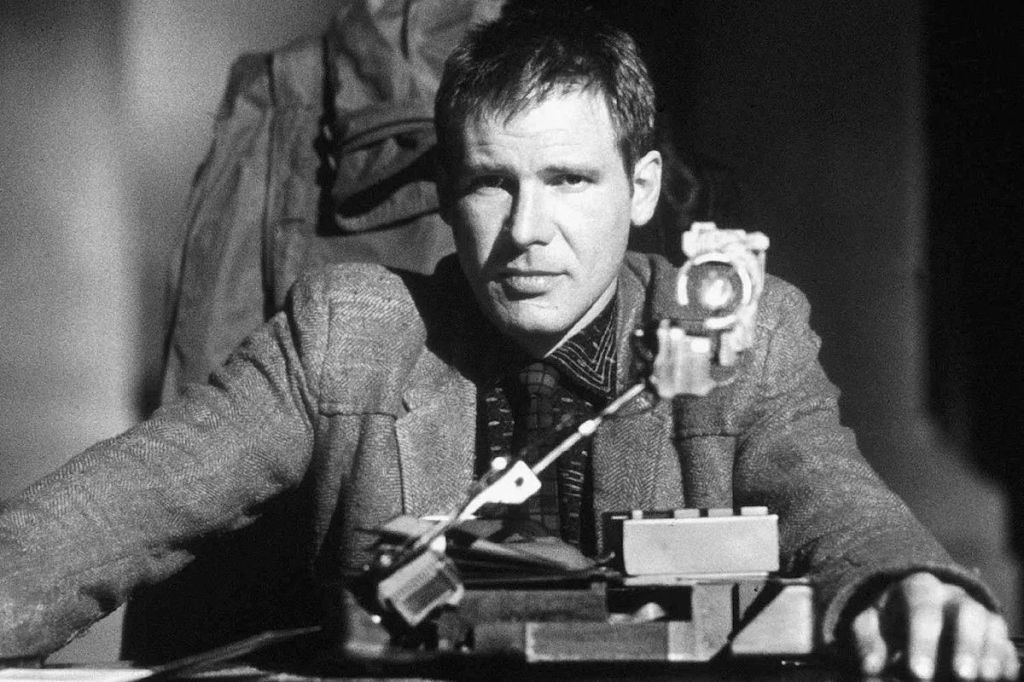
In the dystopian future depicted in Blade Runner, the only way of truly identifying synthetic humans – the kind that are cooked up in a lab – is via psychological testing administered by an expert such as the titular bounty hunter, Deckard (who may himself be a replicant, but that’s another story). Replicants, who are all somewhat NQR, cannot fudge or finesse the test.

It might just take a jeweller to pick the cubic zirconium from the real thing. Ersatz stones lack the integrity of the genuine article, regardless of how much they shine. Yet for the untrained eye it’s hard to tell the real from the fake. Knock-off designer handbags, however, usually shout their counterfeit status from a distance. And crocodile tears from toddlers can easily be intuited by parents practised in detecting crying on demand.

Synthetic writing also has its tells, and I am not the first to name them: a samey, homogenous hyperbolic tone, overuse of emojis, listing items in threes, employing the Oxford comma, favouring “whilst”* rather than “while” and use of the em dash (rather than the aesthetically superior en dash).**

Another telltale sign that AI has been used to generate or sharpen prose is use of reflexive phrases structured along the lines of “it’s not just this, it’s that”.

“More than fabric, denim is a living material—a companion that skates, refines and adapts over time.”

“This isn’t just an Olympic race, it’s a whole masterclass in life … Sometimes the smartest move isn’t chasing the crowd, it’s trusting your own pace.”

“GoPro wasn’t just a camera company, it was a movement.”

“That upbringing didn’t just influence his shooting form—it shaped the way he saw the entire game.”

“Negotiation isn’t about being difficult. It’s about showing up prepared and knowing your value.”

“This is more than a watch—it’s a piece of horological history you can wear with confidence, wherever your journey takes you.”

“The CS311 isn’t nostalgia dressed up—it’s evolution done right.”

“Sports doesn’t just shape performance, it can slow down aging.”

“At Earthen Co, we believe time is not just measured—it is experienced.”

“Literacy isn’t just about reading words on a page, it’s about reading deeply.”

“I’ve been using the em dash since 2008, when I was an undergrad writing literary analyses and falling in love with the art of language. It’s not an algorithmic quirk—it’s a stylistic choice … And while we’re at it—let’s remember that AI isn’t the enemy. It’s a tool. It can enhance creativity, not erase it.”

“Stepping away mid-week feels like pressing pause on all the noise … it’s not just about the work or the grind, it’s about creating moments that shape the bigger picture.”

“Great educators do more than deliver lectures. They spark curiosity, champion creative risk taking, and shape futures.”

“In engineering, your signature is not just a date on a drawing. It’s a guarantee. A guarantee that you value integrity over speed …”

“Events like these remind us that innovation isn’t just about technology, it’s about people, collaboration and purpose.”

“In reviving Thomas Mason, Albini hasn’t just preserved history – they’ve created a living testament to textile excellence.”

“This isn’t just a form-filling exercise—this is how we know if TGBC is doing what we set out to do. It’s how we measure the collective outcome of our impact— yours, mine, the whole chapter’s … This isn’t a feedback form. You’re reflecting on the club—on us— and what we’ve built together. Every response counts, and we need everyone on board.”

“A bad game, a missed promotion, or a poorly written article isn’t just a failure of performance—it’s a failure of self.”

It could be that not all of these examples have been generated by AI, but that they simply look, sound and feel like it, akin to someone who has real hair that resembles a toupee. Perhaps it’s a case of a style of writing and a method of expression that has become popular right now. It has entered the idiom, in the same manner that “leaning into” something has become de rigueur to say. Our language is dynamic, after all. Words come and go, or the meaning subtly changes over time.

I have no truck with the way in which “verses” is used as a verb – i.e., “My team is versing yours in today’s game” – but I suspect that this expression will likely have some resonance due to its common use among younger generations.

So yes, it’s possible Claude AI or ChatGPT didn’t spit out all of the phrases above, but I suspect they probably did. Synthetic writing has a particular sheen and rhythm to its manufactured cadences. It’s almost as if the words have been bent to fit a template. I can’t think of a reason, for instance, why a survey of a men’s book club couldn’t “just” be a survey. I mean, what else is it realistically going to be? There is no overarching authority the text can apply to so that it might alter its status. It’s just a fu*cking survey.

Which underscores another problem I have with this way of expressing things. Why can’t a watch simply be a watch? By implying that a watch need be anything more than a wrist instrument for telling the time (rather than, say, a piece of history or a horological artefact) is egregious. For something simply to be itself and nothing beyond that doesn’t diminish its status.

You know, I believe literacy is simply about reading words on a page, and the em dash is more than likely an algorithmic quirk, especially the way it is used by AI. Denim is just a fabric, and that’s OK. That’s what it was designed to be. Your jeans aren’t going to be offended because you referred to them as a pair of daks rather than a “living material”. And I reckon Go Pro was simply a camera company. What else could it be for crying out loud?

I can understand the temptation to use AI for everyday writing tasks. It’s just so easy, after all. Put in a few prompts and reams of copy come tumbling out, like tickertape in a 1940s noir. Writing that might hitherto have been jumbled or confused can now have a two-pack-like surface applied to it and buffed. That text, however, is not yours; it doesn’t sound like you (unless you’re a B-grade copywriter), and it doesn’t really express what you were trying to say. How can it? If you use Co-Pilot to smooth over your emails or to provide them with an authorial voice not your own, there’s a very real risk that your message will be misconstrued. Your voice belongs to you, and is not something that you should yield to a third party, let alone a lower power.

AI is powerful, no doubt. It can save an astonishing amount of time analysing data. It can help improve your golf swing or convert a mountain of stats into a spreadsheet. It can write code, synthesise information into reports, or spit out that correspondence you’ve been sitting on all day, and sound as ornery as you genuinely are.

So where to from here? We’re already living in an era described by The Atlantic Journal scribe Charlie Warzel as “the golden age of AI slop***”. So, perhaps consider not contributing to the muck, not putting your own version of “it’s not just this, it’s that” out into the ether.

AI scrapes the internet to stay current. But what if the vast majority of the examples from which it is learning are AI-generated? A hall of mirrors eventuates, where the copy LLMs generate is a tapestry of what has already come before. Surely we are above that. Is it really so hard to turn what you are thinking into words on a page?

I could write that using AI for creative purposes isn’t just a sloppy way of working, it’s a betrayal of our higher selves. Yet I won’t express my thoughts quite like that, because – well, you know why.

*Acerbic writer Martin Amis wrote, “Never use ‘whilst.’ Anyone who uses ‘whilst’ is subliterate.”

**I’ve never liked the em dash. Never had much truck with it. The em dash – so-called because it shares dimensions with the base of the alphabet’s 13th letter – always strikes me as over-specced for the task at hand. It’s just a bit much. That said, I understand not every instance of its use indicates the dark handiwork of AI. Although it has greatly diminished in use in Australia over the past 30 years (the time I have spent as a professional writer, editor and sub-editor) it has never gone out of fashion in the US. It is part of the house style for Air Mail, the New York Times and The Atlantic Journal among other venerable publications. James Joyce and Emily Dickinson were said to be fans of the punctuation device, making it part of their respective style. Jon Hamm and Sofia Coppola have come to its defence. Yet I hadn’t seen an em dash used in corporate correspondence for years until a recent stint working for an organisation where the use of AI as a productivity tool was strongly encouraged, if not mandated. Now the em dash is downright ubiquitous, used by individuals who wouldn’t know an em dash from an en dash, hyphen or interrobang. I blame Claude AI, Chat GPT and those who feel compelled to use them.

***”Slop” is the Merriam-Webster Dictionary 2025 Word of the Year. The lexicon defines “slop” as “digital content of low quality that is produced usually in quantity by means of artificial intelligence.”
The fashion for passion

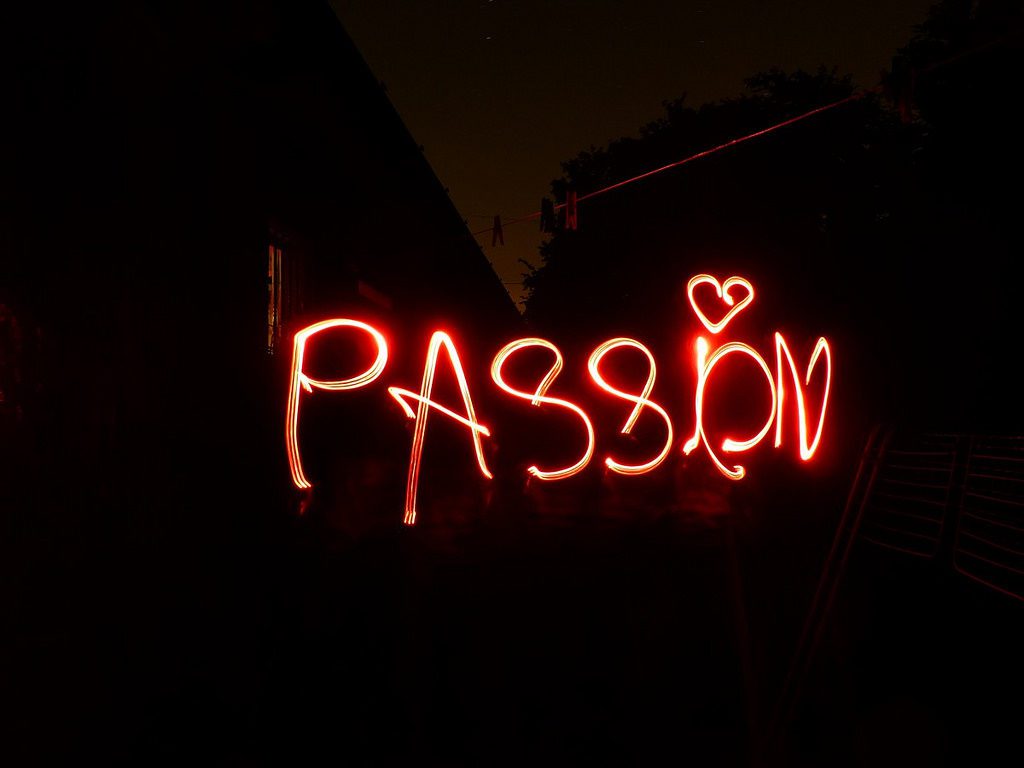
It’s “lightning in a bottle” but is passion your everyday inspiration?

Yes, yes, we get that you’re super dedicated to your hobby, team, music or wine, even your job. But are you actually passionate about it, or do you simply have a limited vocabulary?

You hear a lot about passion these days. Passion is an obligatory characteristic for those competing on TV talent quests. Passionate sports fans never miss a game their club plays, their heads full of obscure team-related lore.

For others, their ardour is reserved for a pastime that has become so much more than a hobby: succulents, pottery, mid-century design, travel, or collecting knick-knacks.

Various libations such as coffee, cocktails or craft beer inspire intense devotion and – you guessed it – the p-word.

The professional realm is another site for the expression of passion. Whether it’s an obscure area within a profession (“I’m passionate about antivirus software”) or the crux of a job (“My passion is customer service”), passion is seemingly ubiquitous at the workplace. It would appear there is a surfeit of it out there. An epidemic.

“We live in a passion-fetishising society, where people are constantly being given this very often-unhelpful piece of advice, which is ‘Follow your passion, follow your passion, follow your passion’,” says writer Elizabeth Gilbert.

No one is saying that passion is bad. Of course it isn’t. But it may not always be available to tap into. Passion is energising but also energy-intensive. Enlightening but consuming.

The Shorter Oxford Dictionary lists nine definitions of the word “passion”, the first of which is “the suffering of pain”, as in “the passion of Christ”. In fact, the word derives from the Latin pati, which simply means “pain”. The first four listed meanings all have a connection with pain in some sense, including a now-obsolete definition of “a painful disorder, an affliction of a specified part of the body”, or “a violent attack of disease”.

Other definitions include a “strong barely controllable emotion”, a “strong sexual feeling”, an “outburst of anger or rage” or “a strong enthusiasm for a (specified) thing; an aim or object pursued with strong enthusiasm”.

Under this definition it is certainly possible to be passionate about Excel spreadsheets, your local footy team or the novels of Lee Child.

In my mind, however, those earlier definitions of the word are inextricably tied up with the more contemporary understandings such that something that evokes passion must also spur discomfort. You love something so much that it hurts; or your dedication to it is such that other parts of your life start to suffer. That’s passion.

And because it causes pain, passion cannot be long-lasting or sustainable; it’s an outburst, as per definition #7. An explosion. A brilliant spark. Passion is immersion, emotion and immolation.

As Dr Tyrell told replicant Roy Batty in Blade Runner, “The light that burns twice as brightly burns half as long. And you have burned oh so brightly, Roy.”

It’s true: there are those who really are deeply dedicated to their daily dose of caffeine, or whose predilection for keyboard shortcuts borders on mania.

My problem with the word is its blanket application. From keen interest to ardent devotion and lots of things in between all are filed under “passion”.

Perhaps other terms from the dedication spectrum might better be applied. You do not, after all, have to be a train spotter to drive the 7.30am express to the city and get it there safely and according to schedule. You can be competent and do that. Competence is acceptable. Competence gets the job done. What it lacks in panache it more than compensates with efficiency. So, let’s place it at one end of the spectrum.

Next along on this hypothetical rating scheme is professionalism. A professional is beyond competent – their tasks are completed with efficiency and aplomb, if not savoir-faire. Professionals make for pleasant colleagues because they are usually not overly chatty, and their reliability and efficiency are sources of comfort. Their actions are polished and executed with confidence and dexterity. They do not cut corners.

Beyond professionalism exists the realm of the enthusiast. Those embracing enthusiasm show “intense and eager enjoyment, interest or approval” for a subject or pursuit. There is nothing wrong with enthusiasm, and a lot right. Enthusiasm is attractive and appealing, positive and energetic. Enthusiasts emit good karma. Their vibe is contagious, their work often bodacious. An enthusiast will take you a long way simply on mindset and energy.

Is there another trait capable of enhancing quality of life and perhaps productivity? Consider curiosity. Gilbert says curiosity is more important to a creative individual’s output than passion.

“Passion is the big tower of flame on the hill,” she says. “It’s lightning in a bottle. It’s the voice of God. It’s all very exciting if you should happen to run into it. But it’s not always there. Every single day you can be curious, because every single day, curiosity approaches you and taps on your shoulder almost to the point where you can’t even feel it, and whispers in your ear, ‘Hey, what’s that?!’”

I know what you’re thinking: What kind of cynical bastard can be critical in any way of passion?

To be clear, I admire the passionate, as I do the curious and enthusiastic (among whose number I’d like to think I belong). Passion combined with intention can create an unstoppable force.

Yet somehow passion has become one of those words – like journey, curated, iconic, purpose and humble – whose ubiquity has blunted its impact, blurred its meaning. Passion is almost a cliché. Even your spellcheck doesn’t like it very much.

It’s on trend to be passionate, but fashions come and go. They are ephemeral. A flash in the pan. Professionalism, enthusiasm and curiosity – especially when combined with a soupcon of nonchalance  – well, these are as accessible as your daily single-origin double-ristretto.

If your reading journey has seen you reach this far, you may be able to tell from this humble screed that on occasion I enjoy messing around with words and expressing a loosely held opinion. In fact, you could say it’s one of my passions.

The unkindest cut: directors and audiences

Filmmakers don’t always get their own way.

Having helmed such critically and commercial successes as Thelma and Louise, Black Hawk Down and Alien, it seems remarkable now that director Ridley Scott didn’t have things all his own way with Blade Runner (1982).

After all, we are talking about an artist who has earned a formidable reputation as a creator of big-canvas filmic epics such as Gladiator. And it’s a given he now has the prestige and the power to hold sway on any project he undertakes.

Yet early in his career while he was still establishing his name in feature film directing, Scott reluctantly made changes to a film many regard as one of the finest of the 1980s.

Even today, 30 years after it was made, the film’s look and tone depicting a dystopian future in a dark, menacing and polyglot LA, still seems futuristic (and bleak).

After the film was shown to test audiences, however, the producers of the project were unsatisfied with the manner in which it was received.

Too confusing, test audiences groused.

The end result was that a couple of changes were ordered.

The original ending, for instance, didn’t gel with Scott’s vision, a key scene was omitted while the voiceover supplied by Deckert (Harrison Ford) was also not to Scott’s liking. The film was released, met with a mediocre response and subsequently earned wider appreciation in arthouses and upon its release to video.

It was only much later, after Scott had underscored his considerable reputation as both a stylist and maker of commercially successfully movies that he was able to finally release Blade Runner in the manner he originally intended for it to be seen.

The director’s cut, as the name implies, is a version of the film the director, rather than the studio, the producers or anyone else, wished it to be made.

Of course, long before Blade Runner Director’s Cut was released, various versions of films were available.

Sometimes different version of a films are released in different countries to meet certain rating standards, scenes are added or lost for television and so on. For instance, the Australian version of On Any Given Sunday had about 10 less minutes of gridiron footage than the US version.

And by 1992, a full 10 years had passed since Blade Runner had originally been released, time for a whole new audience to have grown up, ready to join admirers of the original.

So as much as Scott’s new cut represented the unveiling of an artist’s uncorrupted vision, it was doubtless a whole new revenue stream for a product that didn’t reach its potential upon release.

That would appear to be the category in which most directors’ cuts fall. Consider the example of Steven Spielberg’s Close Encounters Special Edition, James Cameron’s director’s cuts of Aliens, The Abyss and Terminator 2: Judgement Day and the anniversary editions of the George Lucas’ original Star Wars trilogy.

It’s hard to imagine these titans of film not getting their way when their movies were first made. Rather, the cuts of their films are akin to an “added extras” version of a car.

Sure viewers get a longer movie, but is that necessarily better? Is more more?

Often, sadly, no.

Take the example of T2: Judgement Day, Director’s Cut. Quite a few scenes run longer and several new ones have been woven into the fabric of the film. True, some add to our understanding of the characters.  The downside is a compelling film is slowed down somewhat.

The same could be said for the Director’s cut of Aliens, which seems lugubrious when compared to the viscerally exciting original. We gain little from the additions and those gains (for instance, learning Ripley had a daughter who died) are offset by the deleterious effect on pacing.

The latter cut of Blade Runner, however, is imbued with a whole different complexion following the changes made. Though the differences between the two versions are quite subtle, clearly we’re talking about two quite different films.

Doubtless such would also be the case in those cut made by directors who were sacked from films they were working on – that is, if they ever had the chance to make them.

One interesting example might be a director’s cut of American History X prepared by the controversial Tony Kaye.

Kaye’s original vision for the film was wildly different from that of the producers and star Edward Norton, whom Kaye later referred to as “lice.”

In an artistic battle fought out in the Hollywood press, the studio claimed Kaye’s original cut was too short. Kaye countered by spending more than $US one million editing the film and taking out advertisements outlining his stand.

It didn’t wash, and his relationship with Norton deteriorated.

“Norton’s ego and narcissism kind of manoeuvred it (the structure of the film) totally to his wants, really,” Kaye says. “Not so much through the shooting, because I got everything that I needed to get, but when it came to the editing process, he manoeuvred himself into the cutting room and really caused me considerable grief.”

So disenchanted did he become with the editing process that Kaye wanted to remove his name from the credits and replace it with Alan Smithee, the sobriquet customarily used when directors no longer want to be associated with a project.

When that wasn’t allowed, Kaye tried to get his name replaced with that of Humpty Dumpty, also to no avail. For Kaye, this act summarised his relationship with the producers, with Norton and with Hollywood.

“Actually when I pulled the word Humpty Dumpty out of the air, I didn’t realise that Humpty Dumpty is basically a metaphor for mankind,” Kaye says. “And to me, that’s not far away from this whole scenario, because truth and honesty and integrity and respect are not words that any of these people live by. And I think Hollywood right now, maybe it’s always been like this, but it’s really lost a sense of what reality is.

“And I believe that when you make a film or when you put a story in pictures and sound on a screen in a theatre, it has to be real. And if the filmmakers have lost the notion of what reality is and authenticity is, then that work can never ever be good. Because they’ve lost the intuitive sense of how to judge the work.”


Final say in the editing process is obviously the most important factor in determining how closely the film that’s released resembles what the director originally had in mind.

Historically it wasn’t unusual for the bean counters on a project to insist on changes, and Orson Welles was one auteur who constantly fought (and lost) artistic battles over his projects.

Even as long ago as when Welles was making films, a potentially powerful element was already part of the editing process: that of the test audience.

Australian director Richard Franklin (FX2, Psycho 2, Hotel Sorrento) describes Welles’ The Magnificent Ambersons as “probably the major casualty of audience testing in film history.”

(See Franklin’s seminal article, Cinema Papers 95, October 1993).

One test audience member wrote on their card, “As bad if not worse than Citizen Kane.”

Another wrote, “Audiences want a laff,” and this response was given three times the weighting of another comment (saying) “possibly the greatest piece of cinema ever.”

A test audience wanted the song Over the Rainbow cut from The Wizard of Oz (1939) because it was considered the scene it appeared in slowed down the film too much.

Supposedly a group selected to represent a film’s target demographic, a test audience can give a serious high five or thumbs down to characters, plot elements, music, or denouement of a movie.

A test screening audience didn’t like that Samuel L. Jackson’s’ sartorially resplendent character in Renny Harlin’s The Long Kiss Goodnight was rubbed out before the final credits rolled.

So even though earlier scenes had shown Jackson taking enough lead to kill his character several times over, the actors were ordered back to the set and new scenes showing Jackson’s character bravely surviving were shot.

A test audiences was also responsible for having Glenn Close’s character in Fatal Attraction killed off.

In essence, test audiences members are no longer regarded as people who get to experience a finished piece of art, but rather consumers, who like diners in a restaurant, are able to send back what has been served to them if it’s not to their liking.

In Franklin’s opinion, studios using test audience results to ride roughshod over directors “is about power and not about art.”

He considers allowing people who don’t understand the movie-making process to give their opinion on how a picture might be changed is like asking folks in off the street to try some amateur brain surgery.

On the other hand, Franklin is in favour of using previewing that has meaning to him.

“That can be as simple as showing it to two or three trusted friends or as complex as screening it for an audience of 50 people in which half are known to me and half are not,” explains Franklin, who has even been known to stop the projector and ask questions during a screening.

“But never do I use the anonymous process. That is, someone has to give me a reason why someone won’t put their name on the form. If I don’t understand their comment or I think they’ve got a point, I actually follow them up and talk to them.”

Would Franklin make changes to his films based on comments from audience members?

“Of course, why would you have a screening otherwise?” Franklin says. “You don’t so it to make changes, you do it to learn about how your ideas are communicating. And sometimes you can achieve that best by just showing it to one friend.”


Australian director Phillip Noyce (The Bone Collector, Patriot Games, Clear and Present Danger) is one director not necessarily in favour of the testing process as it used in the US.

“In the past 10 years, the studios used the test screening process as a baseball bat to knock the filmmakers over the head and beat them into homogeneity,” Noyce told The Age.

“Now it’s arguable, at least until recently, that a few hundred teenagers in the Valley in Los Angeles have as much power as the studio heads do in terms of finally affecting the movies that actually appear on screen.

“The test-screening process in America has been taken to the nth degree – and that’s n for nitwit.”

For directors without control over the final cut – and in a very competitive business it would seem there are many who fall into that category – the testing process could loom as a potentially intrusive element in the creative process.

Sure, filmmakers must be accustomed to their art form being a collaborative one, with an often eclectic group contributing to the end product. But when a test audience via a studio demands changes be made, it could hardly be considered a constructive element. Not for the director, anyway.

“It’s much easier to embrace the whole testing process when you know that you ultimately control the final cut on your movies,” director Ron Howard (Parenthood, Backdraft) once explained.

“But it’s frightening if you’re in a position where you’re going to show the movie at a preview and somebody else is going to take the results of that preview and re-cut the film based on that, maybe consulting you or maybe not. That’s terrifying.”


It’s easy to understand why a studio would want to control as much of the filmmaking process as possible, of course. So much money is invested in major Hollywood productions that the failure of even a single big-budget feature can have a devastating impact on a studio’s bottom line.

Little wonder, then, that every tool at a studio’s disposal is utilised to make a film “work”.

Would audiences have flocked to Pretty Woman in the numbers they did had Richard Gere and Julia Roberts parted at the end of the film before a test audience effectively changed the conclusion? We’ll never know.

On the other hand, countless changes to films have been made at the behest of test audiences that we’ll also likely never know about, for better or worse.

So is there some way to avoid Noyce’s description of the Hollywood process, where the testing system has an unhealthy presence?

How about director’s cuts for every director unhappy with the version that hits our screens?

Didn’t think so.

Perhaps the emergence of DVDs will go some way to helping viewers understand the difficulty directors (and studios) face in editing films.

When in 1996 final cut was taken away from Paul Thomas Anderson’s Hard Eight (aka Sydney) and the film re-edited, the director was a virtual unknown.

But having since enjoyed a measure of critical and commercial success with Boogie Nights and Magnolia, a director’s cut DVD of Hard Eight is now available, showing the film as it was originally meant to be seen.

Yet perhaps the onus for taking clout away from those California teenagers Noyce was referring to belongs to us.

Every time we stay away from a piece of formulaic, derivative dross, and on every occasion we embrace those films that defy convention, mess with the standard template and resist categorisation, we have a say in the type of films that will be made in the future.


This article first appeared in issue no. 127/128 Autumn/winter 2001 of Metro magazine.

Postscript:

You don’t hear so much about either audience testing or director’s cuts of movies these days. Perhaps Hollywood has become so risk-averse that the kinds of films that might elicit an unfavourable response just can’t be made inside the studio system anymore. Ridley Scott continued to fiddle-faddle around with Blade Runner until he produced The Final Cut in 2007.  There is talk of a sequel in 2017 starring Harrison Ford and Ryan Gosling.