10,000 miles from Graceland

If we are to believe Mojo Nixon, Elvis is everywhere, Elvis is everything, Elvis is everybody and Elvis is still the King. Of rock ‘n’ roll, of course, but also of kitsch.

Most people older than 25 are familiar with the image of the young, hip-shakin’ fresh-faced rocker who sang classics such as Blue Suede Shoes.

Perhaps even more might recognise the King from his performances in a succession of corny films made throughout the 60s that turn up occasionally on weekend afternoon TV.

Yet perhaps the enduring image is one of a corpulent, excellently coiffured cabaret performer bedecked in strange, jewel-encrusted white jumpsuits who belts out pop numbers with the backing of an enormous orchestra while alternatively executing karate moves and dispensing sweat-drenched souvenir scarves to his adoring acolytes.

On the one hand there remains today a legion of serious-minded followers dedicated to the preservation of Elvis Presley and his place in the rock ‘n’ roll pantheon.

At the same time, perhaps more potent is the notion of Elvis that critic Greil Marcus, author of Dead Elvis – A Chronicle of a Cultural Obsession, describes as a collective joke.

Marcus notes that Elvis manifestations have grown more perverse and extreme since his death. Hence in True Romance Christian Slater is inspired by an image of the King to wreak havoc on a room full of mobsters, or elsewhere a raft of flying Elvises is shown jumping out of a plane in Honeymoon in Vegas.

Elvis has been depicted in The Simpsons (shooting a television) and The Twilight Zone.

There is a Mexican Elvis impersonator, El Vez, and at least one female one, Elvis Herselvis.

Stranger still must have been the one-man play, Him, written and performed by Christopher Walken in which Elvis fakes his death, undergoes a sex-change operation and ends up working as a waitress in a diner.

It is Elvis as pisstake, as punch line or fancy-dress costume.

As critic Terrence Rafferty has noted, Elvis was King in pre-ironic times, or at least a period in which irony wasn’t the sole measure of intelligence or artistic value.

Now it’s almost impossible, for non-fans anyway, to view Elvis without irony, or worse, contempt.

For the most part I’ve wanted it both ways, very much appreciating Elvis’ music but also delighting in his strange arcana – the King was a sleepwalker!

That’s why my reaction to a recent Elvis double bill was surprising.

I very much enjoyed the first flick, Viva Las Vegas. It’s silly, yes, but I found myself laughing with the movie more than at it, except in one or two scenes where for instance, love interest Rusty (Ann-Margaret) is shown riding her motor bike while standing.

And there was nary a titter from an obviously respectful audience that filled Melbourne’s Astor Theatre on closing night of the film’s run.

To see the King rehearsing and then performing his Vegas shows in Elvis: That’s the Way It Is is to witness the phenomenon just before the drugs and awful diet really kicked in and everything – career, life, body – went pear-shaped.

When the Big E, with his band and some seriously affroed backing singers cranked out Suspicious Minds I actually felt shivers down my spine, a feeling I haven’t felt at the movies since I don’t know when.

Of course, the movie finished and I left the building feeling confused but also grateful, thinking, Thank you, Elvis. Thank you very much.


This article first appeared in issue 28 of Australian Screen Education.


Christopher Walken and the bad seeds

Need a huckster, psychopath or gangster for your latest film project? Christopher Walken, 72, will likely take your call.

More than a few pretty boys wrestle for roles that yield large coin and kudos. Steve Buscemi has the market cornered in edgy screwiness, while Tom Cruise seems to have first dibs on anything science-fiction related. When Hollywood goes looking for pure, unalloyed malevolence, however, say a psychotic gangster, a bad seed or a 
huckster, Christopher Walken gets the call.

The ghostly complexion, the quaff brushed straight up that Walken says was famous before he was, and an unhinged demeanour, are attributes more naturally suited to villains. And it is in these parts where Walken, with his nasty looks and peerless hair, has plied his trade – and indeed flourished.

Part of Walken’s allure may be that his looks suggest an actor who doesn’t leave his character behind once bereft of costume and makeup, but rather is weird – and dangerous – all the time.

“Chris Walken could scare people just walking down the street,” director Abel Ferrara once said. “Two-year-old babies cry when he enters the room. The guy is scary. He works hard at it though.”

Born Ronald Walken, the son of German and Scottish immigrants who settled in New York and opened a bakery, Walken was encouraged by his mother towards performance from an early age. Schooled in the vaudevillian arts, he has utilised some of his soft-shoe skills in Pennies From Heaven and The Four Rules (aka Search And Destroy), while his crooning abilities and schtick get a show in Homeboy.

While his two brothers left song, dance and acting behind, Walken never seriously considered doing anything else, and made his Broadway debut at 16. It was while touring with West Side Story in 1963 that Walken met his wife of almost 50 years, casting agent Georgianne Thon.

Since then his career has been marked by output as much as excellence, and Walken hasn’t always demonstrated prudent judgement when it comes to choosing parts. Consequently he’s featured in as many low-rent, exclusive-to-video projects (All-American Murder, Prophecy II) as in features that are more worthy of his formidable talents. And judging by the number of theatre roles he’s played, (more than 50, as diverse as Iago in Othello and Stanley Kowalski in A Streetcar Named Desire), Walken has used his prolific film output to fund more personal, board-treading projects.

He even wrote and starred in a play about Elvis called Him, in which the King fakes his own death, undergoes a sex-change operation and ultimately works as a waitress in a diner.

Walken admits fear of unemployment plays on him more than any of the dark stuff he summons for his characters.

“I have been lucky,” he admits. “I have always been in work. Fear? That is my fear. When there is nothing left for me to do.” Judging from his recent output, he’s got very little to fret about. Since making his film debut in the mid 1960s, Walken has made more than 100 film and television appearances.

A random sampling of Walken’s work:

Suicide Kings (1998)
Avery Chasten (Henry Thomas) has a problem. Even though his family is rolling in money, he can’t pony up the ransom for the safe return of his kidnapped sister. So a plan is hatched. Avery and some of his resourceful friends decide to kidnap Charlie Barrett (Walken), a gangster kingpin, and try to force him to use his connections to raise the stake. It’s a strange premise, but then Suicide Kings is an odd melange of seemingly incongruous genres that combine to form a compelling whole. At times comedy, noir and violent crime film, it builds to an unpredictable conclusion that rivals The Usual Suspects in the, “I bet you didn’t see it coming” stakes. Walken is sublime. It matters little he’s done this sort of part before because the guy does it so very very well, and a highlight is a flashback scene depicting him as a superfly 70s ne’er-do-well. Denis Leary plays Lono Vecchio, a wise-cracking henchman with a predilection for hurting people with kitchen appliances and Jay Mohr (Go!) is excellent as Avery’s take-charge buddy Brett. Bottom line? Sure, it’s not without flaws (hey, it did go straight to video) but is nonetheless a suspenseful story revealed piece by searing piece, and a worthy addition to the Walken body of work.

The Comfort of Strangers (1990)
If there is a film that underlines the strategy best employed in the negotiation of the Walken canon, it is this one. An essentially plotless paean to the beauty of Venice and to that of its male and female leads (Rupert Everett and Miranda Richardson), it is less triumph than replacement of style over substance. Oh, the strategy? Don’t ask. DO NOT ASK. Don’t ask why Walken is cast as the Italian lead. Don’t ask about the ending or anything leading up to it. Most important: don’t ask about the use of Walken’s recurring “My father was a big man …” speech. Just embrace the whole damn creepy Walkenesque experience.

The King of New York (1990)
In the best known of director Abel Ferrara’s works, Walken plays Frank White, a gangster, who like Marlon Brando’s Vito Corleone, sees himself as a public benefactor and legit businessman rather than a criminal. Of course The Don didn’t have the Asian element to dispose of, nor a posse of nubile female guards at his disposal. Also, White doesn’t pussy-foot around with a “just say no to drugs” policy. He and his entourage snort it, sell it and steal it. Ferrara has said he was never sure when, or even if, Walken was acting. This may or may not be a good thing, depending on your level of Walken devotion, but nevertheless the film remains a brutal and visceral gangster flick that is spectacular to observe, and White a singularly unsavoury personage. Warning: this film contains David Caruso.

The Prophecy (1995)
To quote director Abel Ferrara, you only have to look at Walken to see he’s been through some heavy-duty shit. Whether he draws upon those experiences to get in character we don’t know (even Walken says he doesn’t understand some of what he does), suffice to say Walken does sinister very well. In The Prophecy (aka God’s Army), Walken plays the archangel Gabriel gone bad. So bad in fact, he’s instigated a war in heaven between factions of angels. You really have to see it to understand it. Four vastly inferior sequels were made.

The Dead Zone (1983)
As Johnny Smith, Walken is a man who recovers from a serious accident to find he possesses extraordinary powers. In his syndicated column for The Onion, the actor explained his motivation for the role thus: “When we filmed The Dead Zone, I ate over 800 hot dogs a day. It was necessary. My character needed to come across as intense as possible, and I found the inspiration for that intensity in my intense love for hot dogs. The director, David Cronenberg, said that he would never work with me again. I kept eating hotdogs when the cameras were rolling, and that seemed to bother him. I say f* him. He doesn’t even like hotdogs. I would like to end by emphasising once again that I really like to eat hot dogs. If any of you people disagree, I loathe you. I despise you. Not only that, but I also despise all of your loved ones. I want to see them torn to pieces by wild dogs. If I ever meet you in person, I’ll smash your brains in with a f*g bat. Then we’ll see who doesn’t like hot dogs.” As Ferrara says, the guy is a treasure.

The Milagro Beanfield War (1988)
Despite the presence of interfering ghosts, this is not really a Walken project per se, rather an excellent film than features Walken in one of the supporting roles that has characterised his working life. As Kyril Montana (Whitely Streiber, Vanni Corso, Sgt Toomey, Caesar – who comes up with these names?) Walken is the menacing sheriff brought to bear on a farmer stealing water. In what is a lovely film about a community coming together, Walken is – typically – the only character not to lighten up.

The Deer Hunter (1978)
Long before Walken earned a reputation for being “out there”, he proved in this Oscar-winning performance he has no trouble playing damaged, tortured souls. Featuring a stellar cast that also includes Robert De Niro and Meryl Streep, The Deer Hunter is a superb film simply to look at if nothing else. It tells of the lives of a group of young adults who belong to the same immigrant European community in Pennsylvania. A traditional wedding and hunting scene establishes the closeness of a group of men who are sent to a brutal war in Vietnam that alters their lives irrevocably for the worse. The film earned five Oscars, including Walken’s for Best Supporting Actor.

Touch (1997)
If not exactly rogue, neither is Walken’s Bill Hill a swell guy. Let’s just say he’s a salesman, an impresario, and whether it’s God via his drive-in church, or campervans from his lot, Hill can close a deal. So when he encounters a bona fide latter-day miracle worker in the person of Skeet Ulrich’s former monk, he recognises an opportunity when he sees it. Again, this is not Walken’s film, but he leaves enough trademark flourishes to mark his presence in what is an engaging treatise on the cult of personality.

Things To Do In Denver When You’re Dead (1995)
Just because The Man With The Plan (Walken) tools around in a wheelchair doesn’t mean he isn’t to be feared, which is something Andy Garcia and his array of strange friends find out to their misfortune. Walken (“I’m a criminal. My word’s not worth dick.”) is a thoroughly immoral felon who employs henchman Mr Shhh (Buscemi) to exact revenge for a botched job. Apart from Walken, for whom this part was seemingly written, it’s worth checking out the film for Treat Williams, far removed from his straightlaced typecast, as Critical Bill, a whacko who beats up cadavers to stay in shape. Give it a name.

Pulp Fiction (1994)
He might only be in the film a mere five minutes or so of screen time, and Pulp Fiction is a movie crammed to the gills with dialogue, but Captain Koons is the role many best associate with Walken. To say more than the scene involves the concealment of a watch in a strange hiding place and a speech delivered with characteristic brio reveals too much. It gets the edge over Tony Scott’s True Romance for best cameo by Walken in a Quentin Tarrantino-associated film.

Homeboy (1988)
In a film set in the scungy world of Palookaville boxing, Walken plays Wesley Pendergass, a singer-dancer, pugilistic hanger-on, schemer, small timer and general miscreant. Although the best line of the film (“Scrote? What is that, French?”) is not his own, Pendergass gets to say, “Ladies and germs … I wrote that myself,” used in the introduction to his nightclub gig as lead singer of Bernie Beamer and the Busted Hymens. Though action centres on Mickey Rourke as tomato can Johnny Walker, there remain plenty of Walken moments. We’re talking egregious monologues (“I want a dozen silk shirts the colour of the rainbow …”), shiftiness, ill-advised criminal activity, the Walken twitchiness and the hair. Always the hair. Downbeat as all getout, Homeboy has a real feel for the sport lacking in boxing films with far more cachet, and a great soundtrack by Eric Clapton.

Honourable mentions to: Biloxi Blues, Videodrome, At Close Range, Wayne’s World 2, Annie Hall, Seven Psychopaths.

This article first appeared over at The Urban Cinefile.

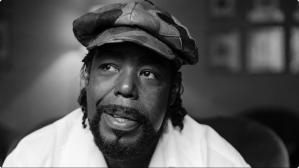
It’s time for a very Barry revolution

Barry White

In days of yore the naming of a child was an august and earnest affair; a time for no small amount of thoughtful consideration.

In some cultures, such as the Hellenic tradition, offspring were (and continue to be) routinely named after a respected family member. In this way, a nominative chain could be observed: Arthur, grandson of Arthur, and so on.

The practice among native American nations was to name a newborn for an observed phenomenon close to the birth. Sitting Bull, for instance, or Crazy Horse.

In more recent times, names that had gone out of fashion, such as Archie or Ruby, have enjoyed a strong revival.

Another recent trend, however, seems to be the flippant, seemingly off-hand bestowal of diminutives, nicknames or pet names for one’s offspring in place of a proper, dignified moniker.

In one recent Sunday paper magazine spread alone, a Rowdie, Birdie, Buster, Captain and Sugar were photographed with their respective culpable dads (it was a Father’s Day feature).

Admittedly “Captain” has a certain cachet about it. And, indeed, if there is such a thing as nominative determinism (the effect one’s name has on future success and even chosen occupation) then you expect this child might aspire to management roles. He could go far.

Buster sounds like he might be a lot of fun. Throw a stick and he’ll bring it back for you.

Clearly, though, none of the parents of these off-handedly dubbed children have thought too far ahead about the ramifications of such a casual approach. Though indubitably cutesy now, a dinky-twee sobriquet is going to have some drawbacks in the workaday world these delightfully named children are one day likely to occupy.

What happens when young Captain wants to pilot commercial aircraft or join the armed services, Sugar aspires to be a nutritionist, and Rowdie hopes to be a Mormon rector?

Let us stop this madness, I say, this naming-as-competition hipster foolishness. It serves us ill.

Rather than continue down this path of egregious appellation invention to goodness-knows where, I urge young parents to turn instead to the formidable font of what’s already available. It is a trough of plenty.

I am plumping for the return to prominence of a name you don’t hear much among the Buster-Birdie set these days: Barry.

Good old Barry. Bazza boy. Basil. Baz.

A name almost onomatopoeic in its capacity to evoke (masculinity, competence, even hirsuteness) Barry had its heyday in the 1930s, 40s and 50s.

Many a Barry has made his mark on the world.

In entertainment, Messrs Humphrey, Manilow, White and Gibb are nothing short of legends. Icons. Titans, even. At least one of them has written the songs the whole world sings.

Australian rules champions Barry Breen, Barry Cable, and Barry Round must surely be members of the Barry pantheon. One launched the wobbly punt to secure St Kilda’s only premiership, one was a pioneering exponent of handball and a trailblazer for aboriginal footballers (and Barrys) – thank you Barry Cable – and Mr Round (nominative determinism in action again) is the oldest Barry (and in fact player) to earn a prestigious Brownlow medal.

Barry Jones is considered perhaps the most erudite politician to have served, in Australian parliament. His grace, humanity and equanimity put contemporary politicians to shame.

Since the 1980s hard-nosed journalist Barrie Cassidy has cast a critical eye over the vicissitudes and vicious character assassinations associated with said milieu above.

What caused the sudden increase in popularity of the name in the early part of the 20th century?

Some sources suggest the name, which has Irish origins, is a derivation of any of the traditional monikers beginning with or including “bar”, such as Barnabas, Finbar or Bartholomew. It means “spear” or “fair haired”.

Perhaps the eponymous character from Thackeray’s The Luck of Barry Lyndon (written in 1844) played a part in the name’s rise in popularity throughout the Anglosphere in the early part of last century.

In the book, the villainous anti-hero Redmond Barry flees Ireland after a duel, becoming a soldier and card sharp before marrying the foolish countess of Lyndon and taking her name. After years of high living and poor behaviour, his life ends badly – poor, prematurely senile, and in prison.

According to website Name Origins, the US reached “peak Barry” in the mid 1960s – around the time actor Barry Pepper and US American football legend Barry Sanders were born.

In Australia that figure would be closer to the mid 1940s, which was when my Dad, Barry Dillon, was born (1943 in his case).

Never has a bigger-hearted person entered the world, I don’t think. The youngest of nine born on a Preston Housing Commission estate, Dad managed to provide for a family (including a future doctor and a professional athlete), and to always be available for his kin, even when he was working three jobs to try and get ahead.

Every year I grow in admiration for the manner in which he’s always conducted himself – a personal code based on commitment to work, helping others whenever possible, intellectual curiosity, and always doing what’s right (which means this may/may not be strictly by the book).

I once worked on a building site where there were four Barrys: my Dad (Barry the labourer), Barry the brickies’ labourer, Barry the plumber and Barry the sparky. I can’t imagine you’d find too many workplaces like that these days. “Barry” has gone the way of Albert, Cyril or Stanley; signifiers of decades long since past.

You do, however, very occasionally hear of a new Barry sighting.

In the TV series The Flash, the eponymous character’s daytime persona is Barry Allen. But then again the comic strip originally appeared in 1956, and the superhero’s alter ego’s name was Bartholomew.

There’s Baz Luhrmann, but he’s no spring chicken either, and in his case Baz is a nickname (he’s actually Mark).

Barry is also a nickname for US president Barack Obama.

Occasionally you hear the word dropped into conversation (as in, “That’s a bit of a Barry”), but in this instance it’s rhyming slang for “shocker” ( it rhymes with Barry Crocker, another famous singing Barry).

It’s a shame that a name associated with so many high achievers has sunk to such a level of ignominy. But it doesn’t dampen my enthusiasm for the Barry cause. Not at all.

I’ve always associated the name Barry with resourcefulness and capability. Dad can sew on a button, darn socks and stitch a repair in a cardigan. He can dig a trench straighter than a machine, cut down a tree and extract the roots, change a nappy, immaculately iron a shirt, dance, build a house, renovate on a budget, and sharpen your knives. He’ll have the crossword and Sodoku finished before you know it, as well as a pile of books of assorted genre and quality.

He can find common ground across socio-economic and cultural boundaries, finesse a handful of rags into “eight no trumps”, and write a letter in beautiful copperplate writing of which he’s justifiably proud.

So, nominative determinism has me thinking. I’m wondering whether Barry White would have possessed the ineffable cool to pen his odes to l’amour were his name Buster? Could Birdie Breen have kicked that wobbly point in ’66? Would Sugar Cassidy have become a hard-nosed political scribe? Doubtful times three.

In Barry we trust.