
Sport, artform, or perhaps an alloy of both? Whichever way you define it, breakdancing (aka breaking) certainly had a moment during the Paris Olympics, perhaps its last appearance at the Games.
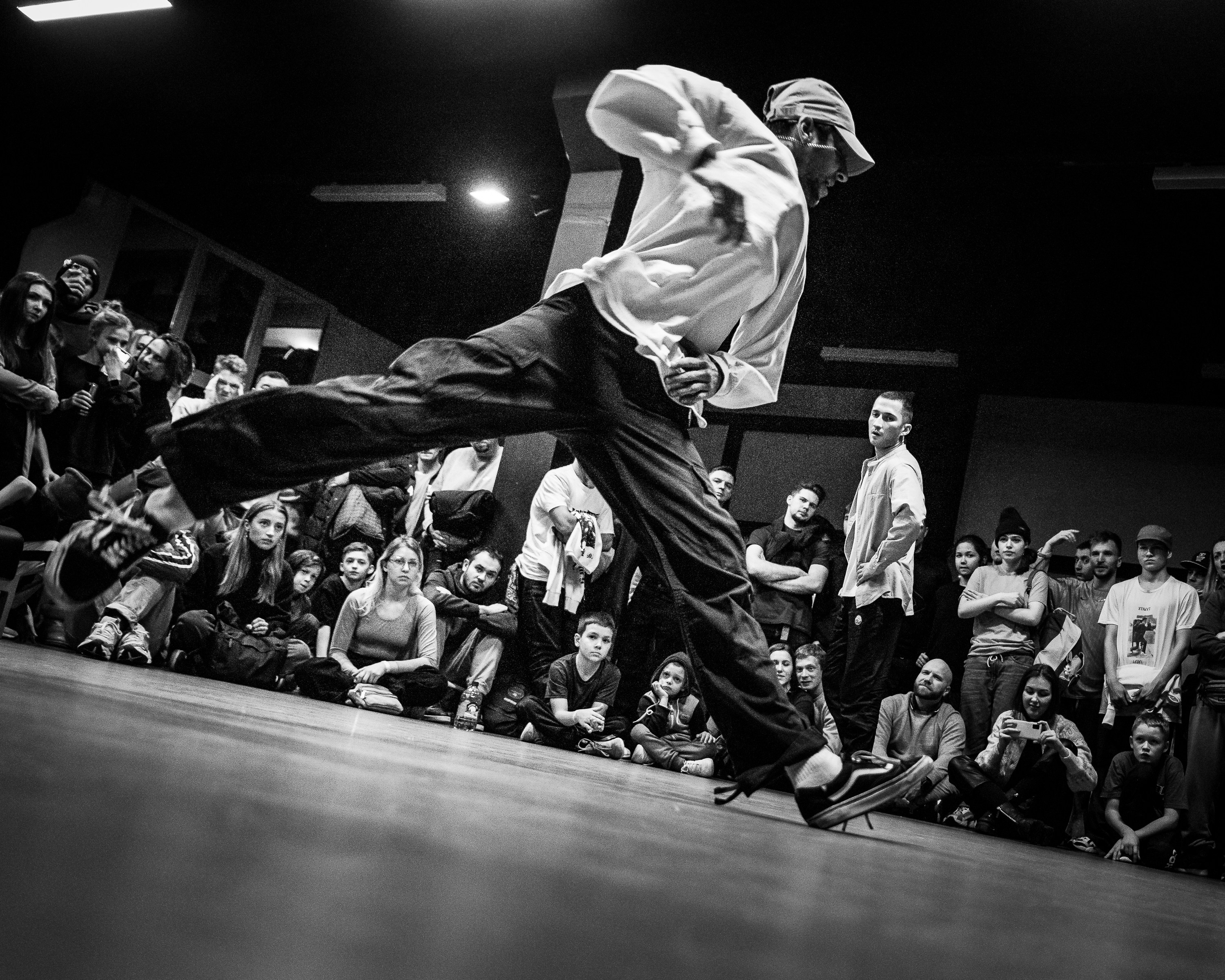
Watching the breaking competition at the Paris Olympics was to bear witness to some astonishingly athletic and entertaining dance moves.
At the Games, B-boys and B-girls (the preferred nomenclature for breakdancers) executed manoeuvres that at times resembled a combination of a whirling dervish, capoeira, gymnastics, fighting ninjas, and the Warner Brothers’ Tasmanian Devil – all with the backing of hip-hop beats.
Some of the dance moves seemed to defy the limits of human anatomy, and it should be said, good sense. The one-handed full-body balances and head spins looked like they were one false move away from serious, life-altering injury. The risk, of course, is part of the appeal for breaking’s afficionados and true believers.
Ultimately, the first – and possibly last – gold medals in Olympic breaking (the term “breakdancing” has had a rebrand) were earned by Canada’s Phil “Wizard” Kim and Japan B-girl Ami Yuasa, known simply as Ami.
What the competition did not resemble so much was anything like my memory of breakdancing from the 1980s, when the popular artform first caught my attention – via acts such as the Rock Steady Crew on Countdown, and then later when my friends and cousins started replicating the moves.
Apart from my lame attempts at the “robot”, I have offered little to breakdancing, lacking a character trait essential for hip-hop competence: attitude, moxie or chutzpah. Righteous moves were not busted by yours truly, nor did I exhibit lyrical flow.
In my recollection, the artform back then was equally divided between standing and prone moves. The former, which were in scant evidence in Paris, were all about “popping and locking”, the latter characterised by the helicopter or “frog in a blender” gravity-defying elements executed on the ground – or on a mat or cardboard back in the day.
Yet the only performer I saw do the “energy wave” move at the Games was Olympic mascot Snoop Dogg*, when he sashayed onto stage at the start of the second evening to introduce the medal rounds.
Let’s face it, it’s a long way – geographically, culturally and otherwise – from the New York City borough of the Bronx in the 1970s to the Paris Olympics of 2024. But that is the formidable distance traversed in time and distance by breaking.
The original artform emerged alongside the music it was spontaneously performed to, in which singers rapped lyrics over the top of beats produced by DJs. Artists such as Grand Master Flash, the Sugar Hill Gang, and Kool Moe Dee were the early progenitors, paving the way for crossover acts such as Run DMC, Public Enemy and the Beastie Boys.
After its shining zenith in the 80s when several breakdancing-themed films were made, the pursuit went underground – performed on street corners, high school gyms and wherever a ghettoblaster and willing participants could be found.
Re-emergence occurred in the early 2000s via competitions sponsored by Red Bull, with these now contested annually as the “BC One”.
In modern competition, protagonists take roughly one-minute turns, trying to do as much as possible in that 60 seconds to out-do their opponents. It’s mano a mano. It’s willing. And there is considerable attitude, not to mention athleticism, on display.
“I love keeping the tradition of breaking alive,” says the USA’s Victor Montalvo, who seized bronze in Paris. “Your body is the instrument, and you’re bringing that instrument out.”
But should that instrument have been played at the Olympics at all?
Well, the Games these days are a long way removed from their ancient Hellenic traditions, when young athletes competed sans clothes.
Breaking, surfing, speed climbing and skateboarding were included in Paris by the International Olympic Committee (IOC), which was doubtless hoping these sports would make the Games more appealing for younger viewers. Skateboarding, sport climbing and surfing all first appeared at the 2020 Tokyo Olympics.
The IOC has form when it comes to experimenting with different sports in the Olympic line-up, and of modifying rules to fit the times.
At the second Modern Olympic Games held in 1900 (also in Paris), competitors fought for medals in angling, motor racing, ballooning, cricket, croquet, Basque, pelota, a swimming obstacle race, and underwater swimming. Live pigeons were used in the shooting events, and there was a tug-of-war competition.
In the next Olympic Games, the Modern Pentathlon will be modified. The equestrian component is out, replaced by an Australian Ninja-like obstacle course. It’s hoped the change will make the event, which was conceived by Modern Olympics founder Pierre de Coubertin, more egalitarian.
So, events come and go. It’s par for the course (with golf back in for the past few Olympics as well, incidentally).
Yet the decision to include breaking by the French did seem particularly quixotic, and more than a little odd.
Not withstanding that breaking has been officially classified by an international governing body, if a competitive dance sport was to be included in the Games, perhaps ballroom dancing might have made more sense, given its global popularity and awareness.
Somehow, codifying breakdancing sullies the idea of two competitors throwing down one on one out on the street. But I’m biased; I also feel like rock climbing should be a contest of climber and rockface, and that surfing is best when it’s a challenge between wave and board rider, with crowds, prizemoney and trophies absent from the event. Don’t get me started on BMX or skateboarding.
However, the crowds at Paris for all these sports would suggest that popular opinion is otherwise, and has been for some time.
Much of the talk about Olympic breaking in Paris focused on Australian B-Girl competitor Dr Rachael “Raygun” Gunn, who was certainly not the best dancer at the Games, but undoubtedly owns the premier nickname among competitors.
Negative feedback focused on Gunn’s age, lack of athleticism and her unique moves, including one that evoked a kangaroo.
But as Te Hiiritanga Wepiha, who was on the judging panel that selected Gunn for the Olympics, says, Raygun’s efforts represented a form of courage.
Gunn competed despite knowing “she was going to get smashed”, and tried to build a routine that played to her strengths, which are artistic more than athletic. Alas, this wasn’t enough to progress past the preliminary rounds. She’ll always be an Olympian, however, and has a lucrative after-dinner speaker career awaiting should she wish it.
And it’s not Gunn’s fault that another, that a more acrobatic B-girl failed to rise and seize the female Oceania breaking spot allocated for Paris. The IOC can probably accept the blame here, because it allowed entry to a sport that lacks sufficiently high global participation numbers to produce a critical mass of elite performers.
In any case, Gunn won’t be preparing for the next Olympics in Los Angeles in 2028. No breaker will, in fact, because the sport won’t be contested in LA.
It’s been jettisoned by the IOC and LA organising committee in favour of squash, lacrosse (sixes), T20 cricket, flag football (a grid iron/NFL derivative) and baseball/softball.
“The choice of these five new sports is in line with the American sports culture, and will showcase iconic American sports to the world, while bringing international sports to the United States,” says IOC President Thomas Bach. “These sports will make the Olympic Games LA28 unique. Their inclusion will allow the Olympic movement to engage with new athlete and fan communities in the US and globally.”
Breakdancing has had its time on the Olympic stage. With DJs spinning records, the B-boys and B-girls flipped, spun, twisted, pointed and air flared. There were freezes, tricks, handglides, head spins, transitions and go-downs galore. As an Olympic sport, however, it is no more.
*How the Snoop D-Oh-Double-G became such a fixture in Paris is a little mystifying. Snoop’s whole vibe seems incongruent with the spirit of the Olympics.

 matthewdillon.net